
Fans on the Menu, Not at the Table
A brief look at fandom, infrastructure, and the point where belonging becomes product.

I’ve spent 25 years of my life building online communities across music and gaming. Professionally since 2007, long enough to recognize the pattern: most things don’t fail loudly, they just slowly stop working while everyone keeps nodding along.
Thank you to those who helped generously with feedback and insight, especially Marcus.
A special shout to Charles for putting your fingerprints on this—it feels like yesterday we were trying to make it all work.
In a way, a follow-up to What a Long Strange Trip It’s Been—published 5 years ago today.
DISCLAIMER:
This article constitutes opinion, cultural commentary, and criticism.
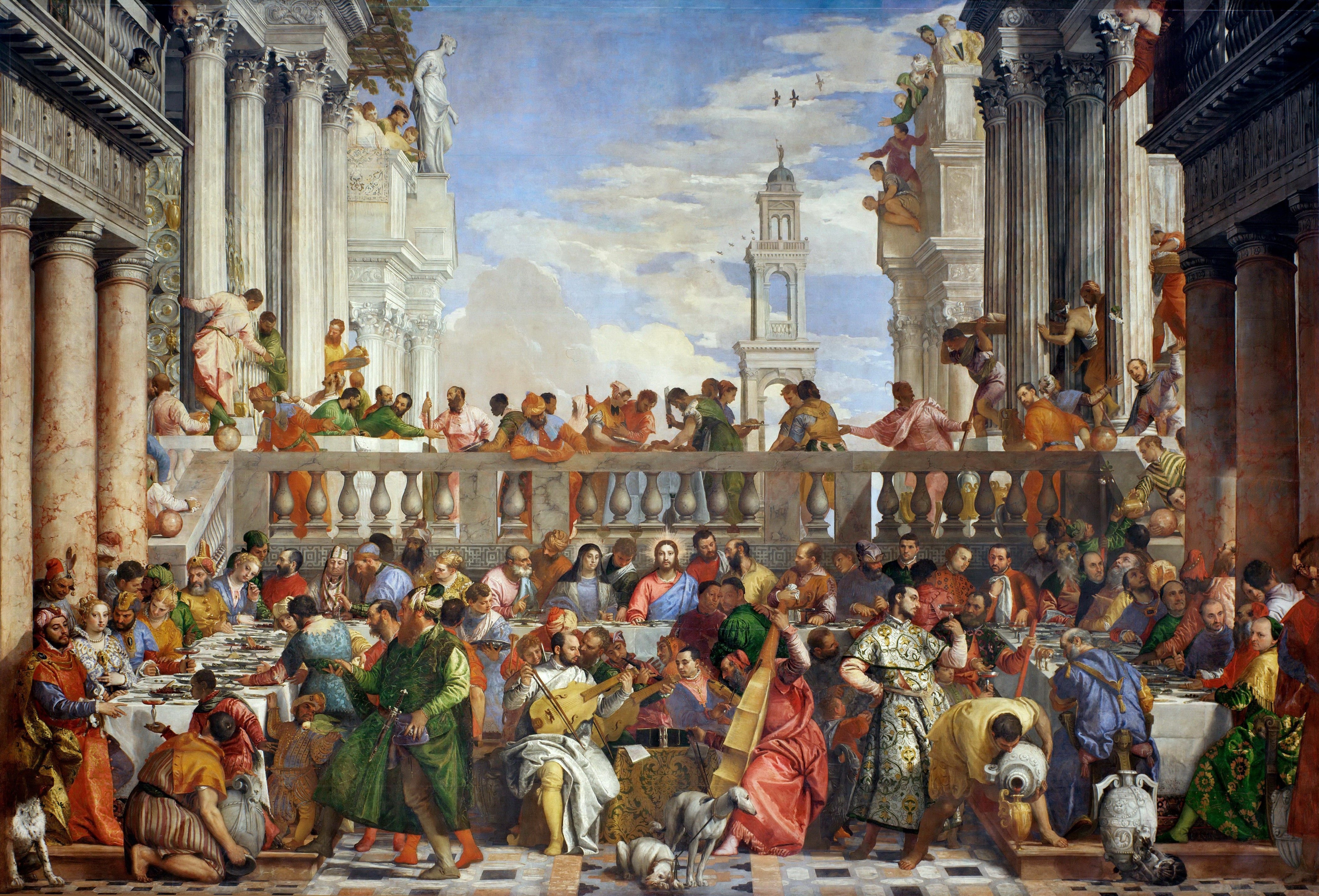
Dial-Up & Devotion
The year was 2000, the year everyone thought the world would end.
It didn’t.
I’d get off the bus, rush home with a backpack that weighed more than I did, hit the fridge, scavenge a Go-Gurt (maybe two), then hike up the stairs with the boulder still on my back. I’d boot up my old and dusty beige Gateway, and the ritual of mimicking the AOL dial-up sound with my mouth would begin. Nights disappeared into feeding Neopets, posting on the Neoboards about feeding my Neopets, derailing RollerCoaster Tycoon, Mephisto runs in Diablo II, and hogging the AWP in Counter-Strike. Call of Duty, RuneScape, and World of Warcraft were still a few years away.
Beyond games, I lurked in eye-searing IRC channels that felt equal parts house party and dumpster fire, camped out on gaming forums that smelled of leftover pizza, and joined AIM chatrooms to witness the chaos. Nobody tracked reach or CTR.
These spaces had real problems. Harassment went unchecked, access was gatekept by regulars, and ops’ accountability was optional. Volunteer governance had its own structural failure mode: unelected admins with unchecked authority, presiding over spaces that worked for insiders and froze out everyone else. Suits formalized what volunteers couldn’t scale; it also replaced one set of blind spots with another. Nobody was there to be monetized, which would prove to be the distinction that mattered.
Try explaining this to a parent whose idea of the internet was MapQuest and email, and you’d witness the light leave their eyes.
Carl Jung—
Loneliness does not come from having no people around you, but from being unable to communicate the things that seem important to you.
Today, the same instinct is a line item in a pitch deck. Users are retention curves, LTV bands, and projected ARPU. Somewhere between then and now, someone recognized that devotion is more efficient than hiring, and longing generates revenue.
Often run by people fluent in corporate SOPs who’ve never lurked in the channels.
Open Flame
IRC channels, forums, and adjacent message boards ran without corporate oversight, monetization pressure, or growth mandates. There was no content strategy because there was no campaign with KPIs to satisfy. The admin in charge was usually the one who cared most whether it existed tomorrow.
Anyone with shared hosting and enough patience could build a community. The barriers were technical, not financial, and survival depended on how often people showed up, not capital. Over time, familiar usernames accumulated like sediment, establishing a cultural bedrock that new users adapted to or left behind. Nobody was trying to franchise it or harvest user data to inflate a pitch deck.
When these communities died, it was nearly always natural attrition.
Fandom and community aren’t the same thing, though the terms are used interchangeably often enough. A fandom is organized around devotion to a subject: The Killers, Gran Turismo, Lord of the Rings, obscure video games, rare Japanese denim from some rural loopwheel knitting mill, or forgotten indie labels only a few people remember. This invites the fan in. A community is organized around the relationships between users.
Albums end, tours wrap, campaigns fade, and fan fatigue sets in. This shouldn’t kill the community, unless it was designed to be disposable.
Textual Poachers by Henry Jenkins recognized in ‘92 that fandoms are inherently communal. They construct their own social structures, creative means, and hierarchies:
While fans display a particularly strong attachment to popular narratives, act [sic] upon them in ways which make them their own property in some senses, they are also acutely and painfully aware that those fictions do not belong to them and that someone else has the power to do things to those characters that are in direct contradiction to the fans’ own cultural interests.
The question of who owns what has been contested ever since, and the balance gets harder to hold as a fandom grows. When an online community develops its own hierarchy, language, and reasons to show up, the subject becomes optional.
KanyeToThe was one of the largest hip-hop forums to ever exist, boasting nearly 100 million posts and 1 billion pageviews across a decade, and it didn’t endure because of Kanye West alone. It endured because the community built something that no longer depended on him.
The shift is gradual and nearly impossible to pin to a single moment. It remains the clearest answer I’ve found to the question every artist team or label executive eventually asks after launching a server on Discord: ‘When do we know this community is healthy?’
Ingredients attract attention, meals build loyalty.
Keep the Sign, Fire the Chef
When corporations began entering the community space en masse during COVID-19 lockdowns—Discord in particular—incentive structures shifted rapidly. Engagement metrics replaced connection as a success indicator, and growth targets superseded stability. The recipe changed, cheaper ingredients were used, and the sign stayed the same. The Applebee’s model.

This isn’t always about caring versus not caring. VC-backed companies report to their boards; online communities don’t operate on the same clock because they aren’t on one. The short-termism isn’t a character flaw; it’s a design constraint, which makes it harder to fix and more important to call out.
Forums that survived operated on a different timeline. Something Awful and Supertalk are both privately owned and have been online for more than two decades. Built, maintained, and futureproofed by those who care and consistently show up.
Elinor Ostrom won a Nobel Prize for proving that commons can be governed without institutional destruction. She outlined eight design principles; the three that matter most for online communities are:
the people using the resource participate in setting the rules
monitoring is handled by those accountable to the community
conflict resolution is accessible and cheap
Something Awful charges $10 to register, moderates through long-tenured users with institutional memory, and meets Ostrom’s conditions by coincidence.
The average agency-run Discord server meets none.
Brass and agencies alike launching a Discord server today think in campaign cycles. A quarter of content strategy, two if the target has budget, then autopilot until it becomes a husk. The plans don’t go that deep, because no one’s staying long enough to see them through. It’s difficult to plan a tour for someone else, for a city you’ve never visited.
Young put it plainly—
The success or failure of an online community depends, in part, on an organization’s commitment to sustained organizational and financial support for dedicated community management.
You can tell within seconds when you enter a community. You stroll in via an invite or a CTA on an ad, and the humidity is palpable; no one wants to be there. The moderators are obsessive fans, often kids selected by the staff, who have no experience. The announcements channel reads like a press release nobody asked for. The rest of the server is quiet, because there’s nothing to talk about. The whole place is a digital billboard that will die in a month.
The gap between who makes the decisions and who lives with them is the most underexamined dynamic in this niche. You can fund a restaurant, but you can’t fund a culture.
One question gets skipped every time, and it’s the only one that matters. Every user is subconsciously asking it, from the moment they join, especially around launches:
Why should I come back tomorrow?
Clean Aprons, Everywhere
By mid-2020, Discord moved on from its grassroots gaming origins, capturing a far wider audience with their Your Place to Talk campaign. Agencies flooded the market, positioning themselves as “fandom experts.” Not cooks who learned a kitchen; tourists who toured it, printed out business cards, then gleefully handed them out.
Demand outpaced qualified supply, and the market filled the gap fast. When the platform underwent a brand refresh in mid-2021, led by Koto and rolled out by AKQA (Koto’s breakdown has since been removed; the near-identical case study by Creative Director Bem Yemesgen remains accessible—not to be confused with Daniel Destefanis’ 2023 mobile redesign), the repositioning toward a broader market was unmistakable.
Those with access to capital and platform visibility were quick to crank out prescriptive frameworks on community-building. Lectures, keynotes, AI-generated static content, long rambling (often insufferable) LinkedIn posts, even books. Some without ever managing an online community at scale. Everyone was an expert, because nobody had been one long enough to be proven wrong.
In one such book, the author reduces friendships to referral mechanisms, and belonging to a driver of lifetime value. If community value is measured exclusively in monetary terms, the framework can’t account for the conditions that created it. You can’t reverse-engineer a family dinner from a receipt.
The agencies that followed soon after built their business models on the same logic, enveloping what they market as cutting-edge sentiment analysis with off-the-shelf SaaS dashboard templates courtesy of Claude Code, to any trained eye, pitched as ‘bespoke’ or ‘custom’ or ‘turnkey solutions.’ Venkit et al. reviewed 189 peer-reviewed papers on sentiment analysis and found a lack of explicit definitions and frameworks, a problem that compounds when the tools built on this research are sold as reliable to clients.
In music, they hand you a dashboard and call it a strategy to ‘convert fans’.
In gaming, the room knows you’re full of shit before you finish the pitch.
Most of these outfits could set up a Discord server well enough to pass the sniff test. Role hierarchies, channel structure, bot configuration, AutoMod enabled, baseline moderation in place, phone verification to prevent spam. Most of this is what Discord’s own setup tutorial tells you to turn on by default. A brand new car on the showroom floor with no engine; keys included.
The pitch always outperformed the service because the next pitch depended on it. When enough clients get burned, the whole category takes the hit, myself included. The people who caused it have already moved on to the next client.
The damage compounds upward. A-level artist and AAA-IP gaming servers launch with no long-term roadmap, entering decay cycles the moment retainers dissolve. I’ve been brought in to bring places like this back, and sometimes it can’t be done. The artist isn’t posting, the label doesn’t want to lean in, and the fan pages that once drove thousands of rabid fans into the room are losing interest (or have shut down completely). You can feel the air leaving, and it’s heartbreaking. In many cases, even the artist or group themselves couldn’t care less.
Some of these servers are still online, years later. No active moderation, announcements channel a ghost town. Just the automated ‘send a sticker when someone joins’ trigger activating, Wumpus waving and all, like one of those inflatable tube men flailing outside a used car lot in the middle of nowhere.
When an A-level artist’s server fails, they don’t come back. Their team flags Discord as the problem, not the execution, and tapes a scarlet letter to it. Discord takes the blame for an operational failure. The next time someone on that team is asked about the platform, the answer is short: ‘Nah.’
That misdiagnosis spreads, and before long, nobody adjacent wants to touch Discord either.
Larger entities, like major labels, reach the same conclusion from a different angle: Discord requires sustained investment for comparatively little in return. Instagram, TikTok, YouTube, and Spotify let you run ads with almost zero friction, measure ROAS easily, roll out the red carpet for priority partners (VASPs), and reach the same audience without ever learning their names. One-way funnel, no sustained investment needed. Inject when necessary.
Just over a year after Pitchfork asked Discord about music, Discord cut 4% of its workforce in August 2023. A few months later, another 17% in January 2024. The communities affected remained active throughout, like a conversation carrying on after everyone stops listening.
Fandom is the condition that makes revenue possible. The fan who buys every album, shows up to every tour, and brings three friends who don’t even listen to the artist, didn’t get there through a ‘conversion funnel’ or a ‘lifecycle campaign.’ They got there through belonging, and belonging is the only thing that survives a shifting algorithm and fluctuating ad spend.
CAC has more than doubled over the past decade.

You Brought a Charcuterie Board to a Cookout
You can learn Discord in a week, but understanding of a culture compounds slowly over time, and the room knows it the moment you open your mouth (or, read your canned, diluted, corpo-approved copy).
K-pop communities have always had some sort of leadership structure, whether it’s bulk-buying coordination, streaming promotion parties, or enforcement hierarchies; same bones as a hip-hop street team from 2003, except the territory is global and the quota is a Billboard chart. Their composition often resembles something closer to organizations than fandoms. Deploy a less-than-perfect launch, and it’ll be ignored. The fans will tell you themselves: they were here before you, and they will be here after you. If not out of loyalty, then spite.
Hip-hop communities operate on a different wavelength—geography as identity:
DJ Screw redefined Houston’s sound with his gray tapes
Detroit was changed forever by Dilla’s drums
Atlanta stopped asking for permission after Outkast took stage at the ‘95 Source Awards
Nas made QB feel like the center of the universe
To an agency, it all collapses into an indistinguishable, templated “rap community.” To anyone who has lived or still lives hip-hop, that sentence is enough to know the server’s fate.
To those who have spent their lives within these cultures, this is all commonplace. Most never encounter it because the ignorance is structural, and it’s not their own fault. Hiring pipelines bias platform fluency on paper over cultural literacy in practice, and the recipe gets passed down wrong because nobody in the kitchen has tasted the original.
Coca-Cola conducted extensive taste testing before launching New Coke in 1985, which lasted 79 days. The tests measured preference, not identity. They taste-tested the ingredients and ignored the room. In this case, literally.
Engagement can be A/B tested and optimized, but belonging has no control group.
The Yelp Review Said ★★★★★
Tools which ‘measure’ community health have replaced human judgment. Efficient for tracking activity, sure. Loyalty, trust, or safety? Good luck.
A message that says “this community changed my life” carries the same numerical weight as one that says something egregious, because both register identically as engagement within the tool. Aggregate data can show how many people entered a space, but can’t indicate whether anyone intends to remain.
Enter sentiment analysis, the industry’s most expensive way to misread the room:
Van Atteveldt et al. tested every automated sentiment method available and found that none “come close to acceptable levels of validity.”
Mohammad posed a simple question: can machines infer one’s true emotional state? His answer: “No.”
Viola concludes sentiment analysis was “originally conceived as a tool to maximize profits.”
Puschmann and Powell describe the numerical outputs as “a comforting illusion of objectivity and precision.”
The issue isn’t confined to “cutting-edge sentiment analysis” tooling or whatever phrasing sells. Beth Barnes, founder of METR—the AI evaluation lab whose benchmarks AI 2027 and frontier labs cite—put it in plain English on Machine Learning Street Talk, May 2026:
…you can sort of, like, be superhuman at making numbers go up, but it’s unclear whether or not you’re actually getting what you wanted.
This isn’t news. The cooks know the kitchen’s on fire. They’ve said so for (six or so) decades, in journals nobody at the table reads. The waiters keep pouring, the dashboards keep shipping, and the check—conveniently—never lands with ownership.
Michael Polanyi named the underlying problem in The Tacit Dimension:
We can know more than we can tell.
The feeling in the back of your mind that something is off, before you can explain why—tacit knowledge. No dashboard replicates it because it isn’t reducible to the inputs the dashboard ingests.
You can automate a process; you can’t automate judgment. David Rein on the same Machine Learning Street Talk episode:
…we just kind of estimate how long we expect it to take people from our kind of vibe or intuition. Ultimately, that’s kind of the best we can do.
Slang, sarcasm, memes, inside jokes, irony. Every server cooks its own dialect, drifting faster than any training cycle can chase. A tourist with a phrasebook can order coffee. A system that can't distinguish context to any reliable degree has no business informing governance decisions up the chain.
When data reporting becomes the center of community management, culture and retention begin to move in opposite directions. The moment a metric is deemed a KPI, the question shifts:
“How do we measure this?”
↓
“How do we manufacture this?”
The community once overflowing with starry-eyed fans is now an ant farm being tapped and tilted by a guy wearing a quarter-zip a few sizes too small.
This misunderstands the space, dressed up as incentive-centered design. When compensation tracks user growth, the system rewards reach, delayed enforcement, and strategic shitposting to drum up numbers—an artform in and of itself. Culture decays slower than reports can track, and by the time the software throws up a Bat-Signal, everyone’s long gone.
Today, phrases such as “direct-to-fan experiences” are greeted by executives like prisoners seeing sunlight for the first time. Packaged as empowerment, but in practice composed of mostly well-established marketing tactics done with modern software. While these tools can “move the needle” on selective KPIs, there is no conclusive evidence that structural power has shifted away from the major platforms. ‘Emerging evidence’ is not the same as proven structural change. Nearly every core aspect of fandom runs on someone else’s platform. “D2F” and “direct-to-fan” are shadows on the cave wall. Fans clap excitedly for the experience, while someone else collects the echoes.
In February 2026, direct-to-fan platform EVEN announced a multi-year agreement with UMG, positioning itself as infrastructure for the “superfan economy.” Turnkey solutions, safe communities, scalable fan engagement. The announcement landed days after a former executive filed a 29-page federal complaint alleging he was “discriminated against on the basis of his race and gender” and “deliberately misclassified as an independent contractor” through 70+ hr/wk crunches with no overtime, then fired after speaking up.
The complaint further describes “an unlawful pattern and practice of misclassifying Washington to suppress labor costs and obligations”, alleges the company “publicly promoted user growth metrics” that included unverified profiles the plaintiff had internally flagged, and claims its CEO acknowledged the contractor arrangement was “not necessarily legal” in a text message he then attempted to unsend. EVEN has called the claims “baseless and false.”
Empowerment is easy to sell when you never have to build it.


Topside, there’s no clapping. The fans show up hesitantly, signing up for yet another platform. How many? They’ve lost count.
Name, email, phone number. The name field doesn’t matter; it’s the other two that count.
ToS pop-up? TL;DR. Approved. Submit.
A tooltip window pops up, with a prompt to generate another password that will be forgotten in a week.
They spend, they believe they’re part of something larger than themselves. Then, often, they move on.
Not inevitability, but a common reaction when shared incentives shrink, and long-term strategy was never, well… long.
Loyalty is monetized without a second thought, and the community’s culture is proven disposable.
Healthy communities, especially large ones, rarely crack all at once; they develop many hairline fractures at a snail’s pace. You must watch the trusted regulars and notice when offshoot cliques form. This is a sign the main community is no longer serving them. Tracking it by hand is the only way; there is no technology for this. It comes from way too many late nights staring into the bluish glow of a monitor way too bright to keep your eyes comfortable.
The most subtle of shifts in an online community can trigger an avalanche, and the fandom experts’ ‘industry-leading’ tools won’t see shit until you’re buried.
Temperature Check
When someone outside a trust-based community optimizes it for extractable value, the optimization selects against the behaviors that built the trust.
Patience, institutional memory, genuine moderation—these get deprioritized because they don’t fit in a slide for the pitch deck that no one reads. The metrics improve while the underlying community decays.
Hirschman mapped the decision in Exit, Voice, and Loyalty (1970): the regulars who built the culture are the first to sense the drift and the least willing to tolerate it. Exit stage left.
The people who remain are disproportionately passive, new, or loyal past the point of influence. By the time management notices, the members who could have reversed it are already gone.
Two things prevent this:
If the people inside the community govern the optimization themselves—Ostrom’s principle applied to servers instead of fisheries—measurement doesn’t destroy the room, because the room controls the thermometer
If the community is small enough that the person making decisions still knows every regular by name, there’s no gap between observation and dashboard.
Landlords Always Eat First
Biometric and ID verification is a regulatory response, but it also reshapes the platform. The regulatory pressure is real; child safety legislation is tightening globally, and platforms that serve minors have no legal room to ignore it. The harder problem is whether verification can be implemented without dissolving the identity layer that made the platform worth verifying in the first place.


Around the same time as Discord’s March 2026 biometric “age assurance process,” two separate events occurred: an October 2025 breach affecting roughly 70,000 users’ government-ID photos, and a confidential IPO filing in January 2026. Together, they define the context behind widespread user concern. Long-time Discord employee ‘Zorkian’ acknowledged: “But if you do end up in the ID bucket, then yeah, you’re right that has some risk. We’re doing what we can to minimize this.”
Discord’s ID rollout, originally set for March 2026, was subsequently delayed to H2 2026, following widespread backlash. Discord severed ties with Persona, a Thiel-backed ID vendor, after researchers found Persona’s code exposed on a government-authorized endpoint. Discord’s CTO acknowledged the company missed the mark.
Discord isn’t merely a destination. It’s been the backbone of modern online community for a decade.
Jason Citron, co-founder and former CEO, now advisor to the CEO, during the Your Place to Talk campaign in 2020:
Games are what brought many of you on the platform, and we’ll always be grateful for that.
As time passed, a lot of you realized, and vocalized, that you simply wanted a place designed to hang out and talk in the comfort of your own communities and friends.
You wanted a place to have genuine conversations and spend quality time with people, whether catching up, learning something, or sharing ideas. A place where you and your world can truly belong.
You came to us and said Discord was this place. And for millions of you, it already felt like a home.
When verification becomes default rather than exceptional, the environment shifts from pseudonymous to intentionally identity-aware. That sense of belonging fades fast, and it no longer feels like home.


Disqus’ analysis of 60 million users found pseudonymous users generally outperformed both anonymous and identified users in volume and contribution quality (original link now 404’s @ SVW). These observations, made nearly 15 years ago, pertain to virtual self-expression and identity, a core ethos (and rev driver) of Discord’s Shop.
Friedman and Resnick demonstrated that cheap pseudonyms carry real social costs—bad actors can shed reputations and start fresh (which they often do). Their solution wasn’t real names; it was designing reputation systems where pseudonymous identities accumulate stakes worth protecting. Discord’s username history, server-specific roles, and accumulated social capital function exactly this way. Strip pseudonymity, and you eliminate the identity layer users invested in.
Users frustrated with Discord’s identity verification rollout weren’t questioning legality. They were reevaluating their relationship with the platform itself, en masse—ask any long-time user.
Roblox’s AI-powered age verification, rolled out in late 2025, introduced mandatory age checks to access chat features. According to Roblox’s own reporting, only ~45% of DAU had completed age checks as of January 31, 2026. It has been deemed a mess, a trainwreck, a dumpster fire, and more. Pejoratives aside, it’s a clear sign of what’s to come.
Discord differs from Roblox. Its user base is older, far more politically aware, and seasoned at building community infrastructure.
Pseudonymity erosion isn’t hypothetical. Research on Facebook’s real-name enforcement documented what happens when a platform decides it knows your name better than you do: transgender users, domestic violence survivors, Indigenous users, and others were deactivated under strict identity policies.

No Substitutions
None of what transpires on Discord exports externally. Every message, conversation, back-and-forth, flame war, sarcastic smartass reply, anything ever sent in Discord is always on Discord, and if Discord were to suddenly disappear, it’s gone forever. Discord is not searchable as a forum. Discord is not an information repository. You must be on Discord, to see Discord, and to use Discord, using your Discord account.
The recipe lies in Building Successful Online Communities, sitting on a shelf between good intentions and plausible deniability:
Incumbents gain strategic advantage when switching costs are higher: the costs serve to lock in members. In the startup stage, a community is in the role of competitor and will generally want the switching costs to be low, making it easy for people to join. Once people have joined, however, the community is in an incumbent role, and a community designer will want the costs of those same members switching out to be high.
Brands, IPs, artists, streamers, entire ecosystems interconnected under one roof. If one migrates, hardly any follow. For all the frontpage Reddit threads and outrage headlines, five-person friend groups that migrate off the platform or viral tweets that get some traction—we’re lazy. When everything’s already in one place, we rarely sacrifice convenience for privacy.
The kitchen could be on fire and we’d still eat at the table.
Large platforms gravitate toward standardized verification because scale rewards predictability. Communities scale through trust density and shared culture, both of which accumulate on someone else’s land. As ID verification becomes infra, the damage is a slow drift, not a sudden collapse.
Those of us who curated our Top 8 on MySpace or refreshed Frank Ocean’s Tumblr constantly might remember: neither platform collapsed from a single decision. It was suffocation in slow motion.
MySpace, under News Corp, increased ads while infra crumbled
Tumblr banned NSFW after Apple pulled the app over unfiltered CSAM, and took a ~30% nosedive in traffic
LiveJournal’s infamous ‘07 shift contributed to over 8 million users lost by ‘11
What may remain is a platform more durable, ad-friendly, and appealing to public markets than the Discord we grew up with. Whether it will still harbor the communities that made us laugh, cry, and cheer in our chatting primes is a bet I wouldn’t take, even if you caught me being frisky.
The Check Always Lands Face Down
Every kitchen operates on some economic structure. Ingredients arrive, labor transforms them, dishes leave the room, and revenue settles somewhere nearby—somewhere specific.
In 2006, Nicholas Carr described this as digital sharecropping:
The sharecroppers operate happily in an attention economy while their overseers operate happily in a cash economy. In this view, the attention economy does not operate separately from the cash economy; it’s simply a means of creating cheap inputs for the cash economy.
Participation scales outward, but ownership doesn’t.
In a pitch deck this would touch on something like the ‘attention economy’ and ‘value capture’ with some AI-generated graph. In your favorite restaurant’s kitchen, this is the ‘house cut.’ Labels and IP holders have collected that cut for decades; this isn’t new. What changed is the intermediary layer: platforms now extract from the attention while labels extract from the content, and the fan foots both tabs.
Fans generate the inputs that make a community worth monetizing. This lends itself to rev-gen. This isn’t inherently wrong. Artists need to eat well, as do labels. Communities that can’t justify their existence during quarterly reviews eventually get cut. ROI matters, but when it becomes the only lens (which it almost always does), the community stops being a room and starts being a register. Then, it dies.
Two hip-hop artist communities launched on Discord within months of each other in 2021; similar in sub-genre, comparable in scale, both backed by majors. One was managed by an agency for engagement metrics: weekly activations, growth targets, content calendar driven by the label. The other was managed by myself, for trust: slow onboarding, moderators from the fanbase, no growth mandates.
By mid-2023, the metric-optimized server was dead; the retainer ended, the room emptied inside six weeks, and the agency was cut. The server was stripped of its verification shortly after, and the server was deleted a few months later.
The trust-managed server never hit the same peak numbers. It also never lost more than 15% of its active base in any quarter, survived the artist’s year-long social media hiatus, and continued generating organic merch sales with zero paid promotion. It still exists today, one of the largest artist servers on the platform for an A-level artist. The artist’s thoughts? Loves it.
Over 30 months, the trust-managed server generated more revenue at lower cost.
The metric-optimized server generated a better slide in a pitch deck, though. That’s all that counts, right? The vanity metrics?
I reached out to a senior label exec, and close friend:
The core community is what matters most.
Artists get visibility from playlisting, TV performances, award shows, press—but what makes a career is when the artist has a flywheel built with fans.
Fans who don’t just consume the music, but buy tickets, buy merch, and invest their hard-earned money on the artist.
That’s a career. Everything else is a moment.
A community gets traction, the numbers look stellar, so someone up the chain throws them into a deck. The quarterly budget call arrives, and community management gets weighed directly against paid media, influencer campaigns, and legacy ROAS figures, as if comparable, somehow. It’s a fight lost before it begins, because there is no column for trust.
There’s no reliable metric for when the room goes cold, though there are many false positives. The power users sniff it out first, the regulars shortly after, then the users who only drop in for announcements, and before you know it, everyone’s gone. A few weeks after the server shuts down completely, the dashboard alerts you there has been a decline in messages.
Nobody puts it in the post-mortem. The next quarterly review takes place.
“What do we think about trying Discord out again?”
A grin, a headshake—maybe a giggle from the top dog if the weather’s sunny—and a hand gesture to move onto the next item.
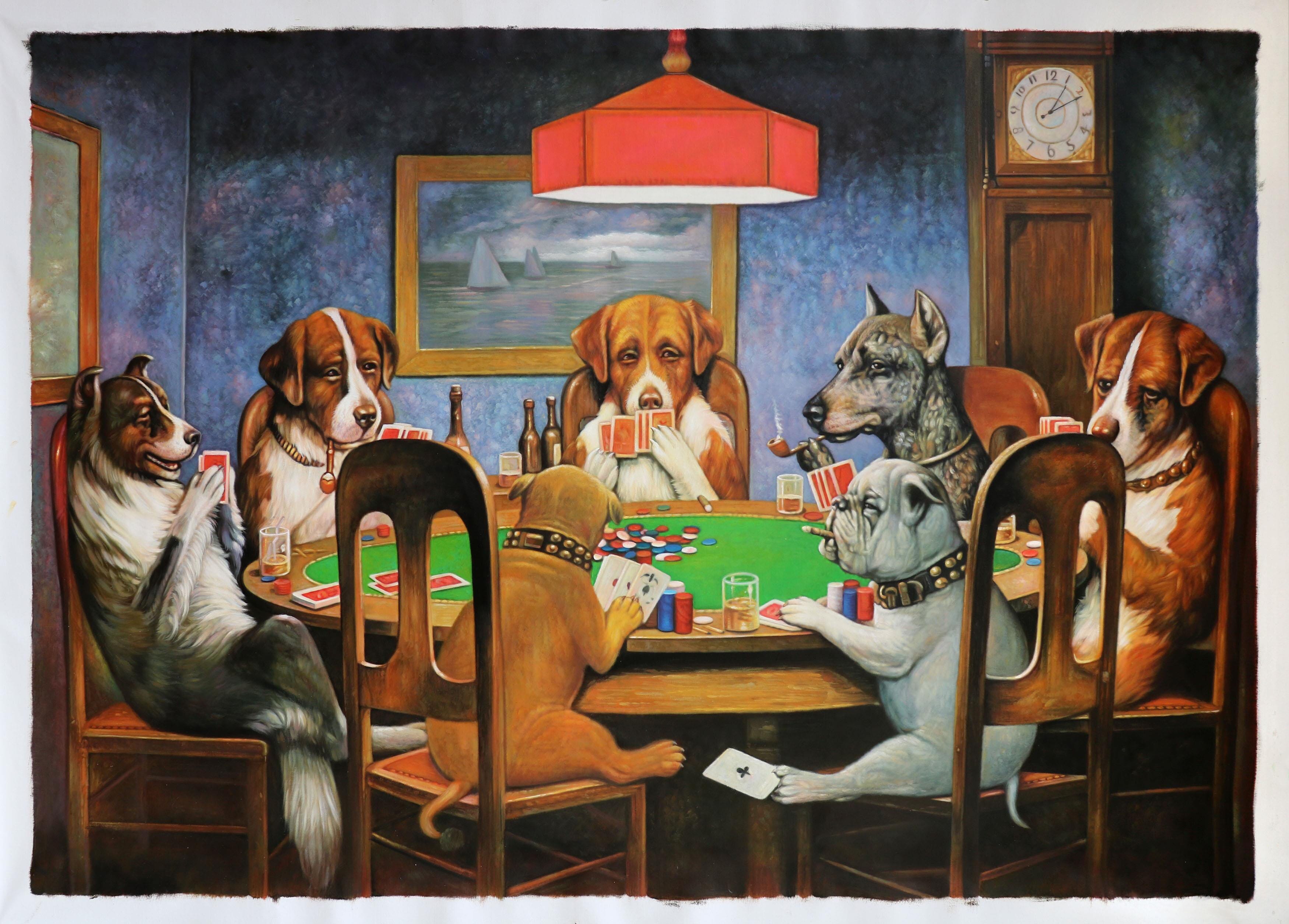
Gratuity Included
I still believe communities are built the way they always have been: slowly, by people who choose to show up for each other. What took me far too long to learn is how fast everything is gutted once someone realizes it’s worth something.
The problem is mostly plumbing, not people. Plumbing isn’t the whole story, though, and pretending otherwise would be its own kind of malpractice. There is an attention migration underway, one that has nothing to do with bad agencies or misaligned incentives.
Social media itself evolved past the conditions that made these spaces thrive. Alg-based feeds now compete directly for the sustained attention that community participation demands, and they’re winning—not because they’re better, but because they’re easier. A 15-second loop doesn’t ask you to show up tomorrow. The hallway got infinitely more interesting than any room ever could, and foot traffic dropped accordingly. The climate shifted. It explains why fewer people walk through the door. It doesn’t explain why the ones who do walk right back out.
Incentives reward short-term engagement over long-term trust, because engagement fits in a PDF. Online communities are treated as an expense until numbers show up. Which numbers? Any numbers, they just have to go up. When they do, they’re optimized. Bit by bit, byte by byte, quarter by quarter, until the deck says the community is healthy by every metric except the ones that matter. Look up from the spreadsheet, and it’s an empty room. Platform dependency centralizes ownership, and eventually, there are no digital sharecroppers left to harvest the ingredients.
You enter your favorite restaurant. The host doesn’t even bother checking the list anymore.
“Back again?”
The brass slide into the booth by the window. The same one as last time, and the time before that.
Finance gets the wine list first.
Agencies sit last, and immediately begin telling everyone about their weekend at Art Basel. Nobody asked.
In the back, past the swinging door, the fans are cooking. In the kitchen they built, with ingredients from the pantry they stocked, following recipes they wrote from memory. They’ve been here since before the restaurant had a name. Some are more experienced than others and it’s obvious this isn’t the first time they’ve cooked on the line.
Then the kitchen begins to shrink, as it always does. The menu gets rewritten by a Top Chef from a few towns over who’s never tasted the local joints. The recipes remain, but the hands that wrote them move further from the stove each quarter. Eventually, they become flavors on a plate.
Every night, without fail, the waiter comes out to take everyone’s order.
“What’ll it be?”
The menu is seasonal. It caters to whatever the room needs to hear.
Flip to any page, and somehow, some way, the fans are always there.
Not seated. Not served. Not even in the kitchen anymore.
Just on the menu.
If you like this piece, you may enjoy:
What a Long Strange Trip It's Been

Most of my friends and mentors found me through a screen, and online communities held my attention long before they were a category anyone was hiring around.