
Korea Welcomes the World
The scenic route through pager rap, DMZ loudspeakers, 19-syllable rhymes, yogurt poured down drains in hopes of glory, and how a borrowed tongue came home speaking Korean.

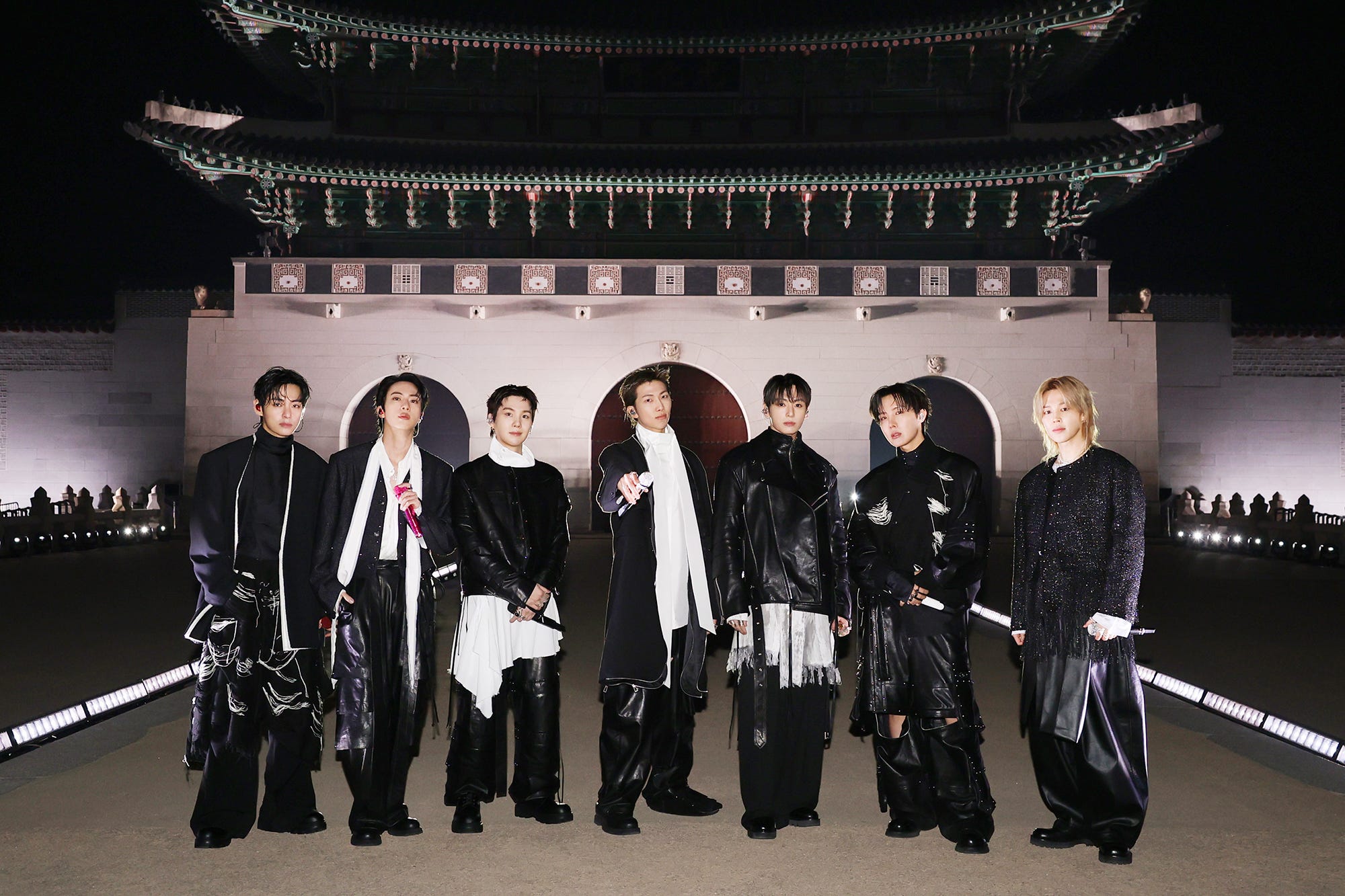
This piece is as much about Korean music as it is about learning a culture I was born into but never fully handed. To everyone who handed me what I was missing along the way—thank you!
DISCLAIMER:
This article constitutes opinion, cultural commentary, and criticism.
Korean-language translations are unofficial non-authoritative—added for reader’s sake.
Dead Last on National Television
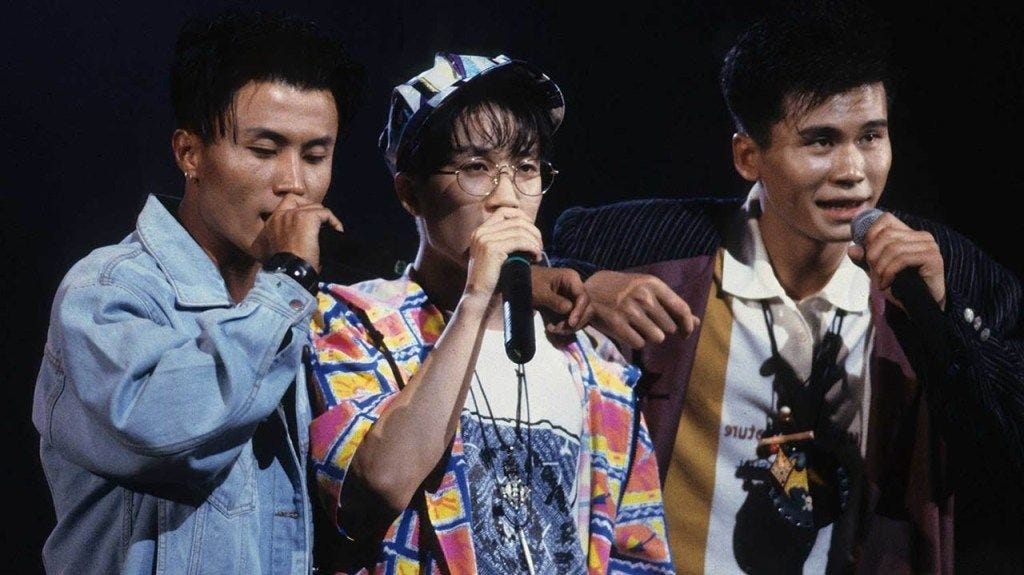
One of the earliest major commercial transplants of Black American sound onto the televised idol stage came in 1990. Hyun Jin-young brought New Jack Swing to Korean television under Lee Soo-man’s SM Studio. Two years later, three young men walked onto MBC’s Teukjong! TV Yeonye (특종 TV 연예; 1992 to 1994) and broke the format.
Seo Taiji, a former heavy metal bassist turned songwriter, had sought out dancer Yang Hyun-suk for choreography training. Yang heard the music and joined on the spot. Lee Juno, a dancer, rounded out the trio. Their song, “Nan Arayo” (“I Know”), was South Korea’s answer to Bell Biv DeVoe.
The judges scored them 7.8 out of 10. Composer Ha Kwang-hoon, one of the four judges, later admitted the show’s concept was to score new acts down. Viewers made it No. 1 on MBC’s chart for 10 consecutive weeks. The debut album moved ~1.6 million copies. New Jack Swing was Teddy Riley’s invention, a prodigy from the St. Nicholas Houses in Harlem who fused hip-hop production, R&B melody, gospel vocal styling, and funk rhythms into something Barry Michael Cooper named in a 1987 Village Voice feature.
Seo Taiji’s rap descended from a tradition born in the West Bronx, 1973. Lee Juno’s breakdancing traced to Black and Latino b-boys in the same borough a decade later. The culture crossed the Pacific at clubs like Moon Night in Itaewon, where Korean dancers moved alongside Black American GIs stationed at the Yongsan garrison.
SBS’s Archive K (2021), on how the dancing arrived—
AFKN을 통해 방영된 힙합 브레이크 방송 ‘소울 트레인’… 어디서도 보지 못했던 비보이들의 춤을 접하게 됐고 그걸 실제로 볼 수 있는 곳이 바로 문나이트였다.
Through ‘Soul Train,’ the hip-hop break show broadcast on AFKN, dancers encountered the b-boy dancing seen nowhere else, and Moon Night was the only place to actually see it live.
Yang Hyun-suk and Lee Juno learned their vocabulary in those rooms. The garrison never left. The 28,500 USFK troops still in Korea today, roughly 19,500 of them Army, sit eight subway stops from where Seo Taiji recorded. The Eighth Army system that staffed the clubs ran ~5,400 military shows through the 1950’s, auditions compulsory for any performing artist who wanted the work, the grade running Special A (AA) down through A, B, and C, with D as elimination and pay tiered to the rank. The graded audition that ranks and culls every trainee in a Korean agency today—the monthly evaluation that decides who advances toward debut and who washes out—rhymes with that ladder. No paper trail connects the two.
Shin Joong-hyun came up through the same camp-town clubs, taking the stage as a guitarist in 1957, and earned the AA grade and the highest-paying officers’ clubs. John Lie, in K-Pop: Popular Music, Cultural Amnesia, and Economic Innovation (p. 30), records that in the late 1950’s, revenues from Korean musicians’ performances for US GIs probably exceeded the total export earnings of South Korea.
AFKN, the American Forces Korea Network that opened its Yongsan studios in April 1954 and added television in September 1957, piped soul, funk, and R&B into Korean airwaves on AM frequencies any civilian could tune. Even AFKN was a successor: WVTP had been broadcasting from Korea since 1945, putting American pop into the peninsula a decade before the Yongsan television studios came online. AFKN’s broadcasts sat exempt from ROK government censorship for the network’s full 39-year run (1957 to 1996), a status SOFA Article III §2 codified in 1966.
Kyung Hyun Kim, in Hegemonic Mimicry (2021), called Yongsan Garrison and Itaewon “the incubation lab for K-pop where local b-boys learned how to dance to black music throughout the latter part of the century.” Korean performers who began as “disposable, off-white/blackish entertainment bodies” for occupation audiences—neither white nor Black in the American hierarchy the GIs brought with them, ranked somewhere below both and asked to imitate the acts that outranked them—were repackaged generation by generation until the aesthetic emerged decades later as something the country claimed as its own.
Riley himself crossed the Pacific to write “The Boys” for Girls’ Generation in 2011, “Mamacita” for Super Junior in 2014, and “Call Me Baby” for EXO in 2015.
Spin ranked “Nan Arayo” fourth on their list of the 21 greatest K-pop songs of all time, but in 1992 there was no K-pop. The reigning form was trot, ppongjjak rhythms and pentatonic melodies carrying Japanese-colonial DNA, rooted in the 1920’s, dominant for decades. Roald Maliangkay traced synchronized girl-group choreography to Japanese entertainment companies in the 1910’s, which brought Western chorus-line dance to Korean stages during occupation. SM, YG, and JYP built their training and choreography systems on that same template.
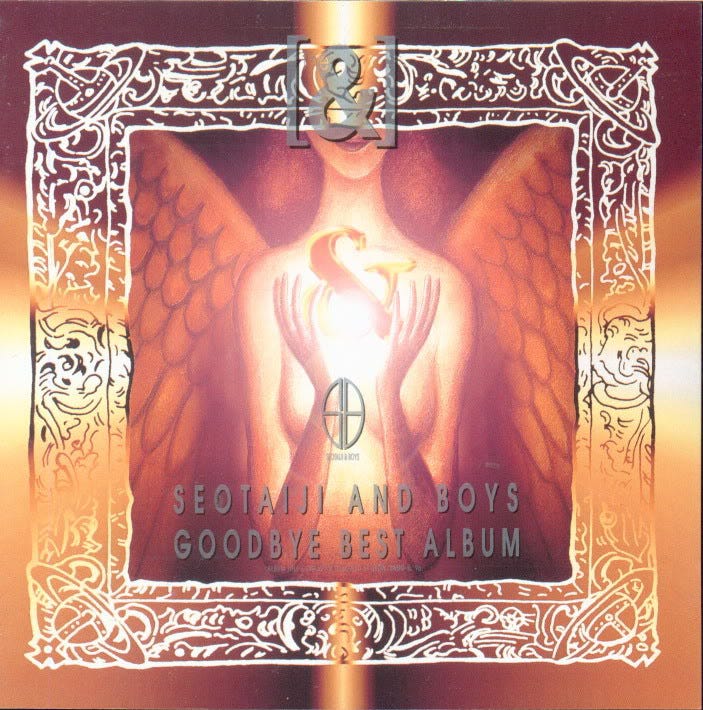
Seo Taiji ended trot’s reign inside a single chart run. Trot would revive two decades later—Lim Young-woong’s 2022 Im Hero tour filled Olympic Park across consecutive nights—without ever threatening the export machine Seo Taiji’s departure had made room for. Seo Taiji and Boys played their farewell concert on January 19, 1996—Seo Taiji was 23. Yang Hyun-suk filed the paperwork for YG Entertainment within weeks.
The Digital Streets of Korean Hip-Hop
In the mid-90’s, Korean hip-hop formed online through PC communication servers—HiTel, Chollian, and Nownuri, the dial-up bulletin-board services Koreans used before the web, built out on the same timeline as the music itself—in communities called BLEX, Dope Soundz, and Show N Prove.
Rhythmer’s history of Korean hip-hop—
‘미국 힙합 음악의 모태가 되었던 거리의 개념이 국내에서는 온라인상에서 형성’
The concept of ‘the street,’ which was the womb of American hip-hop music, was formed online [digitally] in Korea.
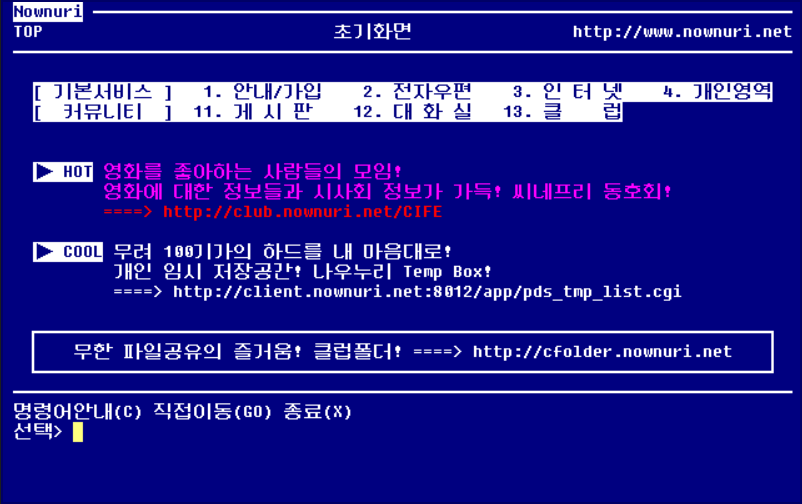
BLEX, short for Black Loud EXploders, started on HiTel on February 2, 1996, as a small group called “Soul Train” (소울트레인). Within 18 months they’d accumulated 400 members, online and offline listening sessions, a charity concert for North Korean children, full HiTel dongho-hoe [official-club] status, and by May 2000, 1,500 registered members. They described themselves as a storehouse of Black music information that was hard to access in Korea, and impoverished even when accessible.
MC Meta, who came from Daegu to Seoul for graduate studies, became the system operator and steered BLEX toward original production. He said, “Let’s make the music we want to hear ourselves.” They released 검은소리 Vol. 1 in November 1997, one of the first independent Korean hip-hop compilations. Only about 10 CDs were physically pressed because burning a single disc took nearly half a day, done at a CD burning shop in Jongno or Myeongdong and split among the small handful of participants.
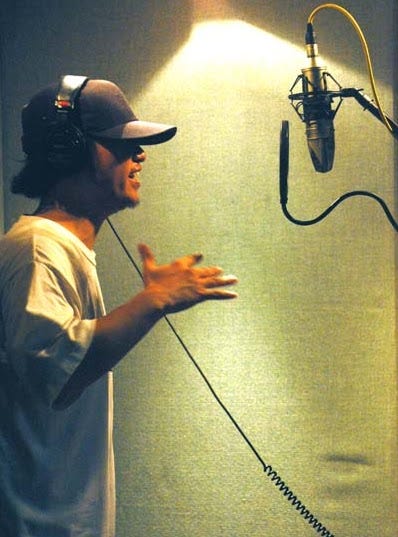
MC Meta, HiphopLE, 2011—
공식적으로 CD로 제작된 건 한 10장 남짓 할 거예요. 당시에 CD를 굽는 게 거의 반나절 걸리던 시절이라서... 종로인가, 명동 어디에 있는 CD 버닝하는 샵이 있었어.
거기서 애들이랑 밖에서 놀다 들어왔다 하면서 구워서 소수의 참여진만 나눠가지고
Only about 10 CDs were actually pressed. Back then, burning a single CD took nearly half a day... there was a CD burning shop somewhere in Jongno or Myeongdong.
We’d hang out with the kids outside, come back in, burn them, and distribute them to the small number of participants.
The official release was an MP3 upload to the BLEX bulletin board. Meta claimed BLEX uploaded before Jo PD, making 검은소리 Vol. 1 the first Korean hip-hop MP3 album.
Before MP3s existed or CD burners were affordable, BLEX members worked out pager rap.
In the era of beepers, members would play an instrumental from a CD on their stereo, hold a phone to the speaker because there was nowhere to upload, time the pager’s voicemail greeting and rap over the beat into the phone receiver.
Meta, in the same HiphopLE interview—
전화기에 ‘삐소리 후 말을 남기세요’와 함께 그때 딱 누르는거야. 20초 그 사이 막 랩을 해요. 전화 수화기 들고 막 랩하고 확인을 해요. 모니터링을 하는 거지. ‘아, 이거 틀렸네’ 이러고 다시 녹음을 하는 거예요.
When the message says, “Please leave your message after the beep,” that’s when you press it exactly on cue. You’ve got about 20 seconds, and you just start rapping in that window. You hold the phone receiver and rap, then check it. You’re monitoring it. “Ah, I messed that up,” and then you record it again.
They’d record, monitor playback, re-record if the timing was off, then post the pager number to the bulletin board as a new single release. On Nownuri, the parallel dial-up service, a smaller and more selective community called Dope Soundz had formed in April 1997, self-described as a clique—
마음이 맞고 음악적으로 뜻이 같은 친구들이 모여 뚜렷한 성격을 가진 모임으로 이끌어나가자.
Friends with matching sensibilities and musical vision gathering to build a group with a clear identity.
When BLEX released its compilation and the creative itch spread, several Dope Soundz members broke off in 1999 to form Show N Prove. The first system operator was Defconn, who’d later build a TV career on routinely antagonizing his guests. SNP attracted a murderers’ row: Verbal Jint, P-Type, 4WD, the singer Wheesung, the R&B vocalist Jung-in. The following year, SNP members 4WD and Verbal Jint released a diss track called “노자” that deployed multi-syllable rhyme schemes nobody in the Korean language had worked out yet.
Meta, in the same interview—
각자 활동을 하고 실력의 차이가 있고 하다보니까... 곡을 쓰는 사람과 랩퍼들이 만든 곡들이 올라오는 과정에서 이제 뭐 회원간이건 아니면 당사자간이건 살짝 견제하는 그런 분위기... ‘누구 랩이 더 좋네’, ‘누구 랩이 엉터리네’ 이런 것들.
As people became active and skill differences emerged... in the process of songs being uploaded by writers and rappers, there was a subtle atmosphere of rivalry between members and between the communities themselves: ‘this person’s rap is better,’ ‘that person’s rap is garbage.’
The craft they were chasing had been worked out in English. Korean-language rap existed and Seo Taiji had proven a market for it, but the grammar was still unsolved, and rappers working in Japanese and French were stalled on their own versions of it at the same time.
In late 1997, BLEX held a release concert for 검은소리 Vol. 1 at a venue called 푸른굴 양식장 (Blue Oyster Farm). The owner had never cleared that many ₩5,000 covers in a single night; the crew left with good feedback and a plan for a Christmas follow-up. When Meta called to finalize, the venue had been sold to Lee Jong-hyun, who was building a dedicated hip-hop club.
Somebody’s Oyster Farm Became the Sistine Chapel
Master Plan sat in the Hongdae/Sinchon corridor, a basement venue of 33 square meters, about the size of a one-car garage. Kyunghyang Shinmun later called it 한국 힙합의 성지, the holy ground of Korean hip-hop. No chairs, no tables, audiences on step-like structures. Performances every Friday, Saturday, and Sunday. Crowds of up to 200. No alcohol, which meant teenagers could walk in, watch the open-mic freestyle battles that closed every session, and eventually grab the microphone themselves.
Naachal went to Master Plan, saw Meta freestyle, practiced for two weeks, and debuted on the same stage. Meta saw Naachal perform and called him immediately. They formed Garion, naming the group after 가리온, a white horse with a black mane.
Artisan Beats (Saatan), a Korean hip-hop producer, arrived at Master Plan through a different door. He’d been preparing to debut as part of a four-member idol group, the company refused to let them make the music they wanted, and he quit and walked out.
Artisan Beats (Saatan)—
회사에서도 그런 거 만들면 안 된다고 하니까 그러다가 도저히 안되겠다 싶어서 때려치고 나와서.
The company said we couldn’t make that kind of music, so I quit and walked out.
He saw a teaser in Sub magazine, got pulled on stage for a freestyle, and Da Crew became MP 공개 오디션 1호, the first act to enter through open audition, paid ₩10,000 for their first show (about $9 at the era’s exchange rate), ₩5,000 each after split, while bus fare from Ilsan ran ₩4,000 round trip per person, leaving the pair ₩2,000—under $2—between them for food after the gig.
Saatan—
우리 둘이 2천원 가지고 뭐하지? 밥도 애매하고 분식집 가야되고.
What do the two of us do with ₩2,000? Can’t even afford a real meal—had to hit up a bunsik joint.
CB Mass, precursors of Dynamic Duo, Epik High’s Mithra Jin, Verbal Jint, and E-Sens all passed through those doors and built the next 20 years of Korean hip-hop.
E-Sens’ lyrics from Next Level—
난 Master Plan 말곤 한국 언더그라운드에 / 딸 래퍼들 있는 줄 몰랐는데.
I didn’t know there were other rappers in the Korean underground besides Master Plan.
When Master Plan transitioned from club to management company around 2001, Meta still talked about it as a loss—
클럽을 버릴 줄은 몰랐어요. 공연장을 접어버렸어요. 공연장을 버리고 그냥 기획사로 빠져버리니까 저는 그게 되게 안타까웠죠
I never expected them to abandon the club. They shut down the performance space. They dropped the venue and just became a management company, and that really gutted me.
Meta, continuing—
갑자기 구심점이 없어지니까... ‘부비부비’가 딱 치고 들어오면서 그게 엄청 앞으로 나와버려요. 케이블에서는 홍대 가면 ‘무조건 여자 엉덩이에 부비부비 할 수 있구나’ 이렇게 인식되는 모습들이 보여져 버리니까
Suddenly the center of gravity disappeared... the ‘boobibobi’ [grinding] culture rushed in and took over. Cable TV started showing Hongdae as a place where you could ‘grind on girls’ butts’… and that became the image.
The former site now houses Geek Live House, which still has Master Plan’s original checkerboard flooring. Digiri, who calls himself the “hip-hop grandpa,” started performing at the first hip-hop club in Sinchon at 18 in 1997, back when most first-generation artists were still just audience members. Digiri told the Korea Herald he didn’t know anything about hip-hop, and he and Young-poong would rap there, freestyle.
The group that formed around those sessions became Honey Family, and their producer was Lee Juno, third member of Seo Taiji and Boys. Two of Honey Family’s members, Gill and Gary, later formed Leessang. Gary became a household name through Running Man.
The Language Said No Until Somebody Stopped Asking
In 1998, overground rapper JP (Kim Jin-pyo) dropped a diss at the cosplayers calling themselves rappers—
여기는 미국 아냐 어죽을 East Side, West Side 외치지만 말고제대로 좀 해봐
This isn’t America. Stop saying East Side, West Side. Do something real.
Two years passed before an answer came. Yoo Seung-jun fired back with a response track—
난 랩 안해도 잘먹고 사네 yo J.P. 그깟 돈, 명예 너 다 가져 그저 네 기준에 맞추진 말아줘 1등 2등 신경쓰지 말아줘 나는 가위의 유승준, 나나나의 승준, 열정의 승준, big westside 승준 너의 기준 속에서 고정되는 나의 표준 새로운 창조를 위해 너희 다시 조준 질문 yo. 꿈이 뭐야.
I eat good without even rapping—yo, J.P. Keep your petty money and fame. Just measure me by another ruler. Forget who’s first or second. I’m Scissors Seung-jun [가위, his signature hit], NaNaNa Seung-jun, Passion Seung-jun, Big Westside Seung-jun. My standard stays fixed inside your standards. I’m re-aiming for new creation. Question, yo. What’s your dream?
T.K. Park, the Korean American writer behind Ask A Korean, called it “anchored realness.” In the 90’s, to be “real” was to look and sound American. Korean rappers flaunted their American connections, stuffed their lyrics with English, shot music videos in locations that evoked inner-city America.
T.K. Park, Ask A Korean, 2015—
In hindsight, Korean hip hop of the 1990s was cringe-inducing. The cringe does not simply come from the fact that most things, 20 years later, are tacky.
It also comes from the fact that Korean hip hop of the 1990s was clearly an exercise in exoticism and cultural expropriation.
To put it bluntly: these were a bunch of Koreans trying to be black.
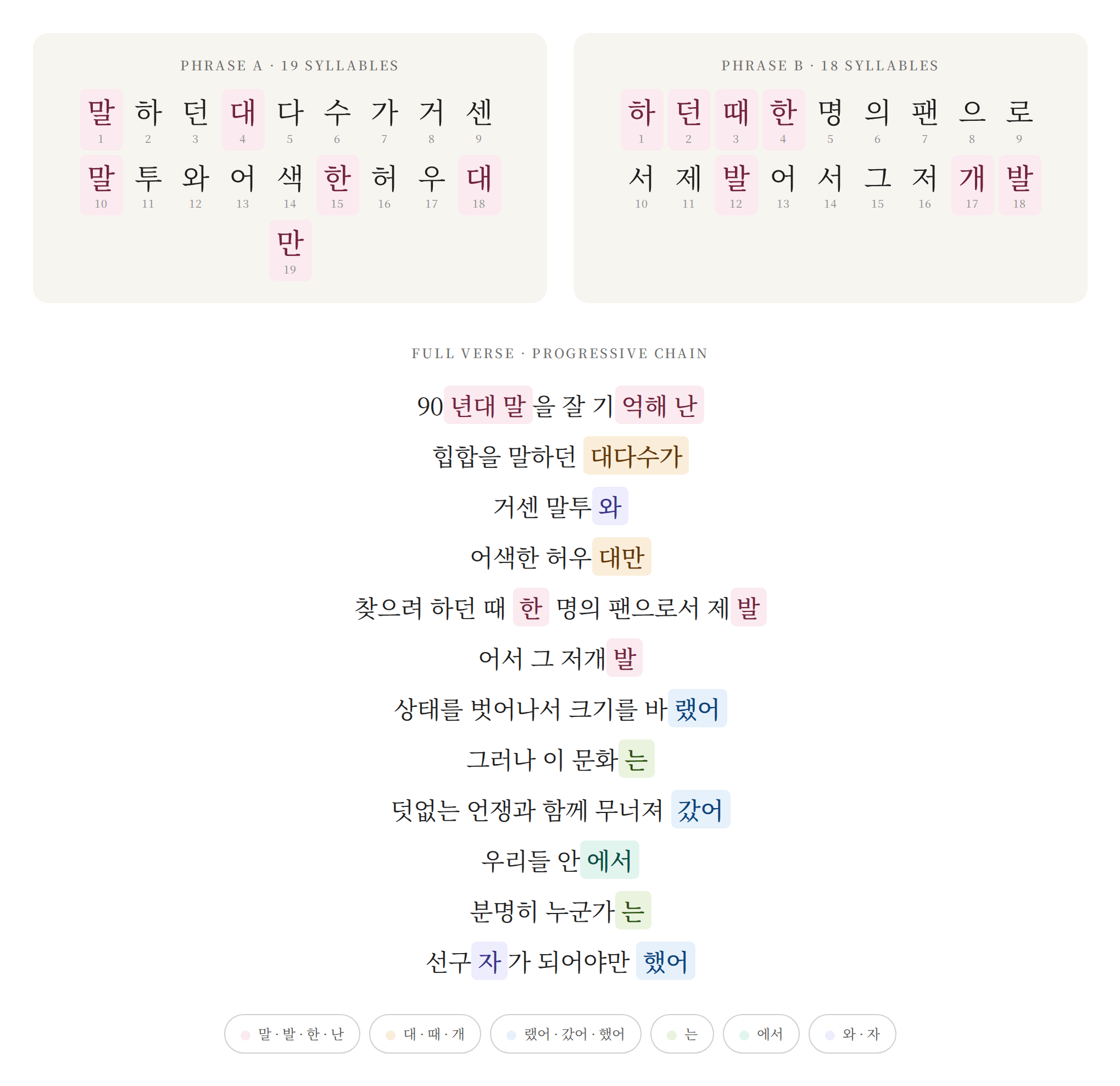
Verbal Jint’s 2001 EP Modern Rhymes broke that consensus. In Korean the verb comes last, every clause ending on a conjugated verb suffix, the rhyme position locked unless the rapper breaks the grammar open from inside.
Before him, Korean rappers were, as Verbal Jint told the Korea Times, “satisfied with talking fast and thinking that it was rapping.” Kim Young-dae, music critic and ethnomusicologist, in 한국 힙합: 열정의 발자취, observed that a G.O.D. verse from 1999 rhymed only at the end of each line, stiff and forced. Verbal Jint’s “Overclass” rhymed everywhere.
MC Solaar had worked multisyllabic rhyme into French and Zeebra into Japanese; Verbal Jint had now done it inside Korean’s verb-final grammar.
After Modern Rhymes, the era of end-rhyme was over.
P-Type’s 2004 album Heavy Bass wrote the rules down, mapping Korean phonetics against rhythmic structure into a template later rappers drew on.
Garion took a different route: recorded in Korean, a deliberate rejection of English mixing. Their 2010 follow-up swept the Korean Music Awards, winning Best Hip-Hop Album, Best Hip-Hop Song, and Album of the Year.
The Quiett co-founded Soul Company in June 2004, an indie hip-hop label on the underground side of the line; a teenager named Dok2 was already recording demos in Busan at 12. Deepflow founded Vismajor Company and became the underground’s institutional memory, and in 2013 he dissed Zico and Jay Park by name for prioritizing money over craft, then kept doing the work while everyone else cashed Show Me the Money checks.
Verbal Jint founded the Overclass crew around 2008 for technical elitism and commercial ambition, while Soul Company stayed poetic and introspective. YG’s producer Teddy Park launched The Black Label as a YG sub-label in 2015, putting company-backed hip-hop on the same shelf as the independent underground.
By 2011, 10 years of rhyme innovation had closed the debate: realness no longer meant sounding American once the rhymes worked in the language the rappers actually spoke.
T.K. Park, Ask A Korean, 2015—
True authenticity requires no justification, because it justifies itself.
Today, Korea’s foremost rappers express their genuine selves through intricate rhyme and flow.
Listen for yourself, and tell me it’s all a lie. I dare you.
2648 West Grand Boulevard to Gangnam
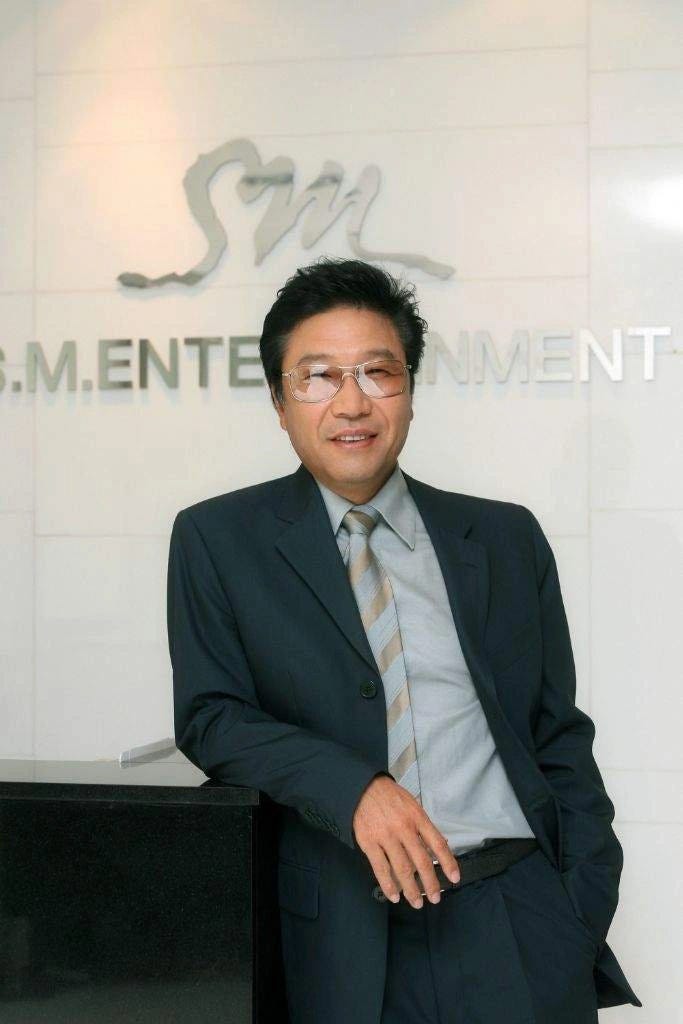
SM worked from what Lee Soo-man called “Culture Technology,” a codified manual—casting, training, content production, and marketing written down as procedure every SM employee was required to learn. He coined the term around 1997 and carried it to Stanford, Harvard, MIT, and Cornell.
The New Yorker reported the details: chord progressions by country, the precise color of eyeshadow a performer would wear in a particular market, the exact hand gestures and camera angles. Every video opened on a 360-degree group shot before cutting to individual closeups. The Wall Street Journal reported in 2012 that developing a single top-tier idol ran into the millions.
The Black Roots Nobody Stamped a Return Address On
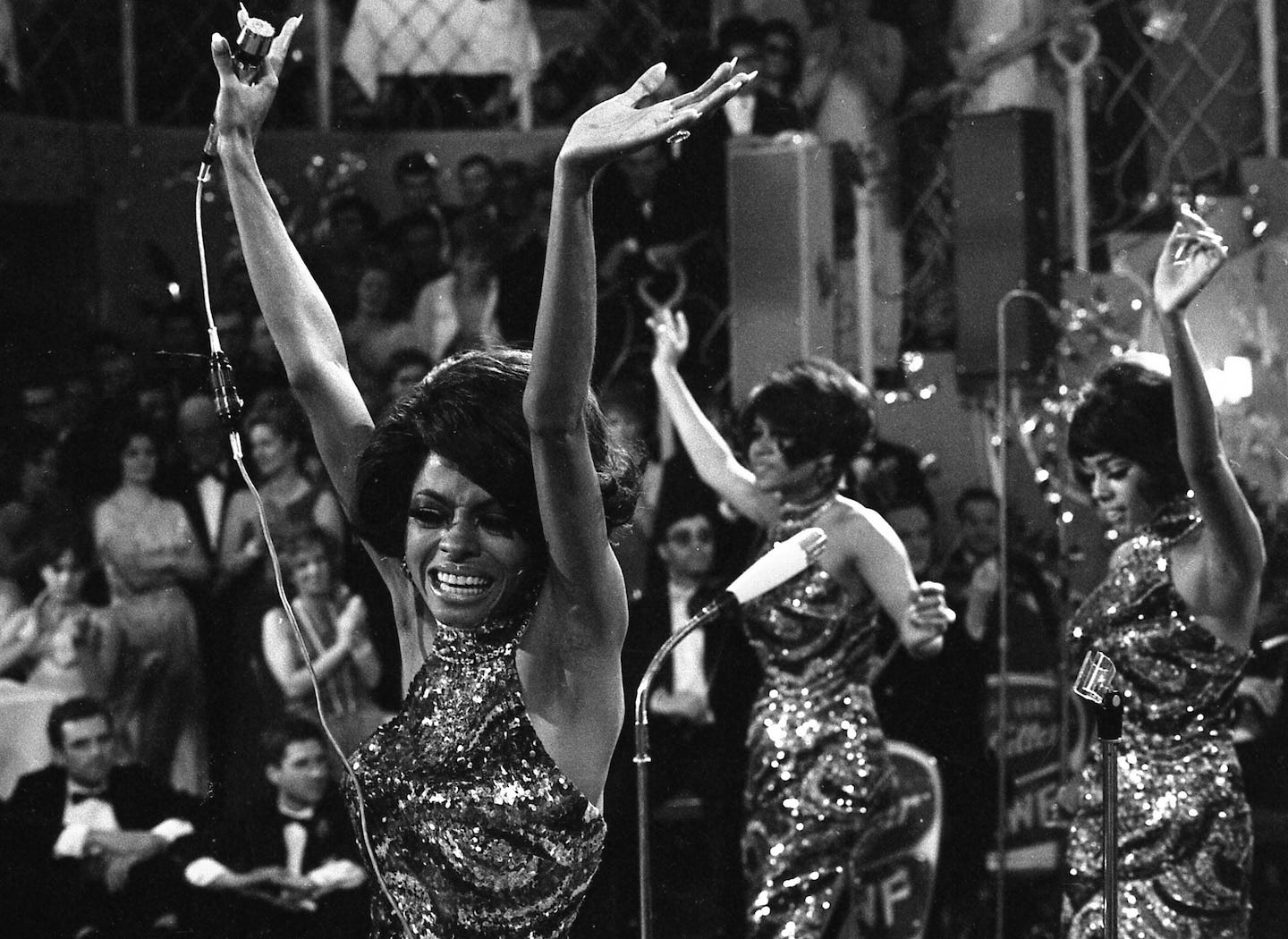
Berry Gordy’s Motown system had a logic. Cholly Atkins, a tap dancer who’d survived a segregated entertainment industry, drilled the Temptations and the Supremes until their stage movements were synchronized to the syllable. Maxine Powell, alumna of the Madam C.J. Walker School of Beauty Culture, ran the in-house finishing school: posture and grooming, then etiquette, how to exit a limousine with knees together, how to answer a hostile interviewer without breaking composure. Gordy controlled image, wardrobe, hairstyles, diets, offstage conduct.
The Supremes came out of the Brewster-Douglass projects. By 1959, Gordy had hung a sign reading “Hitsville U.S.A.” on the house at 2648 West Grand Boulevard and built what was then the most successful Black-owned business in the country. Crystal Anderson documented the lineage in Soul in Seoul (2020), tracing K-pop’s trainee system directly to Gordy’s Artist Development model.
John Seabrook, in his 2012 New Yorker profile, wrote that Lee Soo-man had built a system that made “the star factory that Berry Gordy created at Motown look like a mom-and-pop operation.”
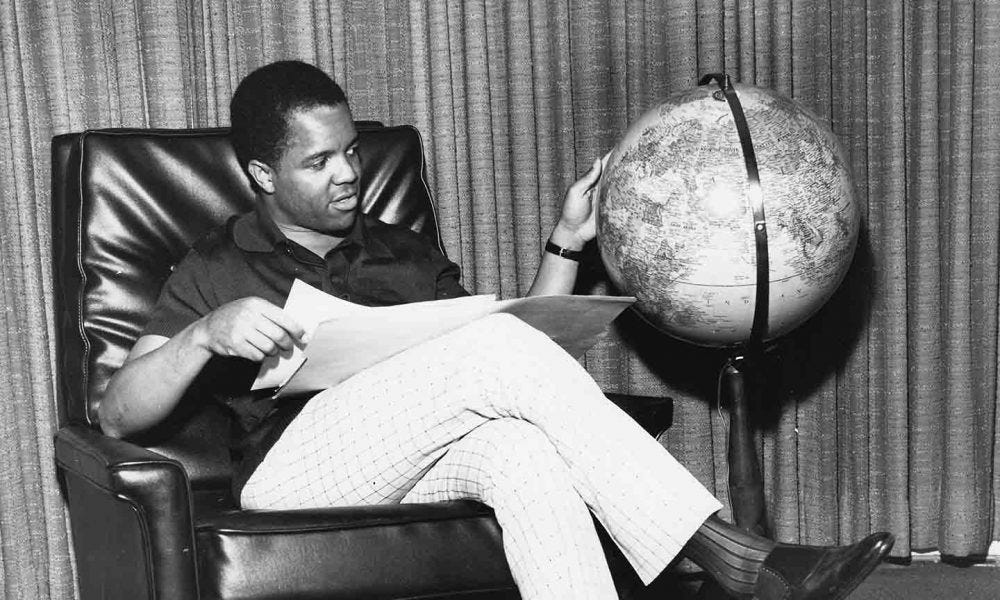
Lee Soo-man rebuilt Gordy’s operation as written procedure, function by function. He cited Michael Jackson and MTV as the revelation. The exposure was direct: Lee studied at California State University, Northridge from 1981 through 1985, putting him in Southern California for MTV’s launch in August 1981 and the channel’s early ascendance. He went over as a folk singer trained at Seoul National in the 1970’s, watched the cable music economy invent itself in real time, and brought the blueprint home (per Lie, p. 119).
Jackson, Motown’s most famous product, was the kid Gordy signed at 10. Gordy’s quality-control voting system, where executives voted on which recordings were hits before release, became SM’s A&R process, and Powell’s charm school the trainee classroom. Cholly Atkins drilling the Temptations became SM choreographers drilling H.O.T. at 4AM.
The dormitory itself came from Johnny Kitagawa in Japan, whose trainee system Lee Soo-man had transplanted into Korea.
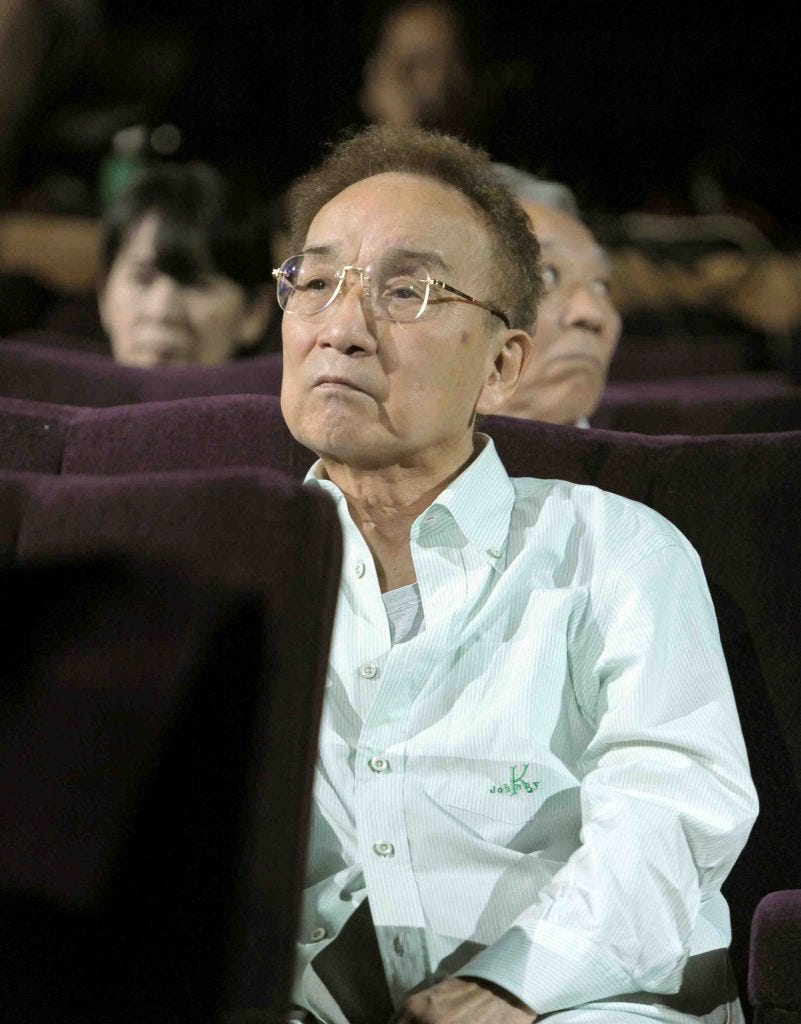
Kitagawa had been manufacturing idol groups since the early 1960’s, three decades before Culture Technology had a name. Total immersion: recruit teenage boys, house them in dormitories, drill dance and singing until stage presence was automatic, debut them into a market he’d already shaped through decades of television relationships. Diet, schedule, social contact, and creative output monitored around the clock. The Johnnys system produced SMAP, Arashi, and a generation of male idols who dominated Japanese entertainment for decades.
Before China and before the West, Japan was the money. BoA had debuted in Korea in August 2000 with ID; Peace B at 13; her Japanese debut on Avex in May 2001 made her a domestic Japanese star before most Korean audiences caught up, and her Japanese sales financed SM’s next generation.
TVXQ’s Tone Tour in 2012 drew 550,000 fans. When AKB48’s Yasushi Akimoto popularized the handshake-event model in the mid-2000’s, with fans buying multiple copies of a single to win face-to-face time with a member, K-pop agencies built their fansign-lottery system on it.
Lee Soo-man and Bang Si-hyuk have both said where it came from.
Lee Soo-man on K-pop’s Black roots—
South Korea has best consumed black music in Asia.
Just as J-pop was built on rock, we made K-pop based on black music.
Bang Si-hyuk (Hitman Bang) said the same thing in 2017 [translated, verbatim]:
음악적으로는 블랙뮤직을 베이스로 한다.
Musically, [BTS’s music] is based on Black music. […]많은 장르를 해도 하우스나 어번 계열을 해도 ‘피비알앤비(PBR&B, 미국 힙스터에게 인기있는 알앤비 장르)’를 쓰면서도 블랙 뮤직임은 변함이 없다.
Even when [we] work in many genres—whether house, urban styles, or PBR&B—the fact that [it] is Black music does not change.여기에 BTS(방탄소년단)만의 가치, 힙합과 흑인음악을 플러스하는 것이다.
To this, [we] add BTS's own values: hip-hop and Black music. […]
Anderson collected both in Soul in Seoul (p. 26). Euny Hong, The Birth of Korean Cool (p. 120), describes Korean pop cycling through a generation of “derivative music that was very slick, but not that different from the most unimaginative incarnations of American rhythm and blues.”
Motown developed its artists inside one house; Lee Soo-man built a multi-agency roster recording in Korean, Japanese, and Mandarin. Yoo Young-jin layered choir-thick vocal harmonies over aggressive rock guitars and Black American R&B and called the result SM Music Performance—the wall of stacked voices and orchestral-rock attack you hear on H.O.T.’s “Warrior’s Descendant” and TVXQ’s “Mirotic.”
President Park Chung-hee’s crackdowns on popular music in the 1960’s and 70’s had killed organic band formation in the cradle. The 1975 cannabis purge—대마초 파동—arrested popular musicians between December 1975 and February 1976—Shin Joong-hyun, Lee Jang-hee, Yoon Hyung-joo, Kim Choo-ja, members of He6 and The Devils—the Korea Entertainment Association expelled 54 of them on a Ministry of Culture directive that January, and the Performing Arts Ethics Committee banned 225 songs that year alone, with Shin Joong-hyun himself losing 17 of his own to the list.
Shin had refused a Blue House request to compose a song praising Park; he released 아름다운 강산 (Beautiful Rivers and Mountains) in 1972 instead, and the arrest came three years later. Korean LP sales collapsed from a 1973 peak of 11.2 million units to 3.1 million by 1976; 47 of 63 record labels closed.
Hong, The Birth of Korean Cool (p. 102)—
Kids didn’t have the free time to jam with friends or form bands. They were studying all the time. All the time.
John Lie, the UC Berkeley sociologist who wrote K-Pop: Popular Music, Cultural Amnesia, and Economic Innovation (p. 91)—
South Korean nationalist discourse is empty because in the past century Korean tradition, any semblance of organic continuity, has been annihilated.
What the purge left standing was trot, ppongjjak on every cab radio.
Packed During Lunch, Gone by Dinner
SM receives an estimated 150,000 audition tapes a year, and 10 become trainees. Powell’s finishing school lasted months. Korean trainee programs run for years.
Gordy sourced songs from a writing team he controlled. K-pop agencies outsourced to Scandinavian topliners alongside Atlanta trap producers alongside homegrown arrangers like Yoo Young-jin, whose SMP records owe as much to conservatory training as to any American template.
Yoo had no formal Black-music training when he started; he had heard Otis Redding’s “These Arms of Mine” on Korean radio and gone looking for voices that bend. Rejected by other agencies, he came in to SM as a last attempt and played Lee Soo-man a demo. Lee asked 더 있냐 (you got more).
Yoo went home, wrote 10 songs a day for three days, walked back in with 30, and built SM’s A&R room on the strength of the response. He landed at #39 on Billboard’s 50 Greatest Producers of the 21st Century 20 years later, one of two K-pop producers on the list alongside YG’s Teddy. Teddy Riley, producing inside SM, saw it firsthand. Korean executives would tell him—not knowing he was the man who made “No Diggity”—to make songs that sounded like “No Diggity.”
Teddy Riley, The Boombox, 2017—
They didn’t have no shame in their game. ‘We want the American culture.’
Lee Moon-won, Korean pop culture critic, quoted in Hong (p. 81)—
Very few countries have ever attempted to sell their pop culture to the United States. Even Japan didn’t try.
Hong (p. 108)—
The star-making process is so unpleasant that there are not many countries whose aspiring stars would put up with it. Korean youth, meanwhile, are used to intense sadomasochistic academic pressure, extreme discipline, constant criticism, and zero sleep.
SM, YG, JYP, and HYBE plan around five-year unit lifespans.
Lie (p. 132)—
The heart of the popular-music industry is planned obsolescence, and the same principle is central to K-pop’s star-maker machinery.
Lee Soo-man lost control of SM itself in a 2023 governance battle when Kakao acquired the company over his objections.
Holland-Dozier-Holland left Motown in 1968 over royalty disputes after writing 10 Supremes No. 1 hits. In Lee’s SM, three members of TVXQ filed a lawsuit in 2009. 13-year contracts. Album splits starting at zero and topping at 5% for a group selling out Tokyo Dome, termination penalties so steep they functioned as permanent bindings, all under an agency operating as management, booking agent, publisher, and label simultaneously. Seoul Central District Court granted an injunction, and the Korea Fair Trade Commission’s standard contract—announced that July, weeks before the suit—capped exclusive contracts at seven years. The Korean press called these deals slave contracts.
H.O.T. launched the idol formula, TVXQ carried it into Japan, and NCT’s expandable multi-unit roster ran the system at industrial scale. YG, founded by Yang Hyun-suk, closed the Seo Taiji lineage. JYP, founded by Park Jin-young in 1997, inverted Lee Soo-man’s system: character before talent, trainability over raw skill, the philosophy that produced Rain, the Wonder Girls, 2PM, TWICE, and Stray Kids.
Mnet’s Produce 101, launched in 2016 under CJ ENM, the chaebol’s media arm that built Show Me the Money, sold viewers a premise the idol system had never offered: you pick the group. In November 2019, police arrested producer Ahn Joon-young and chief producer Kim Yong-bum for rigging vote tallies across all four seasons. Ahn got two years. Kim got one year and eight months. X1 disbanded.
In 2010, Girls’ Generation’s Oh! slipped random photocards into packaging, a trick Japanese idol marketing had used for years. Fans began buying multiple copies to collect the cards. By 2018, one Wanna One fan purchased 554 copies of a single album trying to win a fansign lottery entry.
They didn’t get in.
The photocard economy inflated physical album shipments to 115.7 million units distributed in South Korea in 2023, a country of 51 million people. That number dropped to 93.3 million in 2024, the first decline since 2014.
The machine selling those albums was built in the winter the country went broke. On December 3, 1997, South Korea accepted a $58.4 billion IMF rescue package, among the largest sovereign bailouts to that point. The Won lost half its value. Unemployment tripled. The humiliation ran so deep that 3.51 million citizens donated personal gold. Wedding rings, military insignias, Cardinal Kim Sou-hwan’s appointment cross: 227 tons worth $2.13 billion toward the sovereign debt. They paid the loan back three years early.
Euny Hong on what followed (p. 81)—
Korea’s cultural ambitions are not just chutzpah. Nor did they come out of nowhere. They were born of necessity. And by necessity, I mean shame.
If it weren’t for the crisis, there might never have been a Korean Wave.
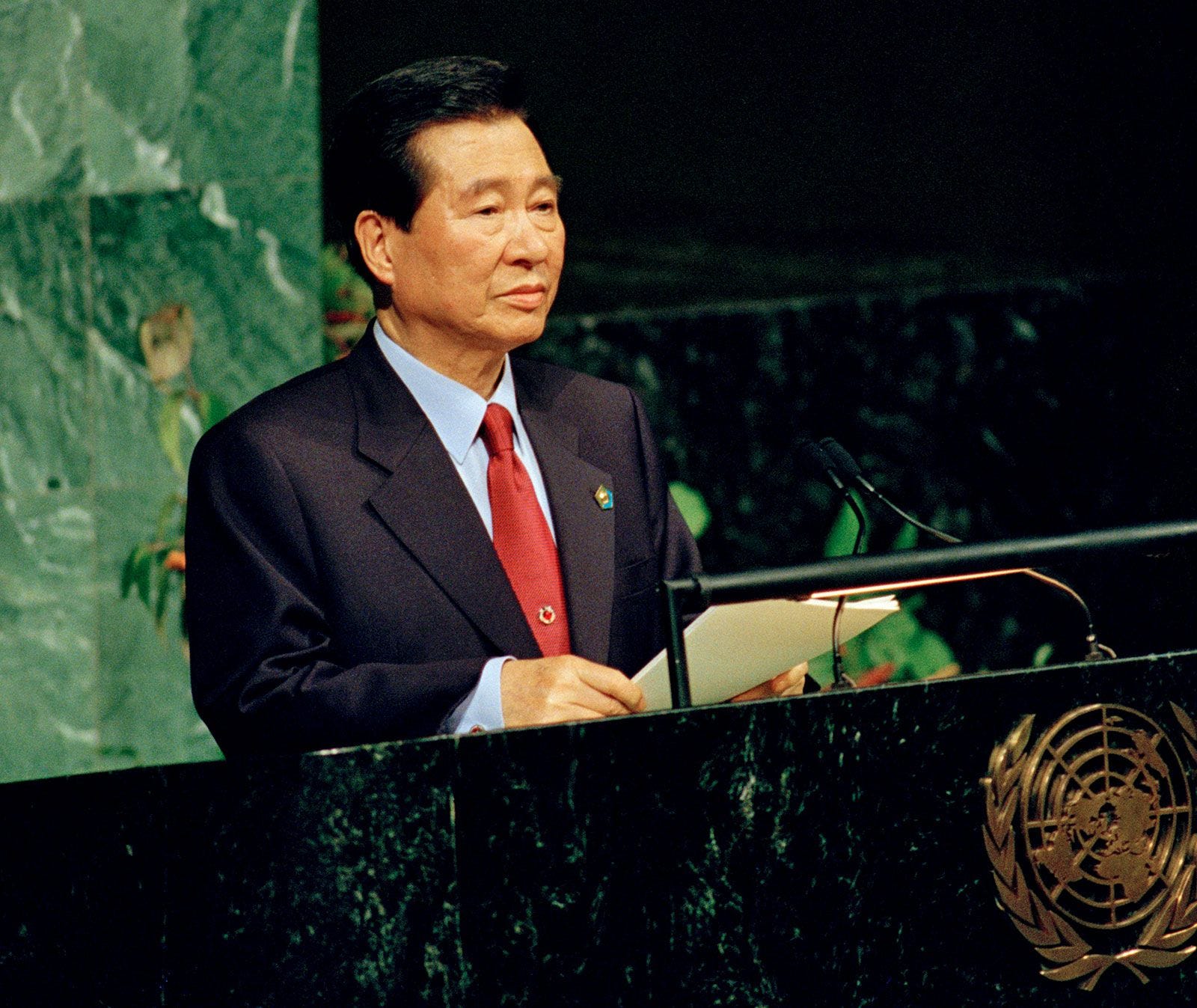
Into that rubble walked Kim Dae-jung, inaugurated February 1998, a man who’d survived imprisonment, a death sentence, and exile under military dictators. A 1994 report circulating in the Kim Young-sam administration had already noted that the global box office of Jurassic Park matched the export revenue of 1.5 million Hyundai sedans. Kim Dae-jung turned that comparison into national strategy.
Hong (p. 81)—
Building a pop culture export industry from scratch during a financial crisis seems like bringing a Frisbee instead of food to a desert island. But there was method to the madness. The creation of pop culture doesn’t require a massive infrastructure; all that is required is time and talent.
The culture budget went from $14 million in 1998 to $84 million by 2001. Content agencies consolidated into KOCCA by 2009. A $1 billion for-profit investment fund, 20 to 30% government-backed, was earmarked for pop culture. By the early 2010’s, Korean venture capital followed. The domestic industry was terrified that J-Pop would annihilate the market the moment Kim Dae-jung began lifting the decades-old ban on Japanese cultural imports in 1998, a phased process whose restrictions wouldn’t fully clear until 2006. The funding was a defensive measure against Japanese dominance first and an export strategy second. The generation building the industry had come directly out of the military dictatorship.
The state wired the broadband that gave Korea the fastest internet penetration in the OECD by 2002; the fund financed export fairs, KOCCA’s market research and distribution support, and digital platforms that let artists reach audiences without a broadcast slot.
Total cultural content exports reached $14.08 billion in 2024. South Korea is the world’s fourth-largest music exporter, and the largest non-English-language music exporter on Earth.
Everything, Everywhere, All At Once
S.E.S. (Bada, Eugene, Shoo) debuted in November 1997, one year after H.O.T., Lee Soo-man’s answer to TLC and proof that Culture Technology ran both ways. The members themselves pushed for a three-member formation modeled on the American group. I’m Your Girl sold 650,000 copies, Love 760,475, 3.6 million physical copies in five years. Alongside Fin.K.L and Baby V.O.X, they led the late-90’s girl groups.
They were also among the first Korean artists to debut and sing in Japanese after the postwar cultural ban began lifting. Their fan club, “Friends,” built the organized fandom modern K-pop inherited. Elected president, coordinated cheering, archival documentation of every broadcast.
They disbanded in December 2002 when the members wanted to re-sign as a group and SM wanted individual contracts. Eugene explained it years later: “Back then there was no such thing as individual activities, and if members did individual activities, people would think they were betraying the rest of the members.” Five years after S.E.S. walked out, nine women debuted as Girls’ Generation.
On January 7, 2009, SM released “Gee” by Girls’ Generation. The nine-member group had debuted 17 months earlier with visual direction by Min Hee-jin. Min, the SM creative director who would later leave to run HYBE’s ADOR and launch NewJeans, dressed them in colored skinny jeans and white T-shirts and connected concepts, the stage, and things in general organically from that point forward, going on to build the visual identities for SHINee, f(x), EXO, and Red Velvet. “Gee” hit No. 1 on Music Bank for nine consecutive weeks, topped Mnet’s chart for eight straight, later named Song of the Decade by Melon.
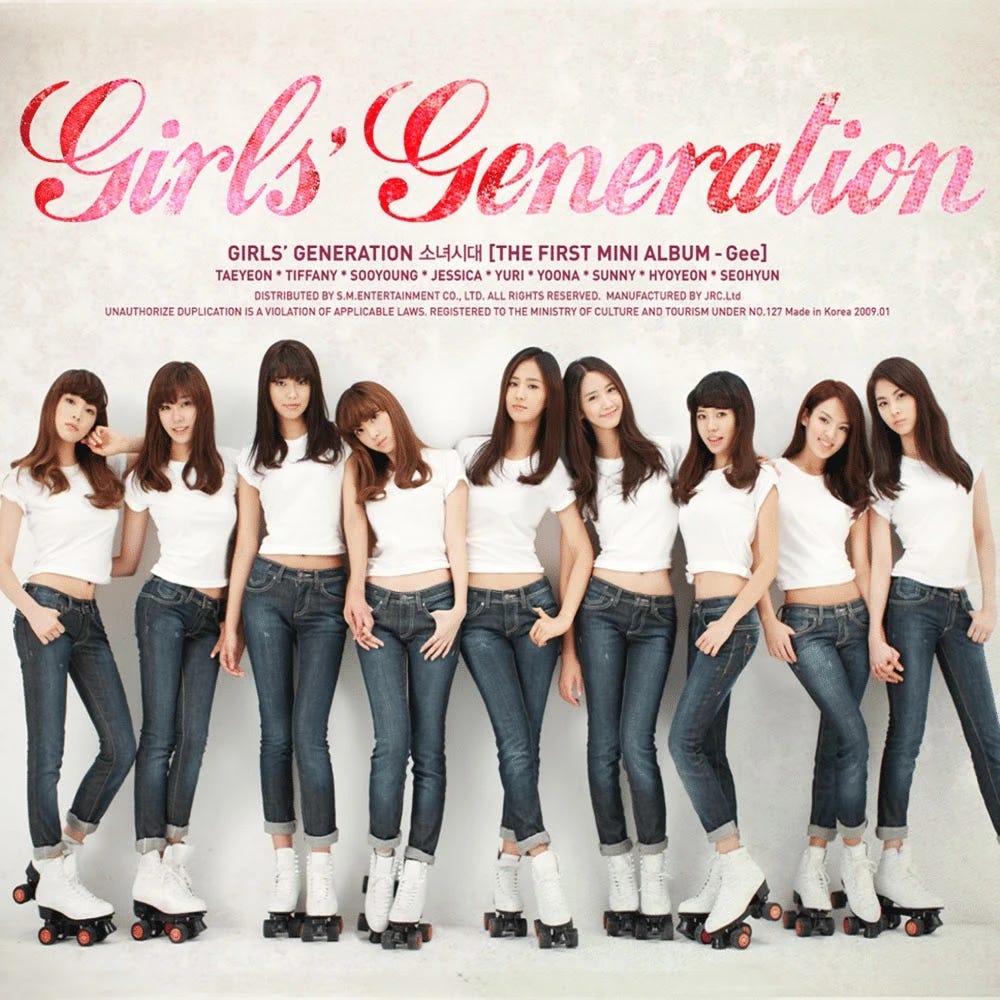
Rolling Stone would rank it No. 1 on their list of the 100 greatest Korean pop songs. Gallup Korea named it the most popular song of 2009. The music video became the first Girls’ Generation video to reach 100 million YouTube views. Billboard called it “arguably the most iconic K-pop song” of the decade. Nine women, a bubblegum hook built from two words—“Gee gee gee gee baby baby baby”—and choreography imitable enough that 300 people replicated it in a flash mob at SM Mall of Asia in Manila. The Financial Times named Girls’ Generation one of South Korea’s 10 most recognizable features in 2011, the only musical act on the list.
In 2009, SM, YG, and JYP partnered with YouTube as their primary international distribution channel, a bet the next half-decade of failed American campaigns would vindicate.
Park Jin-young’s Wonder Girls opened for the Jonas Brothers and got “Nobody” to No. 76 on the Billboard Hot 100 in October 2009, the first K-pop song to chart there, and it went nowhere even as they sold out arenas across Southeast Asia. Park had relocated to New York to oversee the campaign. JYP’s Korean market share collapsed while its CEO chased America.
BoA, SM’s billion-dollar asset who’d already dominated Japan’s Oricon charts, released an English album in 2009 that sank without a trace. SE7EN signed to a US deal, collaborated with Lil’ Kim, played BET, and vanished. 2NE1, YG’s proof that Yang Hyun-suk’s hip-hop DNA could build a girl group with its own register, debuted in 2009 as one of the hardest-edged female acts K-pop had produced to that point. CL signed with Scooter Braun in 2014. She recorded English tracks with Diplo and Skrillex. She landed a solo stage at the 2015 MAMA Awards, did the late-night rounds, released singles that charted nowhere. YG disbanded 2NE1 in November 2016 while she was still under contract, mid-campaign, waiting for an album that never released.
Girls’ Generation themselves pushed an English “The Boys” in December 2011, played Letterman and Madison Square Garden. First-week digital downloads: 21,000.
The acts were dominant in Japan, Southeast Asia, and China, and pre-streaming there was no way to build an American audience before the act landed; the television appearances aired after the campaign window had closed.
PSY Was Serious
“Gangnam Style” went live on July 15, 2012. Born Park Jae-sang in 1977 in Gangnam itself, PSY attended Berklee College of Music; he later admitted he appeared in class five times. By 2012 he had a 12-year domestic career built on comedy, profanity, concert crowds of 30,000, and a contested military stint after his exemption was revoked. The song was satire, mocking the posers who staged their lives in a neighborhood that holds about 1% of the country’s population but 10% of its total land value.
T-Pain, then others, tweeted the video two weeks after release:


The song peaked at No. 2 on the Billboard Hot 100, the highest a Korean-language track had ever charted, stayed 31 weeks, and on December 21, 2012 became the first YouTube video to reach 1 billion views. UN Secretary-General Ban Ki-moon performed the horse dance with PSY at UN headquarters: “Until 2 days ago someone told me I am the most famous Korean in the world. Now I have to relinquish.” YG’s stock surged 60%. PSY later admitted the fame had taken a toll on him, and that he felt “a little empty inside.”
Before BTS debuted in America, the industry’s largest overseas market vanished. In July 2016, South Korea agreed to host the American THAAD missile defense system. China retaliated with 限韩令—an informal ban that cancelled K-pop concerts across the mainland, pulled Korean dramas off streaming, and recalled Chinese trainees from Korean agencies.
Top-tier groups pivoted. Mid-tier acts that had built their entire model around Chinese touring and endorsements, acts without Western fandom to cushion the loss, quietly disbanded. The same agencies that had spent 15 years building a China strategy pivoted to Southeast Asia, Japan, and the English-speaking West in months. BTS won Top Social Artist at the 2017 Billboard Music Awards 10 months into the ban.
Beijing partially relaxed the ban starting in 2023, with wider openings reported through 2025, uneven and never official. Hip-hop and KRNB had reached Western audiences through SoundCloud and Spotify before the ban existed, on channels Beijing couldn’t cancel.
The Breakout That Skipped the Gatekeepers
On New Year’s Day 2015, a 21-year-old rapper from Seoul named Keith Ape uploaded “It G Ma” (잊지마, “Don’t Forget”). The beat owed its DNA to Atlanta rapper OG Maco’s “U Guessed It.” Okasian, JayAllDay, and Japanese rapper Kohh featured. The video crossed 91 million YouTube views.
A$AP Ferg, Waka Flocka Flame, and Dumbfoundead jumped on the remix within months. Keith Ape rapped in Korean over trap production, with no competition show or label behind him, and the American underground wanted the energy. OG Maco initially accused the track of cultural appropriation, and the dispute ended with a royalty arrangement. Between 2014 and 2022, K-hip-hop Spotify streams grew 9,500%. America overtook South Korea as the No. 1 listener market.
Domestic streaming’s worst racket was sajaegi, chart manipulation. In 2018, an unknown artist named Nilo saw his song “Pass By” surge to No. 1 on Melon, beating Big Bang and TWICE. Nobody had heard of him, and the chart dominated during dawn hours then vanished during daytime, a pattern industry observers read as the signature fingerprint of bot-driven streaming. His label denied manipulation.
An SBS documentary followed.
Tiger JK, on camera—
I once got an offer for ₩100,000,000 to go higher in the charts.
Leaked marketing documents revealed the going rate: Melon Top 50 placement cost ₩250 million per day (~$190,000 at 2018 rates). Block B member Park Kyung publicly named six suspected artists on Twitter in 2019 and the court fined him ₩5 million for defamation despite widespread public support. Melon responded in July 2020 with the 24Hits system, counting unique listeners over a rolling 24-hour window.
The reform targeted machine-driven sajaegi from unknown ballad artists, but counting unique listeners rather than raw plays nullified any repeat-streaming operation regardless of who ran it—and the 2AM streaming farms idol fandoms had run for years to inflate chart positions did the same thing in bulk. Fandoms that had built their identity around organized streaming campaigns lost their leverage overnight.
Changmo proved the alternative. “Maestro” and “Beautiful,” B-sides that climbed the Melon annual chart on algorithmic autoplay and playlist placement with no television promotion or label push, a 19-rated song in the top 100 that barred minors from streaming it.
Nine Figures Anywhere You Look
A broadcast television appearance pays ₩50,000. BLACKPINK’s Born Pink Tour grossed $330 million over 66 shows and put 1.8 million people in seats, the highest-grossing tour by any female group, vocal group, or Asian act in history. Each member carries a luxury house ambassadorship as a second career. Jennie for Chanel, Jisoo for Dior, Rosé for Saint Laurent, Lisa for Louis Vuitton. SEVENTEEN grossed $98.4 million across 24 shows, the highest-grossing K-pop act on Billboard’s 2024 list.
Epik High, among Korean hip-hop’s most internationally successful acts, plays 500 to 3,000 capacity venues; the real money is daedongje, the university festival circuit, every May and September. Zico commands ₩30 to 40 million per 30-minute set.
Tablo, Epik High’s frontman, completed coterminal degrees at Stanford (a BA and MA in English, earned simultaneously) in 3.5 years and took Tobias Wolff’s fiction-writing program along the way. His 2008 short-story collection Pieces of You moved 50,000 copies its first week. His father’s cancer relapsed under the stress of the TaJinYo scandal, an online mob accusing him of faking the degree despite Stanford’s own confirmation. Stanford registrar Thomas Black, fielding 133 emails about a single alumnus, wrote—
Daniel Seon Woong Lee entered Stanford University in the Autumn Quarter of 1998-99 and graduated with a BA in English and an MA in English in 2002. Any suggestions, speculations or innuendos to the contrary are patently false.
He became the first major South Korean act to play Coachella in 2016.
RM, Rolling Stone, 2023—
To me, Tablo is like a huge mountain that I always look up to.
Tablo, on SBS’s Cultwo Show, said RM and Suga told him they grew their dreams listening to “Fly,” and that whenever he sees BTS accepting awards around the world he thinks, “It’s a good thing we made ‘Fly.’”
G-Dragon’s 2025 Ubermensch World Tour ran between Epik High’s scale and BLACKPINK’s. 39 shows. 825,000 fans. $71.8 million gross through 22 reported shows, projected ~$126 million full run.
Between 2008 and 2011, underground purists targeted him with diss tracks during BIGBANG’s ascent, testing whether an idol could claim hip-hop credibility and survive. In April 2026, BIGBANG returned to Coachella as a trio, marking their 20th anniversary on an American festival stage.
HYBE reported $1.86 billion in fiscal 2025 revenue. Operating profit collapsed 72.9% to $35.1 million. 1.9% margin. The company blamed one-off costs: investments in debuting new artists, and a restructuring of its American operation around label-owned IP.
Its legal war with Min Hee-jin, the ADOR chief who had launched NewJeans, consumed the entertainment press for over a year. HYBE audited her in April 2024 and demanded her resignation; Min said the fight began when she complained that ILLIT, a sister label’s debut, had copied NewJeans; by August the board had replaced her as ADOR’s CEO. That November the five members declared their contracts terminated. The Seoul Central District Court held them to the deal, ADOR through 2029, and in November 2025 they stopped fighting it and began a phased return.
Mandatory military service sits underneath every male K-pop career, 18 to 21 months for able-bodied Korean men. The 2022 National Assembly debate over whether BTS merited the exemption granted classical musicians and Olympic athletes laid bare the hierarchy: Korea’s most visible cultural export sat outside a benefit extended to a gold-medal archer. Agencies plan around it by accelerating contract cycles, pushing early solo debuts, front-loading global tours before enlistment forecloses the window. HYBE hedged the BTS enlistment cliff by acquisition: Ithaca Holdings, Pledis, and Source Music.
A virtual boy group called PLAVE sold 1.09 million copies in its first week. 10,000 people hold lightsticks at a PLAVE concert and scream at a screen, and the five animated characters, driven in real time by performers whose legal names the label has not released, wave back. The fandom runs the same playbook as any fourth-gen group’s: streaming campaigns, birthday projects, photocards traded in Discord servers by member bias.
Daniel Black, quoted in Suk-Young Kim’s K-pop Live (p. 156), 2018—
Idols exist primarily as a carefully constructed mode of performance. While, of necessity, this mode of performance is most commonly generated by a living body, dependence upon a physically present performer is not inevitable.
Behind the avatars are real performers in motion-capture suits, their public identities held by the company that owns the face, so the performer can’t generate a scandal or negotiate a better deal.
Idols are classified as “providers of business services” for tax and labor purposes. A former member of Teen Top named C.A.P was leading the Idol Labor Union Preparatory Committee, South Korea’s first attempt to organize K-pop performers as workers.
When NewJeans’ Hanni testified before the National Assembly in October 2024 about workplace harassment inside HYBE, the Ministry of Employment dismissed her case on the reasoning the tax code already applied: her contract paid commission rather than wages, the Labor Standards Act required a subordinate employment relationship to apply, and its workplace-harassment protections did not reach her.
Kim Jonghyun of SHINee left a note in December 2017: “I am broken from inside.” Sulli, October 2019, cyberbullied so relentlessly that Daum shut down celebrity article comments and the National Assembly introduced the “Sulli Act.” Goo Hara of KARA, six weeks later.
Two of the three were women. Sulli was cyberbullied for posting without makeup and for challenging beauty standards SM had built her image on. The harassment ran on the same platforms where fan networks coordinate streaming parties and fund subway birthday ads.
The Era of IVE: Outside the Three
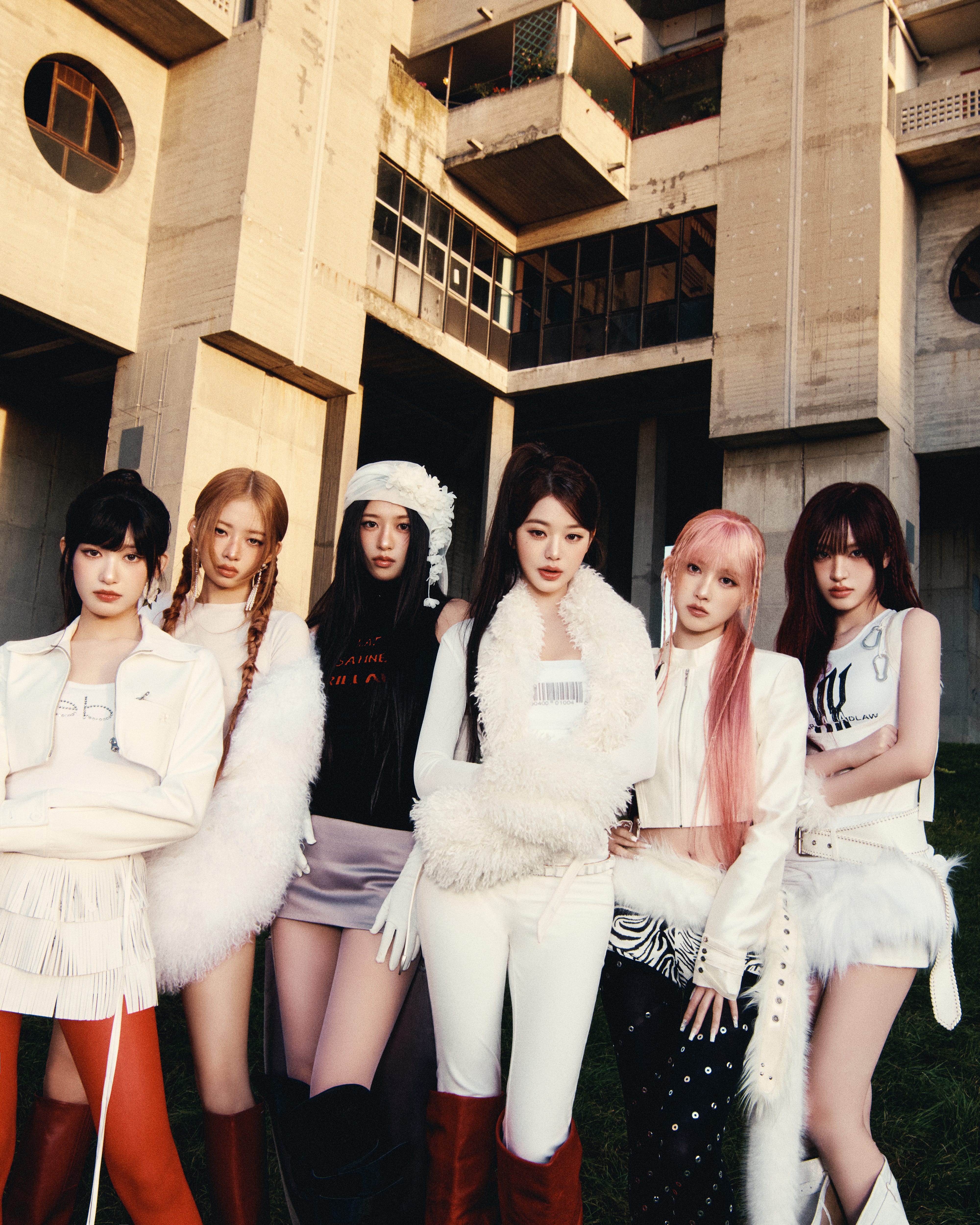
Starship Entertainment sat outside the Big Three, without SM’s trainee pipeline, YG’s producer mythology, or JYP’s “character first” audition philosophy. It had two members, Jang Wonyoung and An Yujin, back from IZ*ONE, a project group dissolved after a vote-rigging scandal. On December 1, 2021, they debuted with “ELEVEN.” Seven days later, IVE won on Show Champion.
The concept came down to two words, “I have.” The plays were other men’s inventions—the graded audition, the dormitory, the photocard lottery—and they worked at full strength for whoever ran them. Starship ran them and won: six Perfect All-Kills (a clean sweep of every Korean chart at once), 12 million albums, the only girl group in the 2025 IFPI Global Album Sales Top 10, with three consecutive years on the chart.
By the time the conglomerate pried SM loose from Lee Soo-man, it already owned the company running his formula.
More on this in an upcoming piece.
The Underground Got Paid and Lost the Mic
Show Me the Money premiered June 22, 2012, at 11PM on a Friday on Mnet, which packaged underground rappers into a competition format it owned and monetized. Chief producer Han Dong-chul said his goal was to let people know there was more in Korea than idol dance music. A month after premiere, rappers who’d built careers on total creative ownership in Master Plan’s basement were performing for producers and cameras, earning real money for the first time.
On August 21, 2013, a week after Kendrick Lamar’s “Control” verse lit the American underground, Korean rapper Swings released “King Swings” over the same beat, calling names—
한국 거의 다 쓰레기 이미지 창조에 바빠 지네가 힙합이래.
Nearly all of Korean [hip-hop] is garbage, busy creating images and calling it hip-hop.
Sociologists Seong Yeon-ju and Kim Hong-jung analyzed the aftermath. Kendrick generated 24 unified response tracks around a single message: craft demands suffering and deserves reward. Swings generated 37 tracks that fractured into personal feuds within 48 hours. Contract disputes cited by name, attacks on weight and military records, girlfriends dragged into bars. E-Sens deployed specifics: 10억, a billion won promised years before by his label. Gaeko fired back the next day. Everyone piled in.
The underground’s authenticity ran on 솔직함, raw frankness, saying what couldn’t survive the overground. E-Sens called Choiza a 랩 퇴물, a rap has-been. Months later on Saturday Night Live Korea, Gaeko rushed out his response track before flying to a US show, then cried alone in America once it was out.
Seong and Kim’s final diagnosis: 상징화되는데 실패한 개인적 모욕의 교환, an exchange of personal insults that failed to become symbolized.
Bobby, a YG trainee who hadn’t debuted, won Season 3 while championing idol rappers’ right to the mic, defending his own legitimacy against an underground that dismissed anyone signed to an agency.
By Season 5, the rapper BewhY was quoting Corinthians over trap beats; Season 6 put Zico in the judge’s chair—an idol-group rapper the underground had spent years trying to bury.
SMTM 12 drew 36,000 applicants across 32 regions in multiple languages by January 2026. Season 12 rated 0.6%, the lowest yet. Rhythmer, on the same season, observed the show transformed Hongdae club culture into a profitable industry while trapping hip-hop’s autonomy inside broadcast’s standardized narrative.
Tiger JK, who produced Season 6, called the show “scripted” and “staged,” watched them mute his Sewol Ferry references from the broadcast, and refused to return.
Filed Under Somebody Else’s Name
Korean R&B (KRNB) grew up in the same house as hip-hop, sharing imported American cassettes and indie labels while the international press ignored both. In 2016, Zion.T and DEAN performed at SXSW’s “K-Pop Night Out” alongside Mamamoo, every Korean act filed under one 3-letter umbrella regardless of what they sound like.
T.K. Park at Ask A Korean, 2017—
No one disputes that IU, BTS, and FT Island are ‘K-pop artists,’ but musically, they share nothing in common.
IU sings mostly standard pop, BTS performs mostly hip hop numbers, and FT Island, light rock.
The commonality among IU, BTS, and FT Island isn’t, and can’t be, music.
Their only commonality is that they all perform popular music of Korea.
D’Angelo’s Voodoo (2000) buried vocals in the mix as texture. Frank Ocean’s Channel Orange (2012) carried literary ambition in R&B without sacrificing groove. Those two records set the template DEAN and Crush worked from. Vocals as ambient color. Arrangements hollowed out to leave space around the voice. Korean vowels (open syllables, elongated phrasing) sat inside the sustained, melismatic cadence American R&B had spent three decades perfecting.
Amoeba Culture, founded by Gaeko and Choiza of Dynamic Duo, held both rappers and the two artists who would blow R&B open, Zion.T and Crush. AOMG had GRAY. H1GHR MUSIC signed pH-1, a Korean-American from Long Island who studied biology at Boston College before deciding melodic rap paid better than dental assisting.
Kim Hae-sol, who would become Zion.T, was born to a taxi driver in Dongjak-gu in 1989 and couldn’t afford supplies for the illustration career he wanted, so he made music. The stage name fuses the biblical “Zion” with a “T” representing the Christian cross; friends, riffing on his vocal style, called him “Zion.T-Pain.” His debut came through Hiphopplaya’s label arm before he signed to Amoeba Culture, where his streaming numbers pushed the label’s domestic sales past JYP on the Gaon Chart in 2015.
His signature track 양화대교 (“Yanghwa BRDG”), September 2014, was a love letter to his father. As a child, when he called asking where his dad was, the answer was 양화대교, Yanghwa Bridge, meaning he was nearly home from his shift.
Zion.T, Hidden Singer 5—
아버지 직업 이야기하는 게 쉽지 않았다... 그래서 영어로 바꿔서 택시 드라이버라고 표현했다.
It wasn’t easy talking about what his father did for a living, so he switched to English (“taxi driver”).
The song exploded in 2015 after he performed it on Infinite Challenge, crossing 66 million streams. Acquaintances crossing the bridge would phone him late at night just to say 나, 양화대교야! He referenced the annoyance in his track “Complex.”
DEAN, born Kwon Hyuk in 1992 in Seodaemun-gu, took the opposite path. He found hip-hop through Epik High in middle school. He ran with Keith Ape in an amateur crew called Getto Boyz at 16. He ghost-wrote for EXO, VIXX, Lee Hi, and Block B under the alias Deanfluenza before anyone knew his face. Signed as a songwriter at 20, trained in New York, he built his international resume first. His solo debut went to American and British iTunes before Korean platforms. His 2016 EP 130 Mood: TRBL hit No. 3 on Billboard’s World Albums chart and made him the first Asian artist at Spotify House at SXSW, alongside Miguel and Chvrches.
His track “Instagram” dropped in December 2017. KBS and MBC banned it for referencing a commercial brand. Certified all-kill anyway. Every Korean chart simultaneously, zero traditional promotion, 171,979 first-week downloads, over 2.5 million domestic downloads to date. IU posted a cover on release day:
Korean media called him 음원 깡패, a digital monster.
The algorithm served the song to people already listening at 2AM with headphones in. DEAN said late-night Instagram scrolling made him feel “infinitely small and lacking.”
Club Eskimo, DEAN’s creative collective, ran on no outside money, the way BLEX and Master Plan had a generation before. Out of those sessions came OFFONOFF (Colde and 0channel) and their 2017 “boy.”, bedroom-produced R&B with Korean vocals at fidelity nobody expected.
When Colde split from OFFONOFF to found WAVY, he built the label explicitly around the playlist economy. His COLORS appearance made him the second Korean artist after DEAN at that global curatorship tier.
Heize, born Jang Da-hye in Daegu, came through Unpretty Rapstar 2 in 2015, eliminated in the semifinals, then pivoted from rap to the melodic ground between genres nobody had claimed.
Her 2017 single “You, Clouds, Rain” topped the domestic charts. Award shows couldn’t decide what she was. Best Hip Hop at MAMA one year. Best R&B/Soul at MelOn the next. She signed to PSY’s P Nation and became one of the few women who stayed visible in a scene male artists dominated on both sides.
Crush and Zion.T’s “Just” hit No. 1 in 2015, two R&B singers atop a market built for idol groups and rap battles. Crush’s “Beautiful” from the Goblin soundtrack later crossed 150 million streams, and by 2026 he was co-producing SMTM 12 alongside Zico.
GRAY joined AOMG as its first artist in 2013, making beats for Jay Park’s hip-hop and melodic production for the label’s R&B acts. In March 2024, he left with Code Kunst and Woo Won Jae to co-found duover. First hire: Hwang Aram, a former AOMG executive, carrying the institutional knowledge.
Primary’s 2012 album Primary and the Messengers broke into the Korean charts with a rotating cast of vocalists who functioned as session musicians for his brand. A Primary feature guaranteed a chart run before anyone knew who was singing on it; Groovy Room placed one beat with multiple vocalists across the playlists.
No Invitation? No Problem.
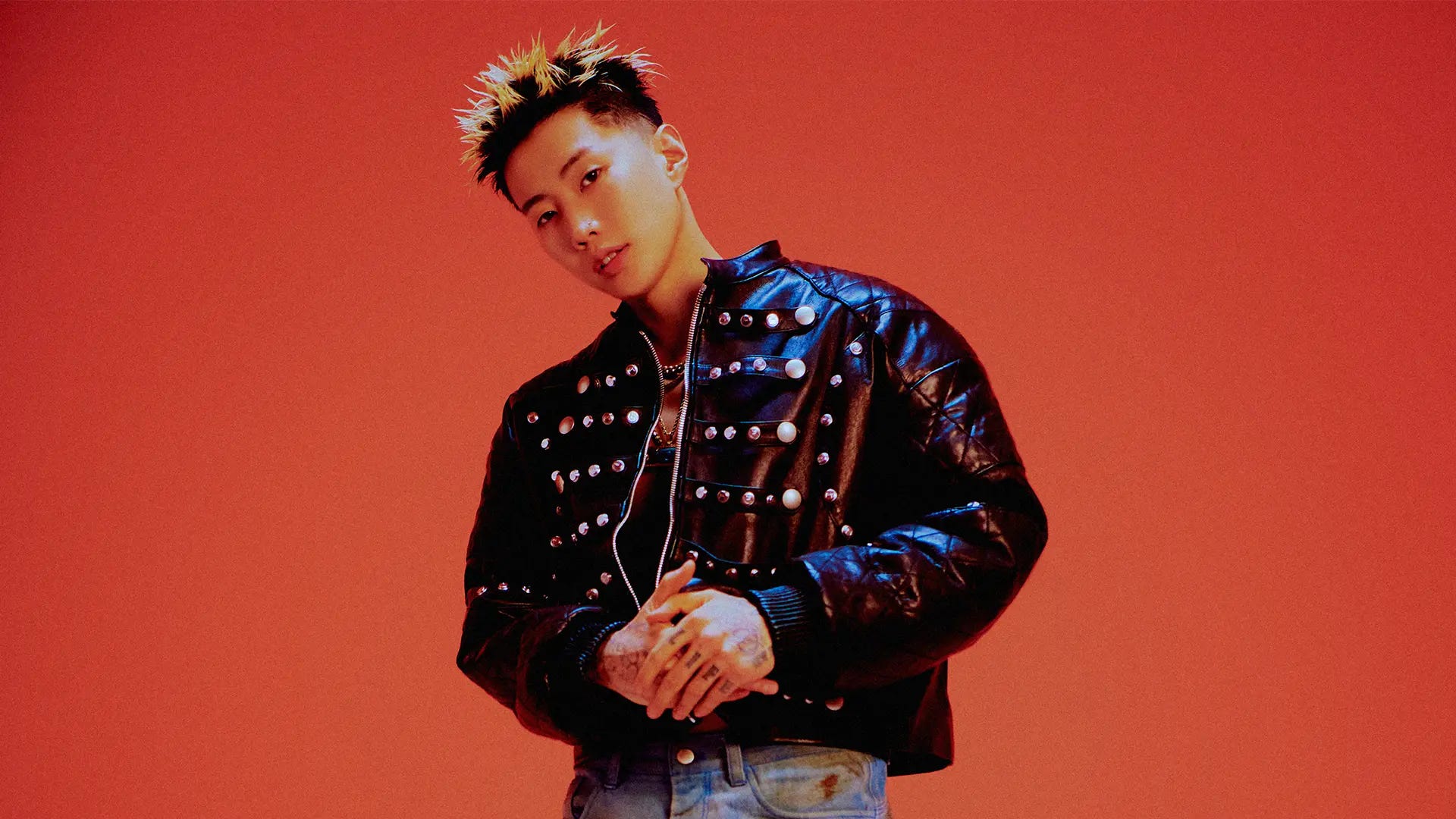
Jay Park was born in Edmonds, Washington, 1987. He joined a Seattle b-boy crew called Art of Movement at 16, auditioned for JYP at 17, and led 2PM by 2008. A year later, old Myspace posts surfaced: 2005 messages to a friend in which a homesick trainee wrote that he hated Koreans and wanted to come home. Korean media translated them without context into a national insult. He left 2PM September 8, 2009.
3,000 people signed a petition calling for his suicide. JYP terminated his contract February 25, 2010. On March 15, Park posted a cover of B.o.B’s “Nothin’ on You” to YouTube. 2 million views in 24 hours. B.o.B’s original topped the Cyworld chart off that momentum, generating $300,000 in sales across Korean digital platforms, all of it to B.o.B.
Park was unsigned, rebuilding from a webcam in his parents’ house. He founded AOMG in 2013. CJ E&M took a stake in January 2016. He launched H1GHR Music with Cha Cha Malone in 2017, signed with Roc Nation as the first Asian American artist on Jay-Z’s label.
He stepped down from both AOMG and H1GHR at the end of 2021 and founded More Vision in March 2022; Kakao bought 20% three months later. On January 13, 2026 he debuted LNGSHOT, a four-member boy group whose youngest member is still a teenager, and the group has already cracked Billboard’s Global charts with 35 million Spotify streams.
AOMG and H1GHR Music together housed Simon Dominic, Loco, GRAY, Woo Won Jae, pH-1, Sik-K, Groovy Room, a roster that at its peak defined the sound of Korean hip-hop and R&B.
Seong and Kim’s study of every indie hip-hop label after the crew era’s collapse: crews organized around a guru’s artistic identity, a label shared administrative functions and little else. When AOMG’s roster eroded a decade later, the split between guru-crew and label-LLC opened wider. Through 2024: Simon Dominic left after a decade, Loco walked out, GRAY, Code Kunst, and Woo Won Jae departed, and Lee Hi and DeVita were gone. What remained announced a joint girl group with H1GHR Music called NEWY, assembled from former I-LAND 2 contestants.
Illionaire had written the playbook for this unraveling. Founded January 1, 2011 by Dok2 and The Quiett, no formal contracts, artists kept their masters, it lasted nine years. Dok2’s debts eventually totaled 672 million won in outstanding taxes and insurance, settled by June 2025. His mother died that February. He released the tribute track “UMMA” in March. The Quiett co-founded Daytona with Yumdda in November 2020, Def Jam model, no “label color,” diverse artists, a record shop-cafe in Hapjeong-dong called Daytona Records.
While Jay Park rebuilt in Seoul, the organic American audience the Billboard campaigns had been missing was assembling itself on the LA side of the Pacific, with no K-pop pipeline in view. Ryan Higa and Kevin Wu held two of YouTube’s most-subscribed ranks by 2008, Wong Fu Productions hit 1 million subscribers by 2011, and Kollaboration, a nonprofit talent show founded in 2000 for Asian American performers, grew to 14 regional chapters; its alumni—Far East Movement, Dumbfoundead, Awkwafina, Steven Yeun, Ali Wong, Jo Koy—built American comedy, film, and hip-hop careers off a domestic Asian American audience already in the tens of millions.
On February 25, 2026, Park made the next move. More Vision announced a partnership with Transparent Arts, the company Far East Movement built after putting the first Asian-American No. 1 on the Billboard Hot 100 with “Like a G6” in 2010—a No. 1 no act out of Seoul would match for another decade. Kev Nish, Prohgress, J-Splif, and DJ Virman grew up in Downtown LA and Koreatown, a pan-Asian crew without a category for them.
Mainstream hip-hop labels heard them as too Asian, and the community centers that did book Asian performers wanted classical piano recitals. They pressed records themselves, booked nightclub and Asian-American convention shows (Anime Expo, Kollaboration, underground LA), and moved mixtapes through MySpace and the LA college circuit until a Cherrytree/Interscope deal finally arrived in February 2010.
Once the Hot 100 was banked, they spent the next decade turning a single hit into a management and production company. Transparent Arts became the vehicle. Roh, as COO, managed Dumbfoundead and Yultron, produced Head in the Clouds content with 88rising, consulted for brands trying to reach Asian American consumers.
In the Koreatown that raised Far East Movement, a kid named Jonathan Park, no relation to Jay, was making his name in Asian American underground rap as Dumbfoundead. He was born in Buenos Aires in 1986, smuggled across the Mexican border as a toddler, and raised in K-town from 3. He came up at Project Blowed, the Leimert Park open-mic Aceyalone and Abstract Rude founded in 1994. A Black-founded West Coast proving ground; he earned his place at the mic against the room.
His Grind Time battle videos racked millions of views. His 2016 track “Safe” confronted Hollywood whitewashing, his face superimposed on Depp, DiCaprio, and Travolta. He acted in Bodied, Eminem’s battle-rap satire, appeared in Starz’s Power as Dylan Shin, featured in Bad Rap alongside Awkwafina, Rekstizzy, and Lyricks.
88rising, the label Sean Miyashiro built from a SoundCloud page and a bet that Asian artists could thrive in American hip-hop without code-switching, signed a roster that wasn’t Korean. “Asian” as a marketing category flattened distinctions the artists themselves would never have erased. Indonesian trap, Japanese lo-fi R&B, and Korean hip-hop share a continent and almost nothing else.
Rich Brian, an Indonesian teenager who’d never left Jakarta when he released “Dat $tick” in 2016; the track went on to cross 200 million YouTube views. Joji, a Japanese-Australian who pivoted from one of YouTube’s largest comedy channels to melancholic R&B. NIKI, an Indonesian singer-songwriter whose vocals carried no accent and needed none. Their Head in the Clouds festival in Los Angeles, launched 2018, became an Asian-centric music festival in America that filled a field on its own roster.
Park sold out American arenas through AOMG and Roc Nation while Korean promoters staging K-pop tours booked his shows through separate channels. Far East Movement got there seven years ahead of BTS, and the K-pop success story rarely has room for them: the export story keeps only the breakthroughs manufactured in Seoul.
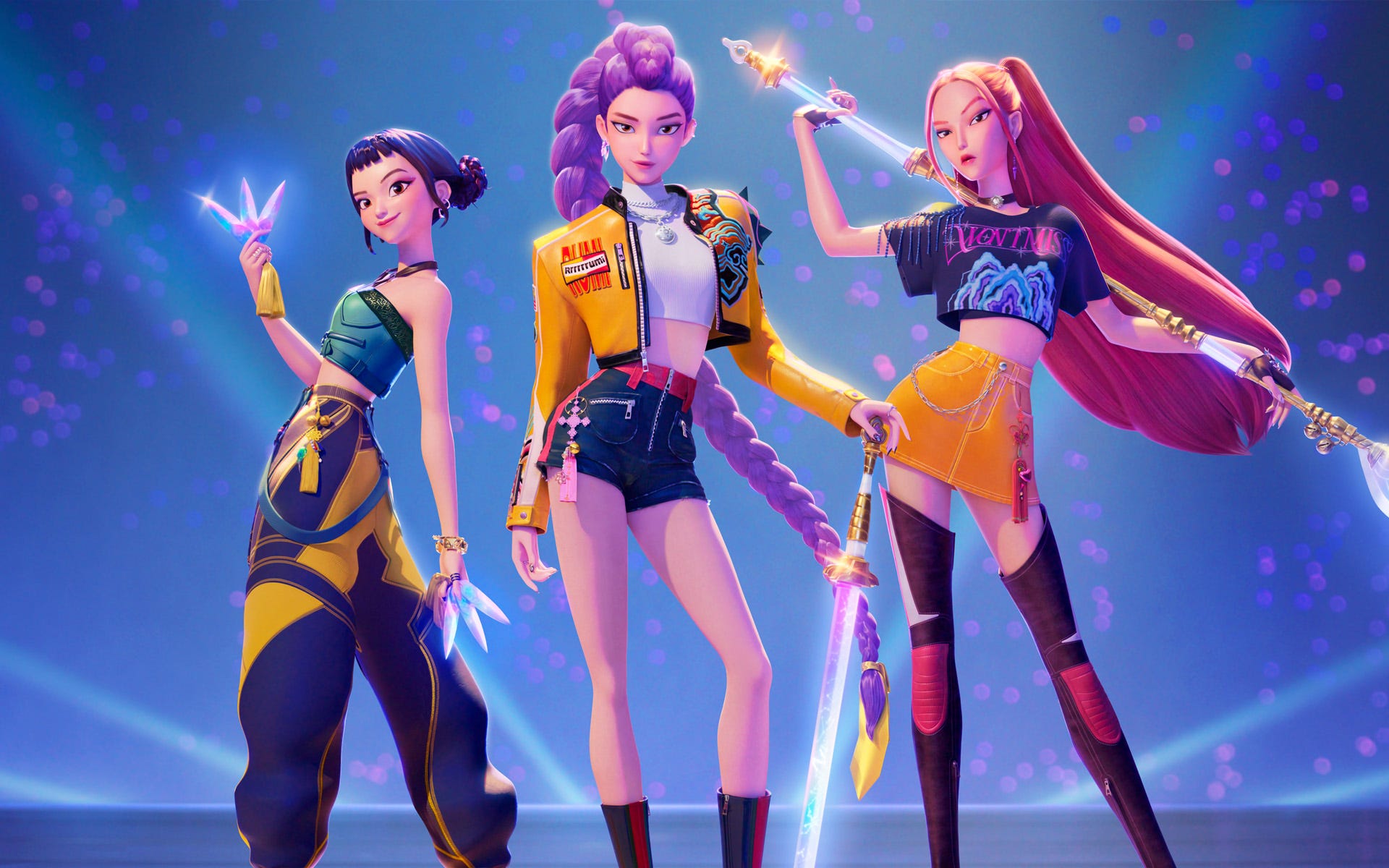
The Fandom Maggie Kept to Herself
Maggie Kang grew up in 90’s Toronto loving K-pop in a city that didn’t have the faintest idea what it was. She kept it in her headphones, at school and in the car alike.
20 years later, she co-directed KPop Demon Hunters with Chris Appelhans, an animated film about a fictional girl group called HUNTR/X who fight demons between comebacks. Netflix released it June 20, 2025, and by year-end it had crossed 500 million views, the most-watched movie in the platform’s history, more than 3.5× the next-biggest film of late 2025.
Teddy Park, born in Seoul, raised in the United States, returned to Korea, co-founded The Black Label, the production house behind BLACKPINK’s biggest hits. Teddy produced “Golden” and “How It’s Done” with 24, IDO, and Ian Eisendrath.
“Golden” hit No. 1 on the Billboard Hot 100 and stayed there for eight nonconsecutive weeks, the longest-leading hit by an animated act in the chart’s 67-year history; the soundtrack became the first to place four songs simultaneously in the Hot 100 Top 10 and hit No. 1 on the Billboard 200. At the 68th Grammy Awards, “Golden” won Best Song Written for Visual Media, the first Grammy for a K-pop song; at the 98th Academy Awards, the film won Best Animated Feature and Best Original Song, the first K-pop Oscar—neither one collected by an act SM, YG, JYP, or HYBE had debuted. Kang became one of the first Asian women to win in the animated feature category.
HUNTR/X’s voices belonged to three women who’d built careers between K-pop, hip-hop, and R&B. EJAE, a South Korean singer-songwriter, had entered SM’s trainee system at 11 and spent nearly a decade inside it without ever being cleared to debut; she co-wrote “Golden” and gave Rumi her singing voice. Audrey Nuna, an R&B artist from New Jersey. Rei Ami, born in South Korea, raised in Maryland. The soundtrack put rap verses and R&B vocal runs over K-pop-scale production, the home register of diaspora artists like Dumbfoundead and of Korean American kids who grew up making music that didn’t fit neatly into “K-pop” or “American.”
The Bulletproof Boy Scouts and a Webcam
K-pop fandom runs on an overwhelmingly female volunteer army. Streaming coordinators, real-time translators, group order managers hand-sorting photocards, fansite photographers with telephoto lenses funding subway birthday ads from merch revenue. No payroll, no chain of command.
Jeff Yang, founder of A Magazine, quoted in Hong—
When people buy into K-pop, they buy into a lifestyle. K-pop is pop culture as lifestyle brand.
In June 2020, BTS donated $1 million to Black Lives Matter. ARMY matched it within 24 hours. That same month, K-pop fans mass-registered for tickets to a Trump rally in Tulsa that claimed over a million requests. Fewer than 6,200 showed up. K-pop fandoms had spent eight years gaming platform algorithms to drown out rival groups and dominate global Twitter trends; in 2020 they pointed the same coordinated mass-posting at electoral targets. China’s 2021 Qinglang campaign suspended 159,000 Weibo accounts after fans bought thousands of yogurt cartons for QR vote codes and poured the yogurt down the drain.
The underground runs as a boys’ club; crew loyalty and gatekeeping are the price of entry. Yoon Mi-rae was the only female rapper of her cohort to clear it; Jessi, CL, Heize, and Lee Young-ji each cracked the surface at different altitudes after, and the gatekeeping has loosened since 2020. The K-pop side ran the other way: Min Hee-jin designed the creative direction, female-dominated A&R boards greenlit the albums, and the volunteer fandom moved the product. Hiphopplaya, HiphopLE, DC Inside’s hip-hop gallery, and r/khiphop functioned as spaces for criticism and lyrical analysis, with no streaming parties or app-crashing campaigns behind any of the rappers.
At the 23rd Korean Music Awards in February 2026, Sik-K and Lil Moshpit swept both rap categories—Best Rap & Hip-Hop Album and Best Rap & Hip-Hop Song.
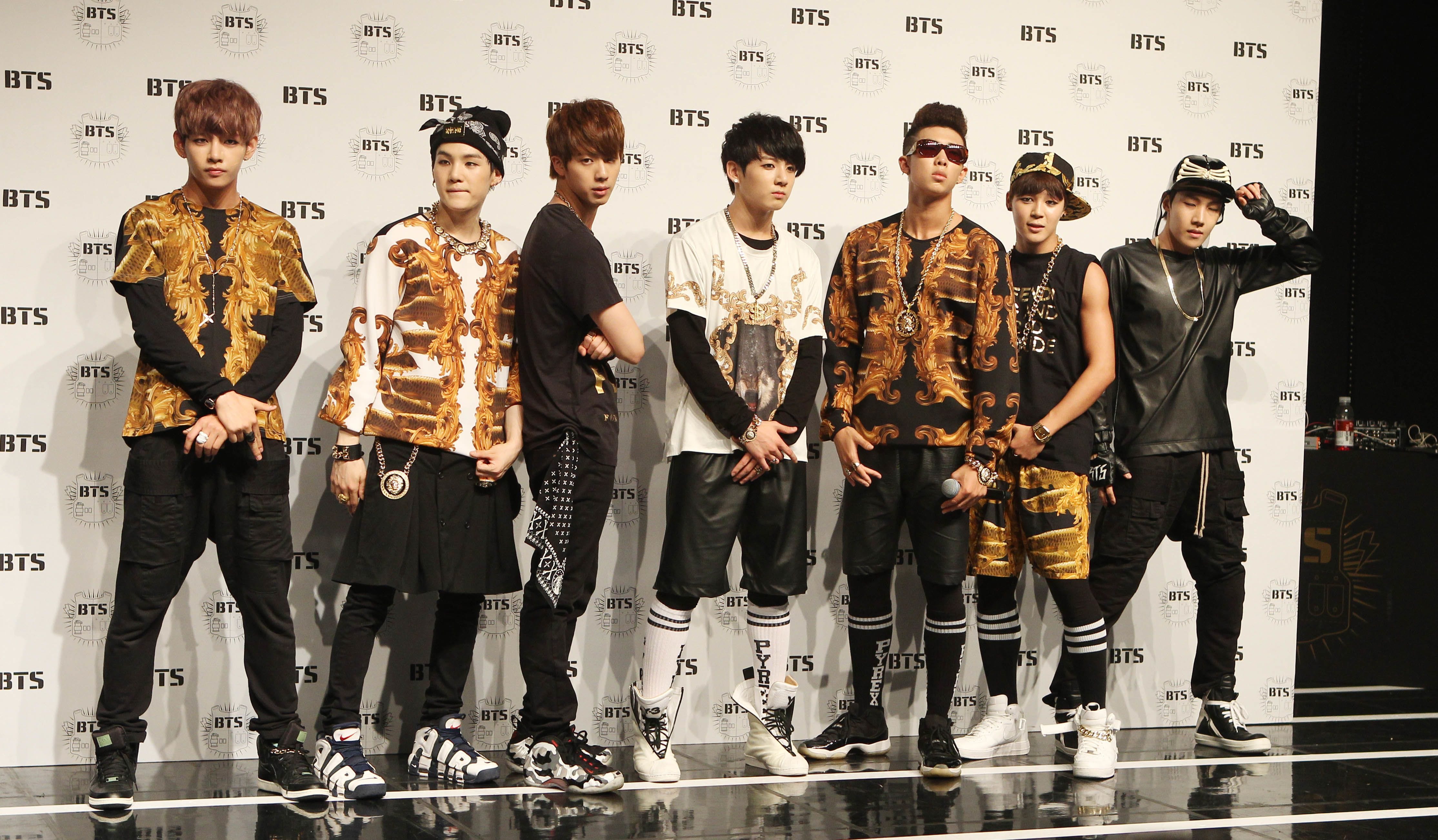
BTS came from the underground. At 11, a kid in Ilsan named Kim Nam-joon heard Epik High’s “Fly” and decided he wanted to rap. By 2007 he was posting tracks on underground forums as Runch Randa, running with Daenamhyup (대남조선힙합협동조합, the Great Southern Joseon Hip-Hop Cooperative, a name its founder Marvel.J took from an agricultural cooperative sign). A teenager named Woo Ji-ho moved through the same forums as Nakseo (낙서, graffiti). The two collaborated on a track called “F*** Cockroachez” over a DMX instrumental when RM was 13 and Zico was 15. Min Yoon-gi, a Daegu kid working at a recording studio at 17, produced beats as Gloss; he would debut as SUGA.
Bang Si-hyuk, a JYP hitmaker who’d left to start Big Hit, heard Runch Randa rap and decided to build a hip-hop group around him. Economics forced the concept toward the idol format during development.
Thirteen years ago today—June 13, 2013—BTS debuted on M Countdown with “No More Dream.” 760 first-week copies, small enough to disappear into a single Lotte Mart’s sales. The album debuted at No. 19. Big Hit was nearly bankrupt.
A leaner budget forced a different approach. BANGTANTV launched six months before debut, first upload RM covering a Korean political rap track. Their Twitter ran unfiltered and daily, members at the keyboard. The first Bangtan Bomb landed six days after debut: Jungkook playing cameraman in the waiting room, self-filmed and unscripted. Hundreds more followed. The Hwa Yang Yeon Hwa era added transmedia narrative fans had to decode across platforms. ARMY organized itself without hierarchy, every role self-appointed.
They rapped about academic pressure and societal conformity in a direct lineage from Seo Taiji’s banned “Classroom Ideology.” Kim Young-dae, the music critic who died Christmas Eve 2025 at 48, analyzed their full discography in BTS: The Review (2019): from the perspective of musical history, the word “hip-hop idol” is an oxymoron—hip-hop still predicated on the DIY spirit of the streets, idol music standing at the farthest end of the popular spectrum from it. In the dialogue printed in the same book he lands on “hot ice.” His interlocutor there is Kim Bong-hyeon, the hip-hop journalist Bang Si-hyuk called before debut for advice on an idol group whose identity would be hip-hop.
BTS’s smoky makeup and choreography became targets in the underground. The standard hostile read: men wearing makeup, rappers dancing. Bong-hyeon called the collision “inevitable for the period of transition”—it made him realize, he said, how idols and hip-hop inherently conflict.
BTS answered the underground rappers and hip-hop fans who called them frauds with the Cypher series, four tracks released between 2013 and 2016. Kim Bong-hyeon, asked in the book for their most notable hip-hop track, picked “BTS Cypher, Pt. 3: KILLER”—
This was unfiltered fury and came straight from their heart. It will probably go down in history as the most explicit, or the most hip-hop moment from a Korean idol boy band.
Kim Young-dae called the Cyphers the place where BTS’s essential motivations converge, “the outrage against their haters and the desire for authentic hip-hop.” The solo mixtapes carried what the group albums could not. RM’s self-titled 2015 tape had technique that made the idol label irrelevant. SUGA’s Agust D in 2016 was rawer, with depression, obsession, and self-hatred confessed on “The Last.”
Bong-hyeon argued you can replace instruments, but you can’t discard your identity—H.O.T. used hip-hop as an instrument; 1TYM, Yang Hyun-suk’s design, took it up as their own. BIGBANG made hip-hop succeed inside the idol establishment, and none made rap the center. BTS’s members wrote lyrics and built beats from the trainee period, and Bang Si-hyuk fed their creativity.
On “Paldogangsan,” RM, SUGA, and J-Hope rapped in their regional dialects (Ilsan, Daegu, Gwangju), something Kim Young-dae called “an exemplary Korean adaptation of American hip-hop’s emphasis on one’s roots,” and an inflection idol music had buried, where vocal coaches had spent two decades training provincial accents out of trainees.
Kim Young-dae’s diagnosis in Hip-Hop and K-Pop—
The idea of K-pop’s modernity is always evolved and developed in a way that avoids or eliminates Koreanness as much as possible.
In 2017, Seo Taiji chose BTS to remake “Come Back Home” for his 25th anniversary project, four years after the BTS debut. J-Hope and RM personally reworked the rap verses:
Zico came at it from the idol side. Scouted by SM as a child before his father’s transfer took the family to Japan. In Japan he found hip-hop through E-Sens and Verbal Jint. He bought equipment. He uploaded tracks to Hiphopplaya. Back in Korea, he debuted with Block B in April 2011 under a project billed as “Creating Korea’s Eminem.” The underground’s reaction was venomous.
Deepflow dissed him by name in 2013—
우리가 사는 집 기둥을 세운 META
그 집을 먹여살린건 결국엔 ZICO 와 Jay Park
변색된 힙합 갈라진 녹색 피부색
달콤한 멜론을 따먹고 슬피우는 새
자본주의를 부추기는 랩들[tr.] META laid the pillars of the house we all live in
But in the end, it’s ZICO and Jay Park putting food on the table
Hip-hop’s color has changed, the skin has cracked and turned green
Birds cry mournfully after feasting on sweet melons
Raps that do nothing but fuel capitalism
Zico kept going, and founded KOZ Entertainment on January 10, 2019, weeks after his Seven Seasons contract expired. HYBE acquired KOZ two years later while Zico was in the military, and Bang Si-hyuk called him “the best producer and artist of Korea.”
In January 2020, his single “Any Song” hit Perfect All-Kill, spent seven non-consecutive weeks at No. 1, and launched the #AnySongChallenge (100,000 fan videos in 10 days, 800 million cumulative views), inventing the K-pop TikTok dance challenge formula every major release has copied since. He later apologized on television for the rope the format had handed every act after him: a lot of people resented him because the dance challenge had become an obligation.
On November 21, 2013, underground rapper B-Free confronted BTS’s RM and Suga at a hip-hop panel. He called Suga “Mr. Sugar.” He asked whether wearing makeup on stage was hip-hop, then corrected the host—
B-Free, hip-hop panel (November 21, 2013)—
No, that’s not boonjang [disguise], it’s yeojang [cross-dressing].
When Suga said he wanted to reach many people with music, B-Free was dismissive.
B-Free offered a partial apology in 2016, then a fuller one in 2019, by which time BTS had become the highest-ranking Korean act on IFPI’s Global Recording Artist chart, No. 1 for 2020. In their 2023 memoir Beyond the Story, RM recalled the night as getting “slapped in the face out of nowhere,” using the English word insult because the Korean word moyok felt “too flat.”
Jin enlisted December 13, 2022. J-Hope in April 2023. RM and V in December 2023. Jimin and Jungkook the next day. Suga, serving alternative social service after shoulder surgery, finished last on June 21, 2025.
On July 1, a Weverse livestream of seven men sitting in a room drew 7.3 million real-time viewers.
In a December broadcast, RM said the group had contemplated disbanding or suspending activities “tens of thousands of times.” He apologized for saying it two days later.
On March 20, 2026, they released ARIRANG. 3.98 million copies on day 1. All 14 tracks simultaneously in Spotify’s Global Top 14. Diplo executive-produced. Flume, JPEGMAFIA, Kevin Parker, and Ryan Tedder handled individual tracks.
NPR’s Sheldon Pearce called it “the ultimate realization of a genreless, referential and yet homegrown popular music of Korea.”
The Needle Drop’s Anthony Fantano scored it a strong 2 to light 3, calling it a carefully groomed product more than a genuine artistic expression.
The next evening, the group walked the eodo—the King’s Road from Gyeongbokgung. They walked it to a stage in Gwanghwamun Square, the same ground where Koreans had gathered for the 2002 World Cup.


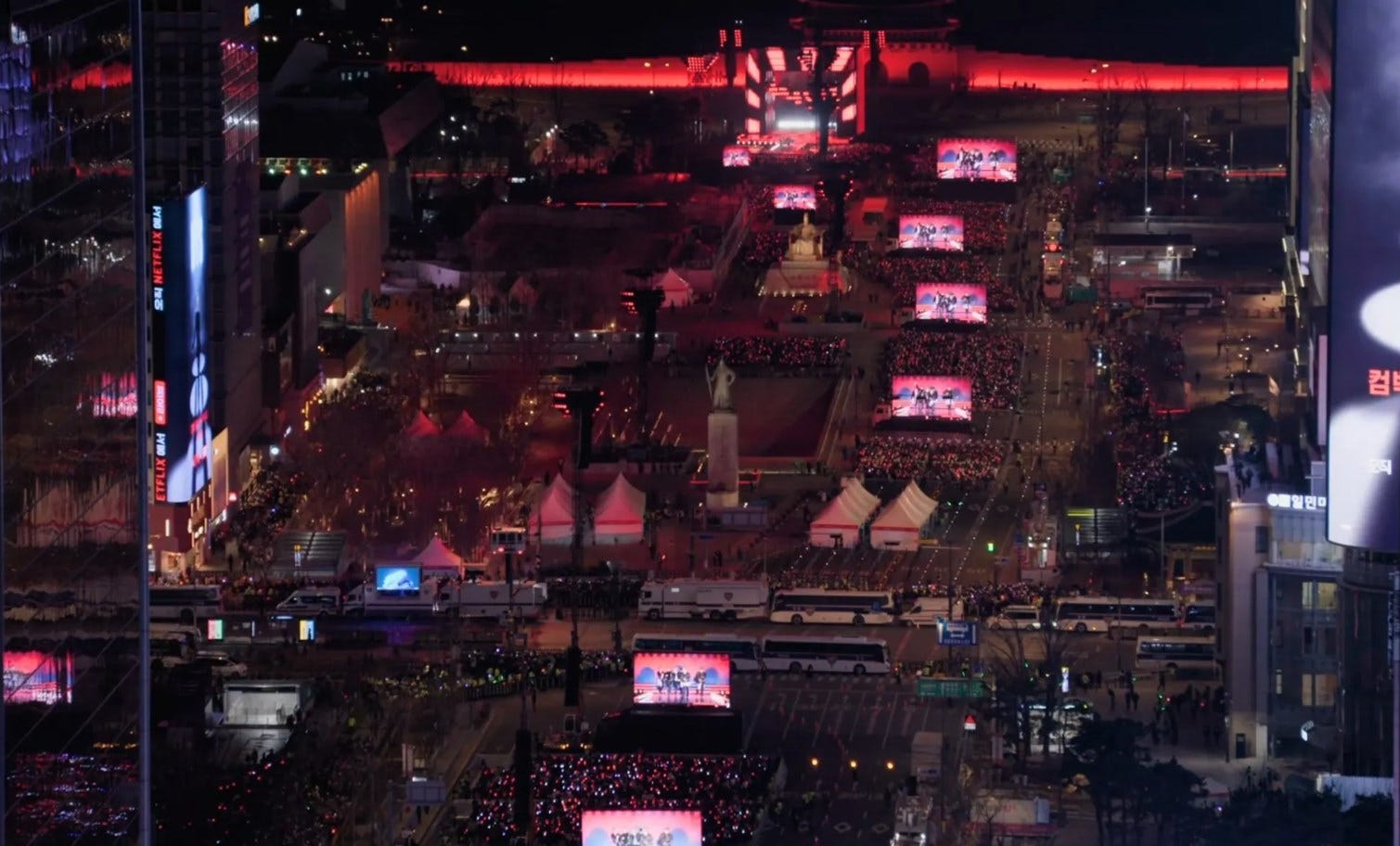
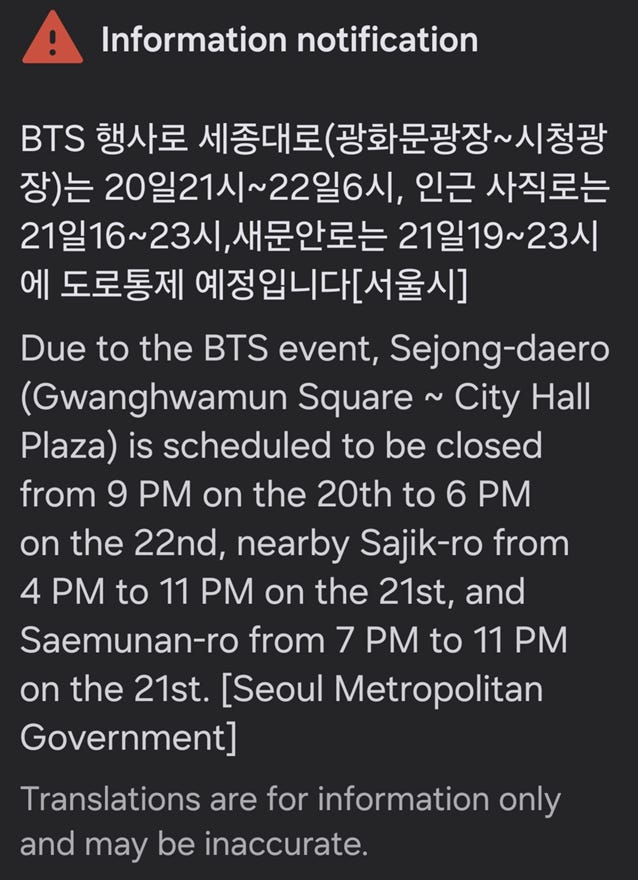
On March 21 and 22, Seoul’s national alert text line notified citizens of a K-pop group’s concert and subsequent concert area shutdown
Netflix streamed it live, its first standalone concert broadcast. 22,000 Golden Ticket holders inside the perimeter. Seoul’s metropolitan government counted 40,000 to 42,000 in the streets. National Gugak Center musicians played traditional instruments alongside the band.
J-Hope, mid-concert—
I was worried that we would be forgotten a little bit.
The world tour behind it runs 82 dates across 34 cities and 23 countries, April 2026 through March 2027. In Mexico City, over one million people entered the virtual queue for 150,000 seats. President Claudia Sheinbaum appealed to South Korea’s President Lee Jae Myung for additional shows, then posted his response on TikTok—
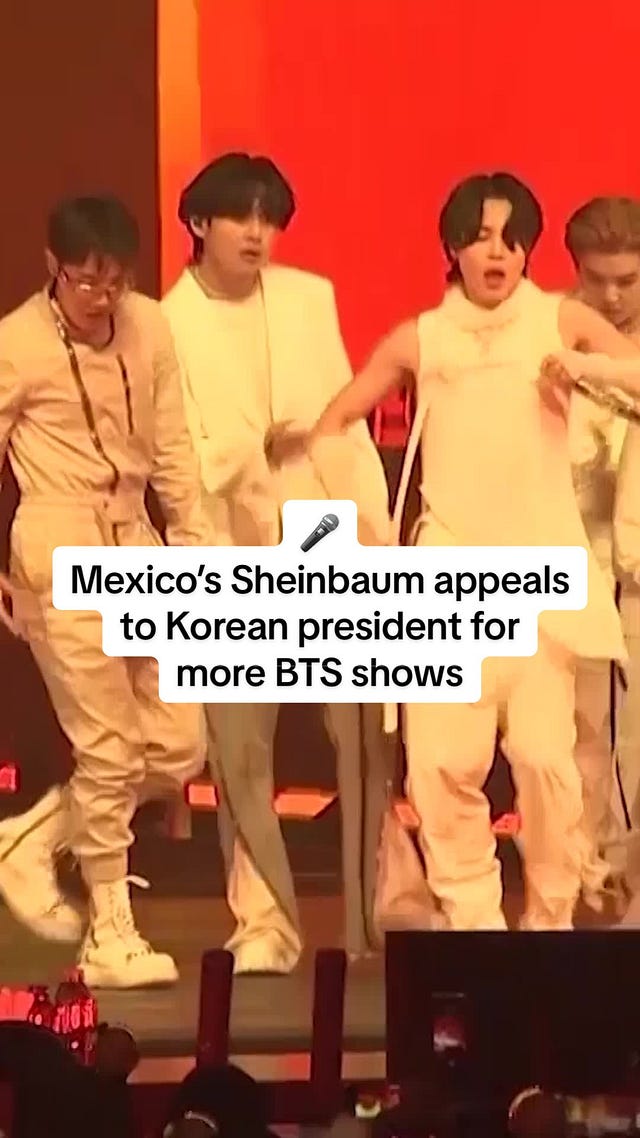
 Tiktok failed to load.
Enable 3rd party cookies or use another browser
Everybody Ate and Nobody Said Grace
Tiger JK moved to the United States at 12. His father, Suh Byung Hoo, was a DJ, one of Korea’s first pop columnists, and the first Billboard correspondent in Korea. In LA, Tiger JK watched Koreatown burn in 1992. Ice Cube had released “Black Korea” the year before—
[…] Oriental one penny countin’ motherfuckers
That make a nigga mad enough to cause a little ruckus
[…] Look, you little Chinese motherfucker
[…] So don’t follow me up and down your market
Or your little chop suey ass’ll be a target
[…] So pay respect to the Black fist
Or we’ll burn your store right down to a crisp
And then we’ll see ya
‘Cause you can’t turn the ghetto into Black Korea
Tiger JK wrote a class-paper response-rap to it that won a school award. Word-of-mouth carried him to a 1992 “Roots Of Rap” festival held in the immediate wake of the uprising. He stepped to the mic in front of a predominantly African American crowd, dropped “Call Me Tiger,” and won the freestyle category:
Tiger JK said of that night that he knew if he put his heart into it, they would get the message that Koreans can do it, too. The win earned him a 쟈니윤 쇼 slot and the return to Korea that founded Movement Crew.
He graduated UCLA with a B.A. in English, founded Drunken Tiger in 1998. Korean broadcasters refused them outright; Tiger JK listed the rejections—
검둥이하고 뭐하는 짓이냐 / what are you doing with that Black guy
춤이 없어서 안 된다 / no dancing, won’t work
한국어도 못하면서 뭘 할 셈이냐 / what are you going to do, you can’t even speak Korean
The Los Angeles Times later called him “perhaps the most popular Korean rapper in America, Asia, and the world.”
His wife, Yoon Mi-rae—born Natasha Shanta Reid in Fort Hood, Texas to a Korean mother and an African-American USFK serviceman who DJ’d on-base clubs and whose record collection became Yoon’s first musical exposure—was called “negro” in a society that emphasizes danil minjok, the “single-ethnicity nation,” told to go back to her country, and dropped out at 15.
Yoon Mi-rae—
In the U.S., I wasn’t Black enough. In Korea, they called me ‘Yankee.’
Her 2007 single “Black Happiness” confronted executives who told her to deny her African-American heritage; the same agency had falsified her age from 15 to 19 at debut.
The lyric—
…하루에 수십 번도 넘게 난 내 얼굴을 씻어내 하얀 비누를 내 눈물에 녹여내~
…dozens of times a day I wash my face, dissolving white soap in my tears~
MFBTY made “Rebel Music” during the Trayvon Martin tragedy and held benefit concerts for multicultural families in Korea. Yoon Mi-rae had crossed between hip-hop and R&B for a quarter century before streaming required a genre tag to make the crossing visible. Drunken Tiger’s catalog was being sampled by second-generation Korean-American rappers in LA and cited by Dumbfoundead on record by the time Spotify and Apple Music could route the streams to him, two decades on.
Suk-Young Kim, in TDR/The Drama Review (2020), argues the same K-pop idols whose performance of Blackness challenged Korea’s idea of itself also reproduced America’s racial ranking in the process. T.K. Park counters that Korea received American culture as the weaker party in a colonial relationship, since the dominant culture was the one broadcasting from Yongsan. A trainee stylist pulling 레게머리 [‘reggae hair’] from Pinterest and a label CEO designing Southeast Asian strategy occupy different positions in that exchange. Neither reading settles who holds the masters.
Crystal Anderson, Soul in Seoul (2020)—
Korean entertainment agency CEOs seek to use Korea’s culture to project a self-determined image onto the global stage. It ties its creative and commercial cultural production to its national image through cultural work that worked for Motown decades earlier.
Nelson George, The Death of Rhythm and Blues, defined “crossover” as an industry term for shifting the sales base of black performers to the larger white audience. Korean acts cross over now too, but the master, the publishing, and the touring revenue book to a company in Seoul rather than one in Detroit or New York.
Megan Thee Stallion records with BTS. Anderson .Paak and DEAN collaborate on “Put My Hands on You.” Producers move between Seoul and Atlanta studios regularly.
The charge runs through K-pop’s own black fans, recorded—and rejected—by Anderson in Soul in Seoul (p. 39), who reads K-pop as citing its sources rather than erasing them—
Such fans argue that K-pop artists do not give credit to the influences on that music, thereby getting the credit for the music and erasing the black originators, both artistically and financially.
The British Invasion came up through Liverpool pubs and EMI, and J-pop developed inside domestic rock venues and Oricon charts; Korea’s pop came through AFKN, Itaewon, and Detroit, on ground Park Chung-hee had already flattened.
The 2024 catalog runs Black Atlantic rhythms straight: NewJeans’s “Super Shy” is Jersey club from Newark, “Ditto” is Baltimore club, “How Sweet” is Miami bass. DJ Tameil and the Brick Bandits crew built Jersey club in Newark, Frank Ski pushed Baltimore club onto the radio, and the credits of the Seoul records running their rhythms carry neither name. aespa’s “Whiplash” pivoted to techno over a beat structure that traces back to Detroit.
In 2015 the ROK army loaded Big Bang’s “Bang Bang Bang” and Girls’ Generation’s “Genie” into the DMZ loudspeakers, as psychological-warfare ordnance against the North.
Kyung Hyun Kim, Hegemonic Mimicry, describes Korean identity sitting “opaquely racial” on the global stage, a double consciousness inherited twice—first under Japan, then under America.
Pento, in an interview with Myoung-Sun Song in 2014—
In America, rappers talk about how their uncles were shot or killed selling drugs.
…but, this is an almost impossible story in Korea.
What Korean rappers wrote about instead was exam hell, ₩5,000/show economics, and contract disputes aired in beefs that broke the rappers they were supposed to sharpen.
It’s All Korean to Me
Lie’s verdict on the system (p. 127, 146)—
K-pop isn’t about art, beauty, sublimity, or transcendence. The business of K-pop is simply business. […]
Even so, K-pop isn’t just an interesting social phenomenon; it is also an aesthetic achievement.
Whether K-pop is business or art was settled long before he weighed in; whose name goes on the achievement was not.
In a stadium of 50,000, every fan sings every word in a language they don’t speak. Google Docs lyric sheets translated and re-translated by volunteer linguists, pronunciation videos recorded after work, romanization guides, circulated freely across Discord servers in seven time zones. The screens flanking the stage scroll the lyrics anyway, Korean climbing past at reading speed.
No one needs them. No one is looking.
In 2002, all across Korea, the banners read—

KOREA WELCOMES THE WORLD