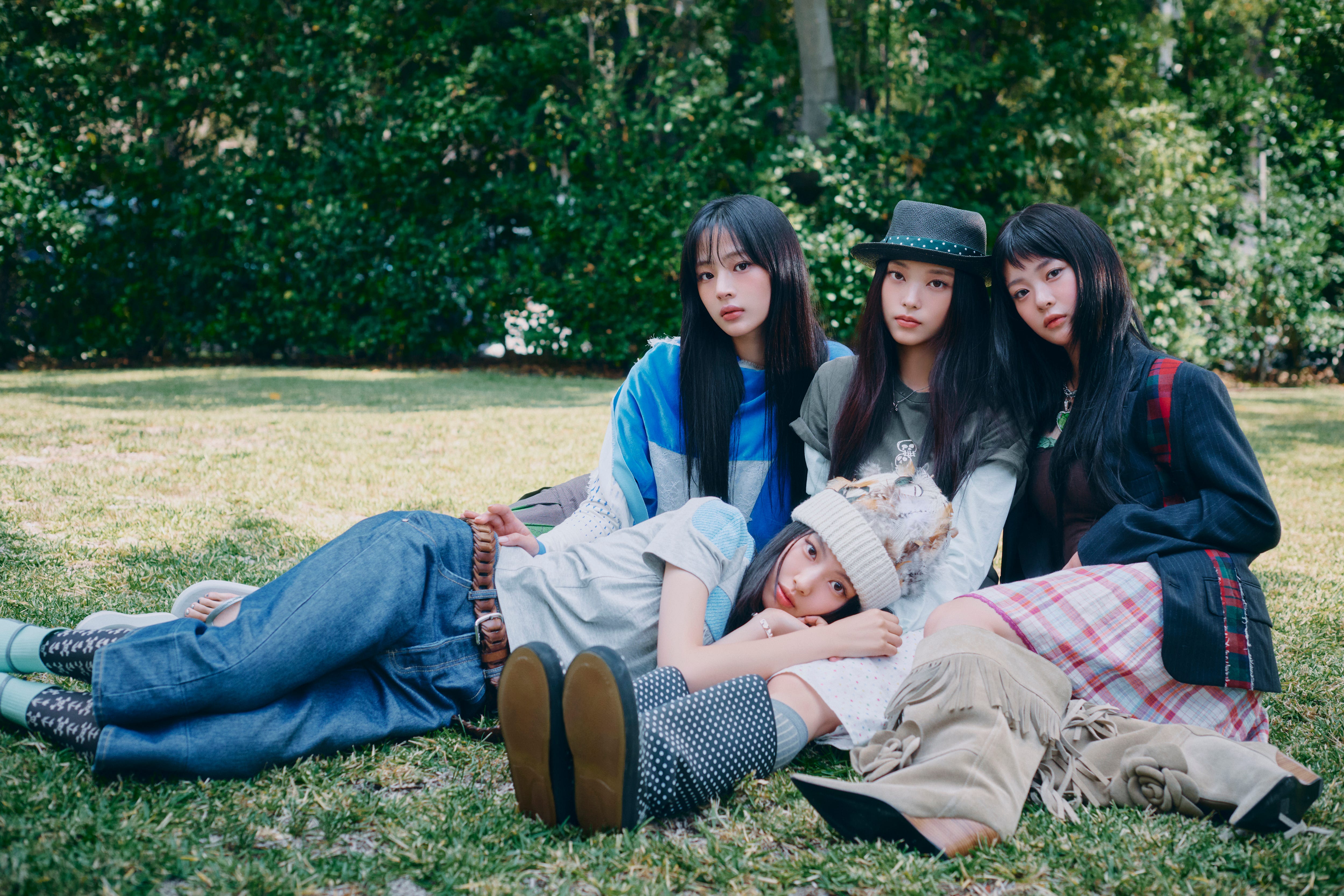
NewJeans Never Dies
A generational group, a contract dispute, and what K-pop lost.


K-pop. It's the most efficient hit-making machine pop music has ever built. Equal parts religion and heresy depending on who you ask, with no shortage of true believers on either side. A whole country's worth of talent, reaching every corner of the planet. Say what you want about it—at its best, nothing on earth moves a room like it.
Most of it familiar. The same concepts, the same wall of sound, comebacks like clockwork, all of it chasing the one hit that gets your name in the books. It works. After a while though, they all start to blur together.
Every so often, though, something comes along that doesn’t play by any of it.
NewJeans.
Built by Min Hee-jin—a woman who’d spent two decades refining the biggest acts—except this time she made something that sounded like none of the others. A strangely precise approach. Quiet where everyone was loud. Easy, in a business that shows its work. Five girls who made it look effortless, and made everybody else look like they were sweating through it.
For two years, they were the best thing going. Then came the fight over who they belonged to.
DISCLAIMER:
Several of the proceedings described are still pending—claim recounts are describing allegations, not findings.
Original translations are unofficial and non-authoritative.
Thank you to the fanpages and otherwise who contributed to and assisted with this piece, providing their POV and thoughts along the way.
A special thanks to Yoshi M. for translation assistance and research throughout.
Crocs and a Striped Sweater at the End of an Empire
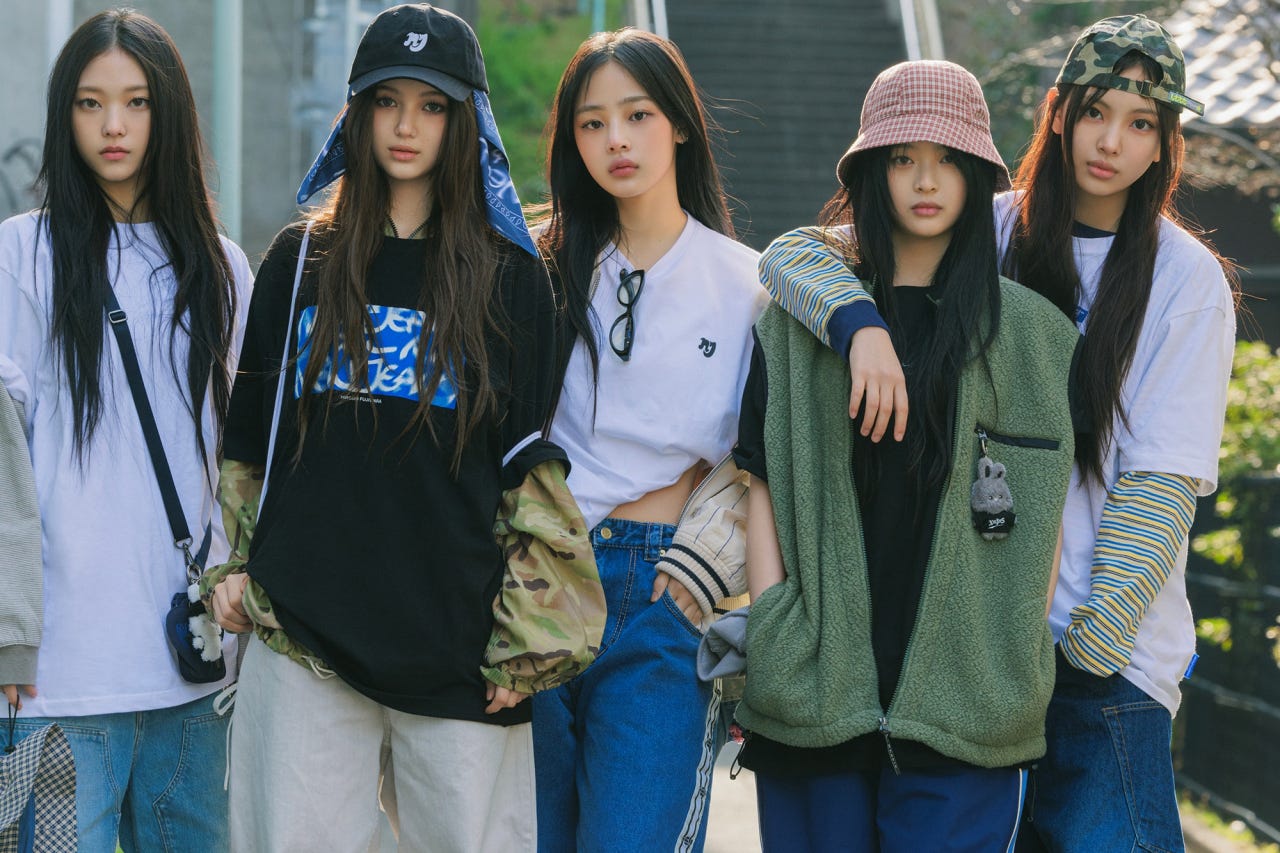
Four years ago today, Minji, Hanni, Danielle, Haerin, and Hyein debuted; within two they had reset what a K-pop girl group could be.
NewJeans sang over Y2K R&B and Jersey club breaks, in clothes that looked like their own, with choreography loose enough to look unrehearsed—cut against a field that had spent five years getting louder: eight- and nine-member lineups, wall-of-sound title tracks, sci-fi concept worlds, unison choreography drilled to the frame. “Attention” went to No. 1 on Korea’s Circle Digital Chart; “Hype Boy” ran 42 weeks on the Billboard Global 200, the longest by any K-pop girl group at the time.
The fight over who owned the group began at its commercial peak, inside the second year of a seven-year contract, the members aged 16 to 19; within months the group went dark. Two years on, it has released nothing since, and no court has found unlawful conduct by anyone—only promises the law could price.
Min Hee-jin showed up in a baseball cap and a California General Store long-sleeve top. She sat behind a table in a Seoul conference center on April 25, 2024, and talked for hours, reading out names, dates, and internal messages as cameras recorded, crying as she read.
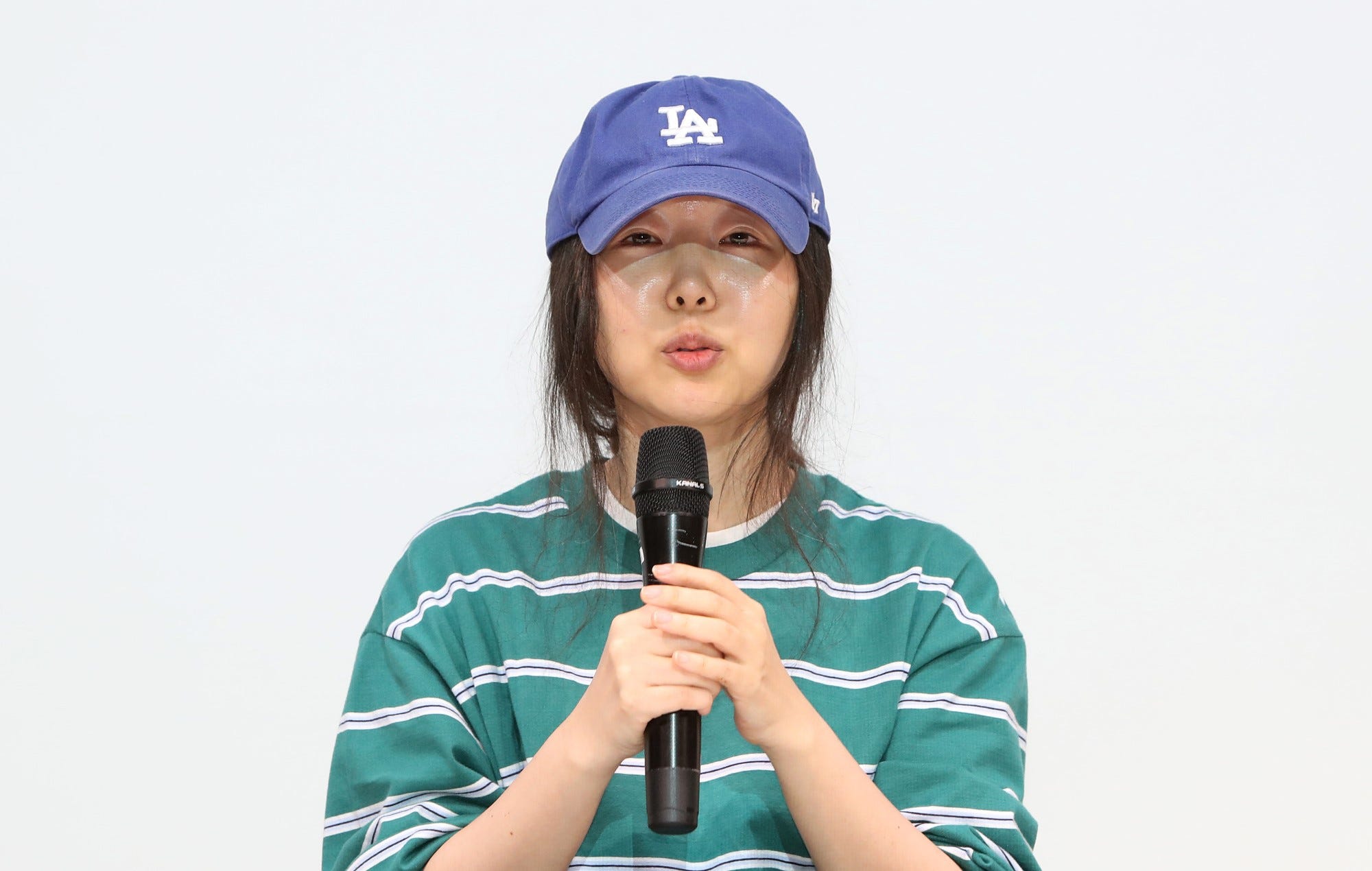
She had spent 22 years in the industry as the art director behind Girls’ Generation, SHINee, and f(x), and now ran ADOR, a label under HYBE, K-pop’s largest company. BELIFT LAB, a separate HYBE subsidiary, had debuted a group whose styling, choreography, and visual identity a court would later describe as showing “many similarities to the image of NewJeans.”
HYBE said the press conference had “distorted the facts by mixing up the timeline.” It had put the minority shareholder under audit and asked her to step down three days earlier. The five members had been excluded from both decisions, the debut and the audit.
Over the next two years, two courts, a labor ministry, and a parliamentary audit would each take up a piece of this fight. The question the five members kept asking—whether the person who built their sound was protecting them—was one the law could take up only in translation: as her motives, as a contract, as a price. Every form of ownership in this story attaches to the company—the masters, the marks, the contracts, the name. What the fight was actually about—whose judgment to trust, what the group was—attaches to no one, and appears nowhere.
18%
Min owned 18% of ADOR, the label she built for NewJeans. She had walked into SM Entertainment in 2002 through open public recruitment, as a graphic designer in her early 20s.
When she heard the group name “소녀시대” (Girls’ Generation), she created an image map and presented it directly to Lee Soo-man, SM’s founder, defining what kind of girl each member should be. The jeans-and-white-T-shirt concept for “Gee” (2009) and the military uniform concept for “Genie” were hers. A 2018 Stanford study of K-pop staging quotes her, then at SM—“It is not simply to decorate an album jacket and interpret a producer’s intention.” Pink Tape (2013), the f(x) album conceived as a pink VHS tape, was later named the greatest K-pop album of the 2010s by Billboard.
After 16 years at SM, she joined Big Hit Entertainment in 2019 as CBO and immediately began developing a girl group project. Bang Si-hyuk, Big Hit’s founder and CEO, had made the recruiting pitch himself.
Bang Si-hyuk, in KakaoTalk messages shown by Min Hee-jin at ADOR Press Conference (April 25, 2024)—
제가 말 그대로 성덕 아닙니까. […]
SM은 잊고 민희진 월드 건설하시는 걸로.
Am I not literally a ‘successful fan’ of yours? […]
Forget SM and build Min Hee-jin World—let’s go with that.
Her technique was reactive: she defined each NewJeans concept against the maximalist norm it followed. She had done the same at SM, where—as she told it—Girls’ Generation’s fresh-girl concept cut against the unreachable-goddess register prevailing at the time.
When HYBE decided internally in 2021 that the group she was building would go out under Source Music—the subsidiary that announced LE SSERAFIM as “HYBE’s first girl group” the following spring, despite Min’s project predating it—Park Ji-won, freshly arrived at HYBE from Nexon as CEO, pulled her aside.
Park Ji-won’s encounter, recounted by Min Hee-jin (April 25, 2024, verbatim)—
희진 님, 저희 그 하이브 첫 번째 걸그룹 지금 준비하던 이 팀은 소스 차기 걸그룹으로 나가야 될 것 같습니다.
Hee-jin, the team we’re preparing as HYBE’s first girl group will now have to go out as Source’s next girl group, it seems.
By her own account, she cursed at him on the spot—너네 양아치냐. 왜 약속 깨냐 (Are you thugs? Why are you breaking the promise?)—and threatened to quit, promising a press conference on her way out. Source Music has called that account defamatory, suing her over the presser’s claims. The trainees she had recruited had come in under MHJ branding; Hyein’s mother had told Min at the time: 소스 매직이라고 했으면 안 들어왔다 ([sic] we wouldn’t have come if it had been Source Magic).
HYBE’s solution was a corporate split. A new entity spun off from Source Music was incorporated as ADOR—All Doors One Room—in November 2021. Min acquired her 18% through a call option for approximately ₩1.1 billion, packed alongside a five-year CEO guarantee written into the shareholders’ agreement—an obligation on how HYBE voted its shares, running to November 2026. The put option was the opposite: the right to force HYBE to buy her shares back at a price the contract pegged to ADOR’s operating profit for 2022 and 2023. The fight over that exact clause ran more than two years, reaching a first answer only when a court fixed her buyout at roughly ₩25.5 billion, ~$17.6 million—a ruling HYBE swiftly appealed.
Min intentionally built ADOR around NewJeans and nothing else—one group, one revenue line, hers to produce end to end. She told Fast Company that casting and training each needed their own house, doors shut, so nobody upstairs could reach in and “help.”
Min Hee-jin, Cine21 (January 2023)—
하이브에서 어도어를 론칭하며 강력히 보장 받기 원했던 내용은 ‘창작과 운영 자율성에 간섭이 없는’ 이라는 확고한 전제였다.
What I wanted strongly guaranteed when launching ADOR inside HYBE was the firm condition of no interference with creative and operational autonomy.
The trainees began at Source Music. Min waded into the pool and came out with exactly one of them—Minji—and built the rest of the group audition by audition. Source got ₩2 billion for their trouble: consolation money, Min called it; the cost of raising trainees, said Source.
They were from everywhere. Hanni was born in Melbourne to Vietnamese parents; Danielle was Korean-Australian; Minji and Haerin came from Chuncheon and Seoul. And Hyein, the baby of the bunch, was somehow already the veteran—she had debuted at 9.
No Guide Vocals
By 2022, a major-label K-pop debut ran on a script everyone knew cold: weeks of teasers, then teasers for the teasers, and countdowns to the countdowns. ADOR posted three animated clips on July 1, stamped them “22.7.22,” and left it there: no names, no concept photos, no pre-order link, nothing.
Three days after the debut, ADOR rolled out Phoning, a retro cellphone that lived inside your real one, built with Weverse Company, HYBE’s platform arm.
Behind the sound was 250—Lee Ho-hyung—a DJ who came up through the clubs of Itaewon. His 2022 solo album PPONG welded ppongjjak—the weepy, unfashionable Korean trot your grandmother swears by—to modern electronics. A generational talent.
Years before that, booked to spin hip-hop at a party at Cake Shop in Itaewon, he looked at the room and played a straight hour of ppongjjak instead.
250, izm (April 2022)—
관객들이 한 명도 안 빠지고 다 나갔었다
The audience left, down to the last one.
Ppongjjak, 250 told Korea Herald, carries “a lingering sadness”—a register he heard converted into dance, and brought into the NewJeans sessions.
250 reached for UK garage, Baltimore club, and Jersey club—rhythms that usually live in an EDM set or a hip-hop studio, though almost never on a Korean major-label girl group’s lead single.
What makes “Attention,” the debut single, land is everything it refuses to do. No drop. No wall of EDM drums. No recycled sound. No three-act climb to a chorus you can see coming a mile out. The hook just walks in the door and stays. A record with nothing to prove, dropped into a genre that proves everything at full volume. It didn’t raise its voice once, and the whole world went quiet to hear it. The effortlessness was the product.
For Get Up in early 2023, ADOR set up a writers’ camp in Copenhagen and stocked it with European indie talent: Erika de Casier, the Portuguese-Danish R&B singer on 4AD; the Norwegian duo Smerz—Catharina Stoltenberg and Henriette Motzfeldt; Fine Glindvad Jensen; even Frankie Scoca. The email that reached de Casier gave away nothing—a session in Copenhagen, they’d love to have her—and it turned out every one of them had gotten the same blank little note.
“You just wrote the song before lunch and had lunch,” Smerz told Crack. “And then you wrote another song after lunch.”
One of those afternoons became “ASAP,” cut over a synth loop they’d run off 250’s starter beats; playing it back, Smerz heard RP Boo’s “Speakers R-4,” a Chicago footwork record. De Casier, who hadn’t touched K-pop before she opened that email, walked away with co-writes on four of the EP’s six tracks.
At the Hyundai Card DaVinci Motel festival in Seoul, September 2024, Min diagnosed it: “this factory-like system is proving to be a disease for the industry.” It was the thing everyone in the industry knew and nobody would say—the kind of line that quietly ends careers.
By then, Min had the standing to say it out loud: two decades shaping K-pop’s biggest acts, then a group she’d built from scratch that reset the field. She’d earned the room, and she used it—not to vent, but to call the machine she’d helped build sick, and to dare the industry to fix it.
Stay in the Middle
“Ditto,” released in December 2022, held No. 1 on Melon’s weekly chart for 13 consecutive weeks, the longest run in the platform’s history. The track was built on breaks and Baltimore club inflections.
Its music video, shot by Shin Woo-seok on handheld cameras across Daegu’s Jung District, drew on Shunji Iwai’s Love Letter for grain, crispy winter light, and a camcorder memory; Idology (아이돌로지), the Korean critical journal, had coined the term “가상의 향수” (pseudo-nostalgia) that September for what NewJeans was doing.
A billion Spotify streams in 219 days—a Guinness record—off a catalog of exactly six songs. “Super Shy,” no Western feature bolted on, cracked the Billboard Hot 100 at No. 48; even Pitchfork, which has its own moments, called it “NewJeans’ most effortless masterstroke.”
Get Up landed at No. 1 on the Billboard 200—Hyein was 15 years old. Then the luxury houses divided them up, one apiece: Minji to Chanel, Hanni to Gucci, Danielle to Burberry, Haerin to Dior, and Hyein to Louis Vuitton.
ADOR made the records; HYBE’s Weverse platform and its Japan pipeline pushed them everywhere a boutique label’s arms just can’t reach. As the label cleared ₩110.3 billion in 2023, the members saw their first cut two months after debut, in a business where trainees usually spend years clawing down a training debt before they see a won of profit, if ever.
Tokyo Dome, June 26 and 27, 2024: 91,200 people across two nights. On the second, Hanni walked out alone in a short bob and a long white skirt—Seiko Matsuda’s 1980, down to the hair—and sang “Aoi Sangosho.”
Hanni got the first phrase out, and the whole place answered—an exceptionally rare occurrence at Tokyo Dome: Matsuda’s 1980 fan-chants, the full ritual of them. Pseudo-nostalgia, the thing Idology had put a name to, running headfirst into the real one. Min Hee-jin said later that even the chant routine surfaced on its own, unprompted—forty-odd years of muscle memory going off at once—and it stopped her cold.
Off to the side, Bunshun’s photographer caught the other shot: Min wiping her eyes.
The headline called her 鬼のプロデューサー—in Japanese: a notoriously demanding producer. The same piece called her NewJeans’ mother; both were true.
“Ditto” was the first foreign song in Japan Record Awards history to win the Excellent Work prize; at the 2023 MAMAs, NewJeans took Artist of the Year, a daesang—the grand-prize tier of Korean music awards—the first for a girl group since Girls’ Generation in 2011, the group Min had art-directed at SM. For “Supernatural,” 250 reinterpreted Japanese singer Manami’s 2009 track “Back of My Mind” (produced by Pharrell Williams) and reshaped Pharrell’s original ad-libs and bridge for the new record.
Then there was NewJeans nearing their peak, something I’d been lucky enough to see firsthand. November 2023—the League of Legends World final, a sold-out event that had come for one thing: Faker, the closest thing esports has to a god. NewJeans opened: five girls and "GODS," the anthem Riot handed them. For the length of a song, the biggest event in gaming forgot what it had come for—a stadium full of gaming disciples who, as if under a spell, turned from their god and became Bunnies.
The only spell in this story I'd swear to. There was, allegedly, another.
The Shaman
ILLIT debuted on March 25, 2024, under BELIFT LAB. Its five members, recruited from the same HYBE trainee pipeline Min had cast from, were handed a concept whose soft makeup, natural hair, and Y2K-adjacent styling Korean internet commentary compared to NewJeans’ visual identity within hours of debut.
The February 2026 shareholder ruling—the same judgment that fixed her buyout—found BELIFT LAB had “not presented additional evidence to prove that the two sides are dissimilar,” though it stopped short of a plagiarism verdict. Min said BELIFT had copied “all the formulas that we had with NewJeans”; BELIFT maintained the claim was false—ILLIT’s concept, it said, was fixed before any NewJeans plan reached it. Still today, a point of contention.
NewJeans held the Y2K-nostalgia over minimalist instrumentals from July 2022 to April 2024; the debut that drew the comparison inside that window came from HYBE’s own subsidiary, while YG’s BABYMONSTER debuted maximalist. SM followed only after the dispute went public. Stablemate aespa’s “Whiplash” (October 2024) broke from maximalism first—a techno pivot, nothing like NewJeans. Hearts2Hearts, which debuted four months behind it in February 2025, was widely read as SM’s answer to NewJeans.
When HYBE argued that Min’s plagiarism complaints had themselves breached her duty, the February 2026 court found otherwise: as ADOR’s inside director she was bound to protect NewJeans, and raising the ILLIT problem was justified management judgment.
The April 22 audit began on a tip; during it, HYBE’s forensics secured long KakaoTalk exchanges between Min and a person it characterized as a shaman, discussing corporate personnel decisions. One exchange dated to March 2021, months before ADOR’s incorporation, included the line “딱 3년 만에 기업합병 되듯 가져오는 거야” (“take it over in just three years, like a merger”). Min called the person “just an acquaintance”; police later declined to refer HYBE’s breach-of-trust complaint—a decision HYBE formally contested—and prosecutors dismissed Min’s defamation complaint in turn, finding the “shamanistic management” in HYBE’s press statement ‘exaggerated but not false.’
The day HYBE announced it was reporting her to police, Min booked a conference center for the same afternoon.
Min Hee-jin, ADOR Press Conference (April 25, 2024)—
저 월급 사장이고 […] 저는 일을 잘하는 죄밖에 없다라고 생각을 하고요. […] 제가 돈에 욕심이 있었으면 처음부터 제 레이블을 만들고 거기에 제 자본금을 태워서 그렇게 시작하는 게 제일 빨라요.
I’m a salaried CEO. […] I think the only thing I’m guilty of is being good at my job. […] If I had wanted money, the fastest path was to start my own label from the beginning and burn my own capital into it.
HYBE said the same day that much of what Min claimed was “far from the truth.”
None of which made HYBE’s position incoherent. A multi-label company is built so that no one person’s exit can take a group down with it; the years of unrecouped training investment are why the industry’s anti-tampering rules exist at all; and the court itself would soon find that Min had explored ways to leave with the group.
Another Door
On May 30, 2024, the Seoul Central District Court’s 50th Civil Division granted Min’s injunction, ordering HYBE not to vote in favor of her dismissal at ADOR’s extraordinary shareholders’ meeting the next day. HYBE held 80% of ADOR’s shares.
The court set the penalty for non-compliance at ₩20 billion. Bang Si-hyuk had filed a personal 탄원서 (plea letter) arguing that an individual’s malicious actions shouldn’t be allowed to undermine the system, that he was working “as a leader of the industry” to correct the situation, furthermore that creators had to be able to create more freely than now. NewJeans’ parents filed counter-plea letters supporting Min.
The burden of proof sat with HYBE; on each substantive allegation—breach of fiduciary duty, trade secret leaks, stock manipulation, the shaman consultations—the court found the showing insufficient.
The ruling acknowledged Min had explored ways to leave with the group, but found she had not gone “beyond such exploration or planning stage to take concrete implementing actions”—her conduct not “acts in violation of laws.”
Min Hee-jin, Second Press Conference (May 31, 2024), the day after the injunction, on the strangers who had written to her—
사실 그분들 때문에 제가 되게 뭔가 이상한 선택을 안 할 수 있었던 것 같아요.
Honestly, it was because of those people that I think I was able to avoid making some really strange choice.
The injunction had bound only HYBE’s shareholder vote on Min’s dismissal; at the same May 31 meeting, HYBE voted its own nominees onto ADOR’s board. On August 27, that reconstituted board removed her as CEO, replacing her with Kim Joo-young, an HR executive. ADOR then sent Min a 업무위임계약서 (work-delegation contract) offering to keep her on as NewJeans producer without the CEO title. She declined to sign. Shin Woo-seok, the “Ditto” director, said collaboration with ADOR was “no longer possible” and signed a petition for her reinstatement.
Hyein, TIME (March 2025)—
Some people would conveniently switch their perspective, treating me as a kid when it suited them and then expecting me to act like an adult when it was more convenient for them.
NewJeans responded on September 11 with a surprise 7PM KST YouTube livestream, “What NewJeans Wants to Say”, broadcast on a channel called nwjns that they had set up that day without ADOR’s authorization. The five members, ages 16 to 20, put their demand on camera—the way, they said, to get along with HYBE without fighting.
“What NewJeans Wants to Say,” YouTube livestream (September 11, 2024)—
저희가 원하는 건 민희진 대표님께서 대표로 있으신 경영과 프로듀싱이 통합된 원래의 어도어입니다. […] 방 회장님 그리고 하이브는 이 십 오 일까지 어도어를 원래대로 복귀시키는 현명한 결정을 해주시기 바랍니다.
What we want is the original ADOR—with CEO Min Hee-jin, where management and producing are integrated. […] Chairman Bang, HYBE—by the 25th, please make the wise decision to return ADOR to what it was.
Danielle told the camera, in Korean—
인간적인 측면에서 저희 민희진 대표님을 그만 괴롭히셨으면 좋겠어요. […] 하이브가 그냥 비인간적인 회사로만 보여요.
On a human level, I hope you stop tormenting our CEO, Min Hee-jin. […] HYBE just looks like an inhumane company.
HYBE shares fell 5.7% over two trading days, as the September 25 deadline passed by.
Hanni described an incident from May 28, 2024, on the hair-and-makeup floor of HYBE’s Yongsan headquarters, the day NewJeans was prepping for a university festival tour. She had finished hair and makeup first; the ILLIT members came back 5-10 minutes later. As they passed, she said, the BELIFT LAB protocol manager made eye contact with her, turned to the others, and told them to “ignore her.” BELIFT LAB denied the comment was made.
On October 9, Hanni posted on Phoning, the label’s own member-to-fan app—“아직 매니저님들이나 회사는 모른다” (“Neither my managers nor the company know yet”). Min’s side of the fight ran through press conferences, HYBE’s through statements; the infra built to sell closeness and offer proximity—the fan app, the livestream—was the one lever the members still held, and they kept pulling it against its owner. Six days later, on October 15, 2024, she testified at a National Assembly audit, appearing before the Environment and Labor Committee.
ADOR CEO Kim Joo-young, testifying after Hanni, said she had asked the artists and their managers to confirm the account, and had checked whether the expired footage could be restored. She also said: “My understanding is that under current law, artists are not covered as workers.” Rep. Jeong Hye-kyung responded the same day: “엔터 업계에서 우리도 사람이라는 목소리를 낸 역사적 순간이 아닐까 싶다 / what may be a historic moment—this industry raising the voice that we, too, are people.”
The courts treat an idol’s exclusive contract as an “unnamed contract similar to mandate” rather than employment—the line, set down in the Song So-hee case from 2019, that the Labor Ministry leaned on that November to dismiss the harassment complaint filed over the corridor incident. The Labor Standards Act needs a subordinate employee; Hanni’s contract paid commission, not wages. A trainee’s path to debut is a recoupable advance against future earnings, on splits historically tilted toward the company; ADOR’s 2023 audit filing implies the members’ settlements that year averaged roughly ₩5.2 billion (~$3.8 million) each.
The NewJeans contracts used the seven-year template the TVXQ fight produced out of 2009’s 13-year “slave contracts”—minor at signing, parent guardian co-signature—tested since by Fifty Fifty’s suit and hardened after that 2023 exit bid, when the Culture Ministry extended the post-termination ban on same-or-similar content from one year to three, “to lower the expected returns that could induce tampering.” The TVXQ split had already staged this fight’s ending: SM kept the name, barred the leavers from their own songs, and sought the injunction that kept them off television. Other jurisdictions point the same seven-year ceiling the other way: California’s Labor Code §2855, the De Havilland rule, caps personal-service contracts at seven calendar years from commencement of service.
Min’s bid to reclaim the CEO title failed on October 29. The court didn’t deny that the agreement promised her the title; it held that no order to HYBE could deliver it—directors decide who runs a company, and directors owe a shareholder no obedience.
Among the evidence the members attached was an internal HYBE document surfaced at the October 24, 2024 National Assembly audit containing the phrase “뉴 버리고 새로 판 짜면 될 일” (“just ditch New [Jeans] and start over”). HYBE relieved the document’s author of his post five days later, the same day its CEO apologized to “the artists who were hurt.”
On November 20, Min resigned from ADOR, giving up her board seat—her last tie to the label. A year later, as the members returned after the October 30, 2025 ruling, she said in a statement: “I can begin anew anywhere. But I believe that NewJeans must remain whole as five.”
Four days earlier, on November 16, at the Korea Grand Music Awards, the members thanked Min Hee-jin from the stage—“always protecting us,” Danielle said—and Hanni added, “We don’t know until when we’ll be NewJeans.”
Contract Termination
On November 28, NewJeans held a press conference and announced that their exclusive contracts with ADOR were terminated effective midnight, on one chief stated ground.
NewJeans, Contract Termination Press Conference (November 28, 2024)—
어도어는 뉴진스를 보호할 의지도 능력도 없어요.
ADOR has neither the will nor the ability to protect NewJeans.
Danielle spoke in English: “Regardless of our name, just remember that NewJeans never dies.” HYBE shares fell as much as 6.97% that Friday, roughly $423 million off the market cap, the worst session the dispute had cost it yet.
All five members’ parents said in a joint statement on April 4, 2025 that the five members “cannot return to HYBE.”
Announced as headliners in February, the members rebranded as “NJZ” and performed at ComplexCon Hong Kong on March 23, 2025, closing the festival Metro Boomin had opened two nights earlier. The five members have not performed together since.
ADOR’s injunction, granted on March 21 by the same 50th Civil Division that had blocked HYBE from dismissing Min 10 months earlier, now blocked all five members’ creative work—performances, songwriting, composing, singing. The ComplexCon stage had gone ahead two days after the grant, against an order that did not yet carry a penalty; the enforcement teeth came in a separate ruling that May.
NewJeans appealed and lost on June 17, 2025; the Seoul High Court held they “cannot unilaterally break or arbitrarily depart from the contract on subjective grounds.” The same burden-of-proof doctrine had been set down two years earlier, in the dismissal of Fifty Fifty’s bid to terminate its ATTRAKT contract.
Seoul Central District Court, Presiding Judge Jeong Hoe-il (October 30, 2025)—
민 전 대표는 어도어를 하이브로부터 독립시키기 위해 소송전과 여론전을 준비했고, 자신이 전면에 나서지 않은 채 뉴진스 부모들을 내세워 하이브에 대한 부정적 여론을 조성하면서 어도어를 인수할 투자자를 알아봤다.
The former CEO prepared for litigation and a public-opinion campaign to take ADOR independent of HYBE, and—without stepping forward herself—put the NewJeans parents out front to build negative sentiment toward HYBE, looking for investors to acquire ADOR.
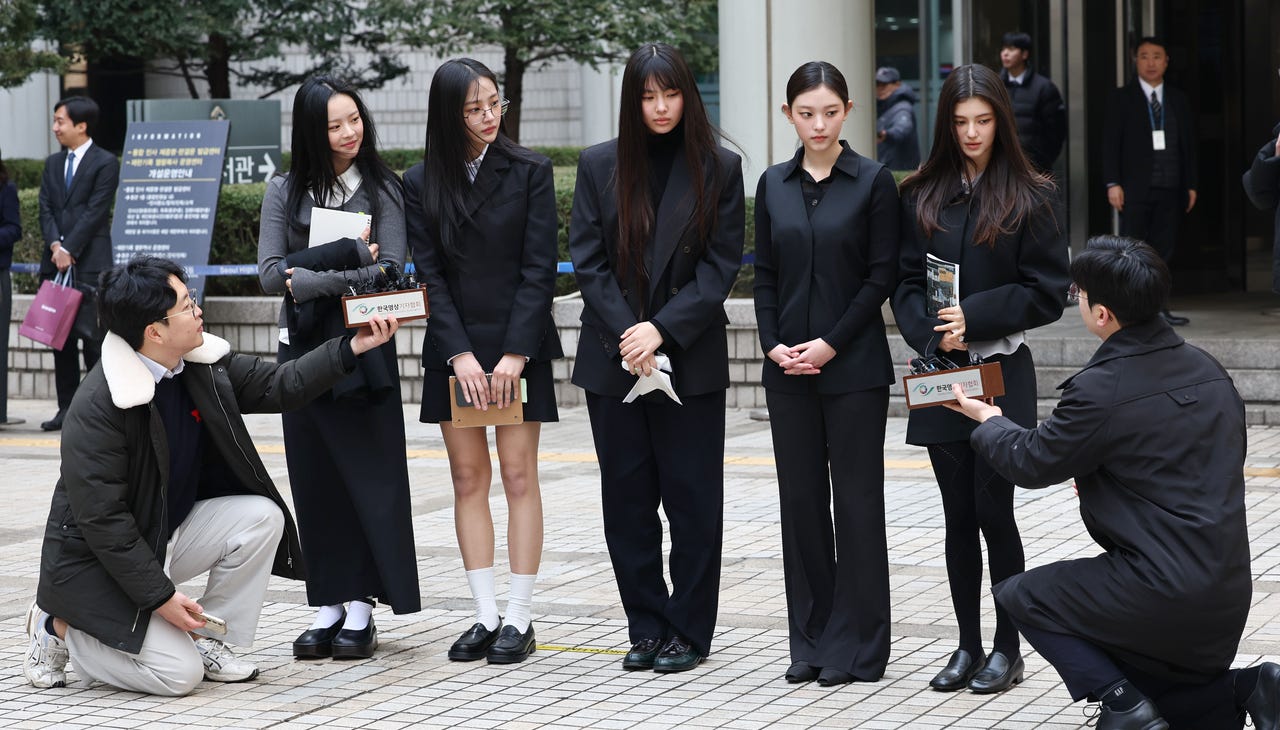
On whether any of it had been to protect the group, the court gave her nothing: “It cannot be viewed that Min Hee-jin’s actions were for the purpose of safeguarding [NewJeans].”
While the group was working, nothing protected her stake like protecting them—their worth was hers. The put option paid on 2022 and 2023, years already banked; the day she exercised, her number was fixed. The freeze that followed cost the five their prime. When the figure finally landed, she offered to walk away from the whole buyout—if every suit on every side ended—and HYBE moved to keep her from collecting instead. Whatever was in her heart, the paper had made it unreadable: it had put protecting the group and cashing out the group on the same number.
The members’ certainty about her could never become evidence—and neither could HYBE’s certainty against her. Hanni wasn’t, in law, an employee the Labor Standards Act could protect. She was a party to a mandate.
None of the members appealed.
The deadline passed at midnight in mid-November, unfiled, and the ruling was final. Haerin and Hyein had gone back to ADOR the day before; the others followed in a statement of their own—Hanni, it said, was in Antarctica when it went out.
Through all of it—even after the members announced they were gone—ADOR had kept the money flowing: salaries, ad fees, event payouts. A 2025 ruling had already put a price on stepping out of line: ₩1 billion, about $725,000, every time one of them went off on her own.
Then, on December 29, ADOR terminated Danielle’s contract—”no longer feasible,” it said—and sued: Danielle, her mother, and Min Hee-jin, for allegedly setting the whole conflict off and grinding the group’s activities to a halt. The number was enormous—₩43.1 billion, some $32 million, since trimmed to ₩33.1 billion—and Danielle’s lawyers called it targeted and unjust. In January, a court froze ₩5 billion of Min’s assets and ₩2 billion of the mother’s—가압류, a provisional seizure, collateral on a judgment nobody had won yet.
On January 12, Danielle went live on Instagram—
I fought until the very end to be together with the members and that truth stays with me.
Danielle, open letter (dated November 12, 2025; published mid-January, at 20)—
민지, 하니, 해린, 혜인은 나의 두 번째 가족이야. 같이 행동할 시간이 어긋났지만 우리를 갈라놓을 수 있는 건 아무것도 없어.
Minji, Hanni, Haerin, and Hyein are my second family. The time for us to act together no longer aligns, but there is nothing that can divide us.
That spring, her message history disappeared from Phoning—ADOR called it a service reorganization.
더 나은 서비스 제공을 위해 일부 콘텐츠를 재정비하게 됐다
…to provide a better service, we’ve reorganized some content.
Korea Herald reported ADOR had a full album prepared; by spring, the reported target was a comeback in the second half of the year.
No Producer
The October 30 ruling sent HYBE up 7.12% that day, 18.4% on the week—roughly $644 million added in a single afternoon. The February 2026 judgment barely moved it. At every other HYBE label, a name was affiliated with the music: Bang Si-hyuk’s own credits run through BigHit, Source Music, and BELIFT; Zico makes KOZ’s records; Seventeen’s Woozi makes Pledis’s. ADOR, after they removed Min in August 2024, had nobody’s.
Korea’s music-content, producers’, and management associations closed ranks behind HYBE and ADOR, framing NewJeans’ termination as “tampering”: a third party inducing a contracted artist to defect, a threat to the whole business. It’s the ‘actor, not asset’ stance—the same logic the Culture Ministry’s three-year rule had already made clear.
What ADOR put on the records was a genre range no major-label peer was carrying at the time, written into original compositions whose masters ADOR kept.
By its own numbers, ADOR spent 2025 doing little. Revenue fell about 73%, to ₩29.5 billion; the line that books concerts and member activity—the sound of a group being a group—fell 99%, the accountant's way of saying it had stopped. On HYBE's own books, that same dead-quiet label carried a 36.9% growth assumption—the highest of anything the company owned in Korea. The most frozen asset in the house, penciled in as the fastest-growing.
Two years of litigation froze NewJeans—no performing, no writing, no singing, not even the name. What the law couldn’t do was start them again.
🐰 & ❤️
Min launched OOAK Records—One Of A Kind—and opened global auditions for a boy group, applicants born 2008 to 2013. The oldest were born the same year as Hyein; the youngest would turn 13 the year the call went out. The factory-like system she had called a disease was taking applications again.
On her 21st birthday, months into ADOR’s suit against her, Danielle posted a short demo to Instagram—easygoing pop over a sparse arrangement, a file fans dubbed “Fly High,” no caption attached. Whether she can ever release it is part of what the suit now contests.
In late May 2026 the Ministry of Intellectual Property moved to refuse 34 of the 54 “NJZ” trademark applications the members had filed under the name they took to ComplexCon, citing among its grounds ADOR’s prior “NewJeans” mark. Motown had gone through this decades earlier: the name “Jackson Five” was the label’s property, and the brothers left for Epic as the Jacksons.
Haerin and Hyein were spotted in Copenhagen on April 12, inside a shop, one of them holding a camera. Hanni’s presence surfaced two days later. Three of the five were in Copenhagen, where the Get Up sessions had been held, and nothing had been announced.
ADOR confirmed the visit:
It is true that NewJeans members visited Copenhagen, Denmark, with staff.
Its statement called the trip pre-production for a new musical narrative—the group’s first record made without Min; two weeks later ADOR confirmed it again as comeback speculation grew.
Hyein turned 18 on April 21. ADOR’s official channel posted multiple photos of Hyein with the caption “HAPPY HYEIN DAY” that day. Hyein turned up at her own birthday cafe in Seoul in sunglasses, a mask, and a tracksuit. Fans recognized her, and when they sang, she turned away and wiped tears. It was her first reported sighting inside the country since the group went dark.
Fans had booked a “2026 Minji Birthday Cafe” at Yogopro Frozen Yogurt and Cafe Bonny in Hongdae for the days around Minji’s 22nd birthday; on May 5, two days before it, Minji delivered roughly 500 home-baked cookies—bunny shapes and heart shapes—four-cut photos, and handwritten letters to the cafe entrance. She did not enter and was not photographed.
Minji’s notes, as excerpted across Xports News and Ilgan Sports (May 5, 2026)—
안녕 버니즈. 정말 오랜만이야. […] 올해는 작년에 못했던 쿠키 선물을 준비했어. 500개는 구운 것 같아. […] 우리에게 다시 좋은 기회가 오길. 우리가 다시 만나서 차분히 말할 수 있는 날이 분명 올 거라고 믿어. […] 5월이야. 상상한 대로 이루어질 것만 같은 그런 계절이랄까
Hi Bunnies. It really has been a long time. […] This year, I prepared the cookie gift I couldn’t last year. I think I baked a good 500. […] I hope a good chance comes for us again. I believe the day will surely come when we can meet again and talk calmly. […] It’s May. The kind of season where it feels like things will come true the way you’ve imagined them.
On May 7, Minji’s birthday, ADOR’s NewJeans account—which hadn’t spoken her name in a year and a half—posted “HAPPY MINJI DAY,” over new photographs of her baking. It was the first time, Star News noted, that an official account had acknowledged her since the fight began, and it wouldn’t have gone up, the same report added, without her consent. The system built to sell proximity was running again.
The group taking shape was four—Minji, Hanni, Haerin, Hyein. Danielle had come back with the others and been cut loose anyway—the only member named in ADOR’s ₩33 billion suit. The one who had promised a room full of cameras that NewJeans never dies, who had written to the other four that nothing could divide them, was the one being divided out: slowly, expensively, in a court that hadn’t ruled, while the four tried to be a group again.
Four women, taking each other’s hands one after another, closing a circuit meant for five.
K-pop groups die. Lawsuits, scandals, contract disputes, sometimes a better offer elsewhere. However it happens, the lights go out, and by morning someone else is standing in their place.
Not NewJeans.
The contracts the four returned to run until July 31, 2029. Long enough to turn a hiatus into a lifetime, and make survival feel like rebellion.
The story everyone expected to end became something far more dangerous:
Unfinished.