

After 30 years, the world is starting to take notice of South Korea’s hip-hop scene—and the timing isn’t accidental. A phenomenon within the Korean Wave sweeping the West, Korean hip-hop has won over millions in recent years, riding the same cultural infrastructure that turned K-pop into a global export.
Where K-pop was engineered top-down by entertainment agencies running on trainee systems and managed fandom, Korean hip-hop grew from the opposite direction: online communities, basement open-mics, and a generation of kids who discovered rap through imported American CDs. Those roots are starting to bear fruit internationally.
The Western influence is obvious in content and aesthetic, but Korea is building something of its own—by itself, of itself.
Telephone Lines and Basements
T.K. has documented the origins well. Stories told through rhymes, the same way hip-hop out of North America did in the 80’s, just in a different language. The topics were similar in spirit—social and political commentary reflecting Korean life at the time—but distinct in their own right.
Hong Seo-beom is widely credited as the first well-known artist making hip-hop music in South Korea.
The origins are more traceable than they are stateside; the scene was small and tight-knit in the early days, with fewer players and a clearer record of who showed up first. That doesn’t mean it was simple—debates about who laid the foundation have run for decades, and the further back you go, the more the lines between hip-hop, dance music, and pop blur together. The early Korean hip-hop community coalesced in online spaces, through PC communication boards and internet forums where kids shared ripped MP3s, argued about flow, and organized the first offline meetups.
Seo Taiji and Boys had a stronger influence on Korean hip-hop culture—and the Korean music scene broadly—than anyone else historically, despite not sticking to hip-hop alone. What they did was crack the market open. Before Seo Taiji, Korean pop music had been running on the same formula for decades—trot ballads, variety-show crooners, a scene that moved slow and rewarded compliance. “Nan Arayo” in 1992 changed the temperature overnight. The establishment hated it; the kids didn’t care. Within weeks, the song was inescapable, and every assumption about what Korean pop music could sound like was suddenly negotiable.
Seo Taiji and Boys were to Korea in the early 90’s what Dipset was to Harlem in the early 00’s—bigger than life itself. They owned the scene—hip-hop or otherwise. Their dominance of Korean media during their run was total, and their split after four years left a hole that took years to fill. Yang Hyun-suk, one of the three members, went on to found YG Entertainment. The group that sparked Korean hip-hop also planted the seed for one of the three agencies that would dominate K-pop—two industries from the same root, splitting in opposite directions.
Everything Between
Both sides of the Pacific argue constantly about what hip-hop is and what “real” hip-hop represents.
The culture was born in the South Bronx, built by Black and Latino communities. The distance between that origin and a studio in Gangnam is not something you cross without leaving footprints.
What qualifies as real in Korean hip-hop? The answer is in the rhymes. Spitting about a harsh ghetto or a crime-ridden block may not apply to South Korea the way it does stateside, but there are other topics that cut just as deep. Mandatory military service that pulls every young man out of his life for nearly two years. The pressure-cooker education system that runs kids through 16-hour days from middle school onward. The weight of family expectations in a culture where your parents’ sacrifices are a debt you carry whether you agreed to it or not. These aren’t borrowed struggles. They’re Korean.
In the 90’s, Korean rappers located their authenticity across the Pacific—to be “real” was to look and sound American. English lyrics, American fashion, music videos shot in settings that evoked inner-city America. The scene has moved past that, slowly. The rappers who matter now are the ones rapping in Korean about Korean things, and the technical groundwork that made Korean-language rap feel natural—not just translated American cadences, but schemes built for the way Korean syllables actually land—was laid quietly in the early 2000’s by artists most Western listeners have never heard of.
The audience for Korean rap—inside Korea and outside it—is larger now than at any point in the genre’s history, and the window is still opening.
Straight From Seoul
Korean rappers rarely get to speak for themselves in Western media. Most coverage runs through large outlets that filter translations for their own purposes. I wanted to step away from that.
Due to tight schedules, I asked all my guys the following:
The hip-hop scene in South Korea is constantly shifting; what are your thoughts?
What inspired you to start rapping and taking it as a serious career?
Hip-hop—what does it mean to you?Your legacy—does it matter? What’s yours?
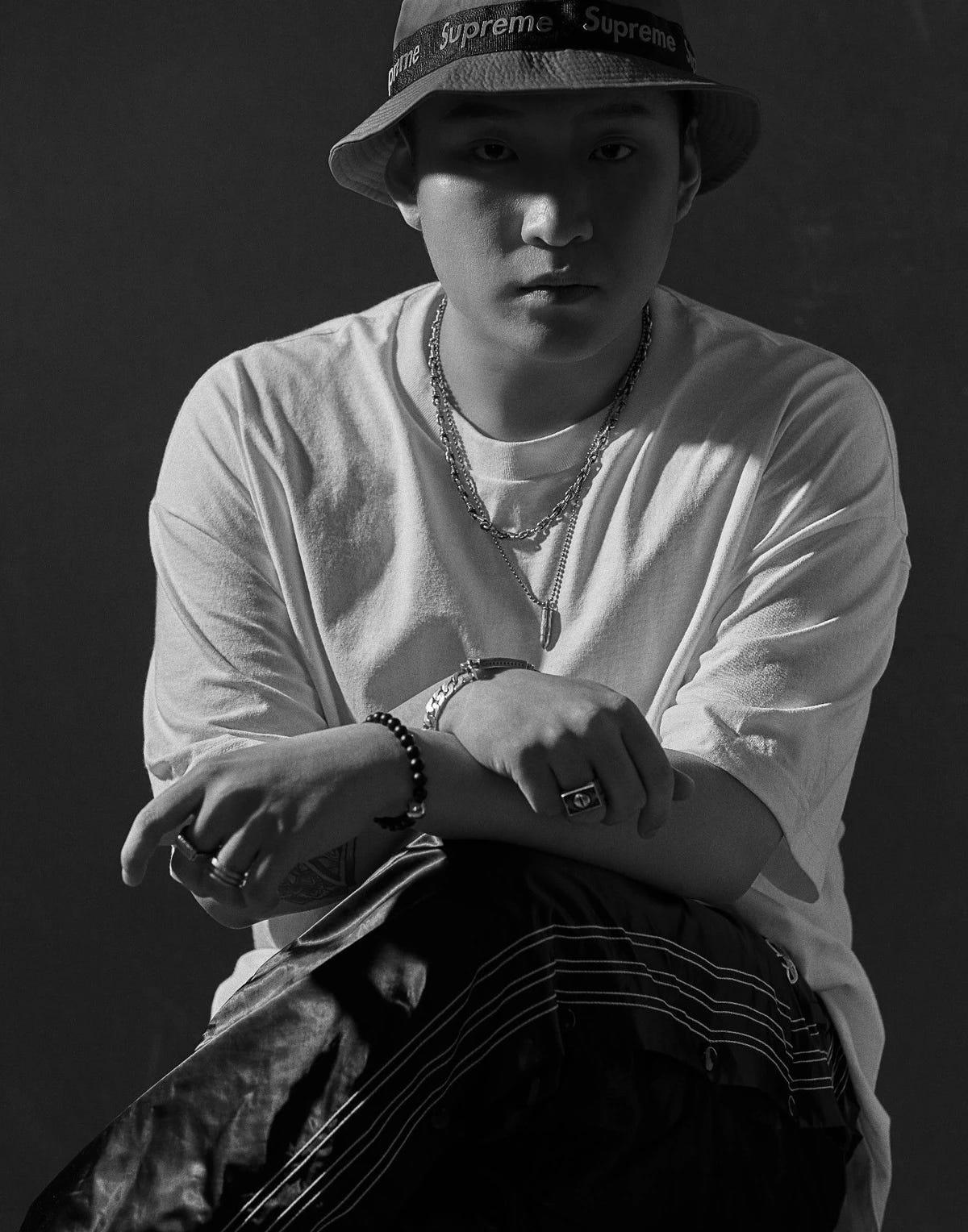
RYNO:
I started listening to the first album of Dynamic Duo in 2004. Gaeko had a huge influence on me, and I thought from that point forward it would be cool to become a hip-hop artist. It's a dream of mine. I'm a lonely person, and have a lot on my plate, swirling with emotions. Through rap, I was able to mature more—become more alert, control my behavior, and take back my life.
I was born into an unhealthy and broken home. My mom lived her life through me, and the constant feeling of being inferior loomed over my head. To me, hip-hop is the most mundane, raw, emotional, honest type of music. It's a device in and of itself, a friend to play with, if you will. I want to become a historic rapper, one that conveys the story of my life through rhymes, while expressing the positive, more fun aspects of it along the way. I want to just pave my own road, and be remembered for my efforts.
The purpose of rapping was broad to me. While I release my emotions, life, and imagination to the world, I feel both satisfaction and stress. It satiates the listeners' ears, but it also puts me under constant pressure to improve and become more appealing. Korean hip-hop is a lot better now than I thought it ever would be.
There are different styles. Lots and lots of different styles, and in a lot of cases, you can't compare two artists together (think: underground vs. mainstream).
I want to just pave my own road, and be remembered for my efforts.
HU57LA:
The hip-hop scene in South Korea is getting bigger and bigger every year.
There has been a wave coming through Korea with help from this audition program called Show Me The Money—this show helps people who do not understand or listen to hip-hop often to become familiar with it. The show also narrows listeners' ears to believe rappers that the product which you see on the television are the nicest [talented, best] rappers Korea has to offer. For Koreans, what shows up on a television screen is reality. I wish they could listen to more music from YouTube or SoundCloud, rather than looking at the Top 100 Melon charts [Korea's Billboard]—I feel like some diversity and drawing on smaller talent could be beneficial to Korea's hip-hop scene. Too many talents in South Korea that are coming up, but I've been listening to Changmo lately.
Hip-hop is way of life you know? Being free at all times. That's hip-hop to me. My introduction to rap was as a battle rapper. It felt great to out-rap someone or make other rapper seem less talented. It was my way of feeling free. Many artists inspired me but Lil Wayne was my largest inspiration. Hip-hop is way of life you know? Being free at all times. That's hip-hop to me. No boundaries. Thinking outside of the box. No norms when it comes down to hip-Hop. That's why we all love it right?
My legacy? I just want people to remember me as a rapper who truly rapped from his heart.
JON:
Current Korean hip-hop is trending more towards alternative R&B than anything, where auto-tuned R&B is mixed with rap. This is good, however, as a lot of underground artists started and were exposed to this type of music first. On the other hand, this is a negative, as everyone is attempting to bandwagon off this trend, and not having a true genuine deep-seated passion or feeling about the music they are creating.
The reason why I started to rap back in the 5th grade was Nas' debut album, Illmatic. It just blew my mind. I could agree with and relate to some of the lyrics, and that's why I got into the tape so much—that's when I started to take writing seriously, too. I wasn't the best; it was a start.
To me, hip-hop is something I do to express myself. I'm an extremely quiet person who doesn't speak much. Friends say they can't read emotions when we talk, but when I rap, it's different. I can express myself better, through a different medium, and that's why I love it. I want people to search up my name instead of my songs' names, I want to be known. In other words, there's a difference—if they search for a song name, it means the song was good, but the artist wasn't memorable.
I want people to remember me. You feel me?
Borrowed Sound, Borrowed Style
Modern American culture has a heavy influence on the sound of Korean hip-hop. The United States has had an outsized influence on South Korea’s culture since the Korean War—decades of American military presence meant American music was in the air, literally and figuratively, long before the internet made it searchable. That pipeline ran for decades before anyone called it “influence.” Korean hip-hop’s relationship with American sound isn’t a recent import; it’s generational.
The influence shows up in the modern mix of R&B and trap elements being integrated into traditional rap sounds—boom-bap, conscious-leaning beats—though the old school sound is fading fast. People gravitate toward catchy sounds and hooks over dust; there are even different takes on what formulas make a song stick. An old school underground beat almost never makes it into Korea’s mainstream radio.
On the surface: clothes emulating old school hip-hop tones, chains, hypebeast name brand fits, strong shoe game, and visual nods to R&B in music videos—intertwined with modern braggadocio energy. The class is there to make it smooth and elegant; the confidence and flexing make it just vague enough to be considered hip-hop in certain cases (see: Zion T).
Crush’s “Oasis” with ZICO, pictured below, did exactly this—played relentlessly in clubs and through the streets of Seoul for nearly two years.
That’s a positive example among many negative ones. Bite off more than you can chew, and your jaw gets tired.
Biting is an issue—subjective, but serious. It shows up more often in Korea than stateside, given how directly American music is absorbed. The term refers to emulating another artist’s style blatantly, either by mimicking or using it as your own, without a nod to the original source.
Plagiarism, more or less. “Okey Dokey” was a decade late biting the ringtone rap aesthetic and sound. ZICO got caught up in a beat scandal. Primary was suspected of stealing beats, and ended up donating all proceeds after his sampling crossed the line into replication.
In most cases, it’s influence rather than intentional theft. The question is where the line sits—at what point does genuine passion for a sound become a balancing act of how much you can extract without getting caught. This question applies to the entire Korean music industry, not just hip-hop. K-pop itself runs on Black American musical DNA—R&B vocal styling, hip-hop production, choreography traditions that trace back decades—industrialized and exported at a scale the original genres never reached. The hip-hop scene just happens to be where the question is asked out loud, because hip-hop has always cared about credit in ways pop music doesn’t.
For most younger listeners, Keith Ape from The Cohort is the name that comes up first when biting in Korean hip-hop enters the conversation.
His song “잊지마” (”don’t forget [about me/my name]”) caught tens of millions of views and broke the internet—a pseudo-race war between keyboard warriors and Twitter fiends arguing about African-American and Korean culture, with “cultural appropriation” thrown around from every direction.
The controversy, supposedly resolved, sparked a larger debate about who owns what, who can claim what, and what a “culture vulture” is—something we saw play out with Post Malone, which didn’t go well either. This debate isn’t going away; if anything, as Korean hip-hop’s global reach expands, the scrutiny will only intensify. The dynamic is complicated by the fact that Korean artists didn’t seek out American hip-hop from a position of cultural dominance—they found it as kids, through whatever channels were available, and absorbed it the way anyone absorbs the music that changes their life. That doesn’t make the appropriation question disappear, but it does make the “culture vulture” framing too simple for what’s actually happening.
T.K. put it plainly—hip-hop is an imported artifact, and the line blurs when you take culture from a foreign place and try to make it yours:
Clearly, hip hop is not of Korea. It is a cultural artifact that Korea imported. And surely, hip hop in Korea is still in the process of becoming localized. Although Korean hip hop has come a long way in the last two decades, there is still no stand-alone “hip hop culture” as one exists in America.
K-Town to Seoul, Both Directions
Dumbfoundead came out of K-Town and left his mark through battle raps, collaborations, and music videos over 10 years on YouTube. He remains the face of Korean-American rappers working to break into the mainstream, and he did it without entering through a Korean door. He came up at Project Blowed, the legendary Leimert Park open-mic in LA—a Black-founded institution—and earned his place by rapping circles around the room. That credibility can’t be manufactured by a label or a reality show.
The gap between North America and South Korea is closing, and social media is doing most of the heavy lifting.
Korean rap hasn’t matched K-pop’s audience stateside because most Americans don’t speak Korean and can’t parse the lyrics or references. “It G Ma” got popular because of the hard-hitting trap sound—not the words, but the sonics. This will likely be the template that carries Korean hip-hop into Western ears: the sound arrives first, the lyricism follows once the audience is already in the room.
Is Korean trap the most accurate representation of Korea’s hip-hop scene to the Western world? No, but that’s fine—and that being fine is something that rubs a lot of people the wrong way.
Why?
A fair argument is that Korean hip-hop, particularly trap, parodies African American culture—pandering to and emulating it without proper understanding. Taeyang of Big Bang, one of Korea’s pillars in pop music, did a controversial interview, supposedly mistranslated, regarding the influence of black culture.
The emulation of “blackness” attracts attention, views, listeners, and clout within the music scene. Nobody has resolved it.
Conscious rap has taken a back seat (Kendrick Lamar being the exception), and globally it’s more about sound than lyricism right now. That’s not a negative; it’s the state of hip-hop, and Korean artists caught on quickly. The artists who last will be the ones who use the sound as a vehicle for something specific to their own experience—the way the best American artists always have.
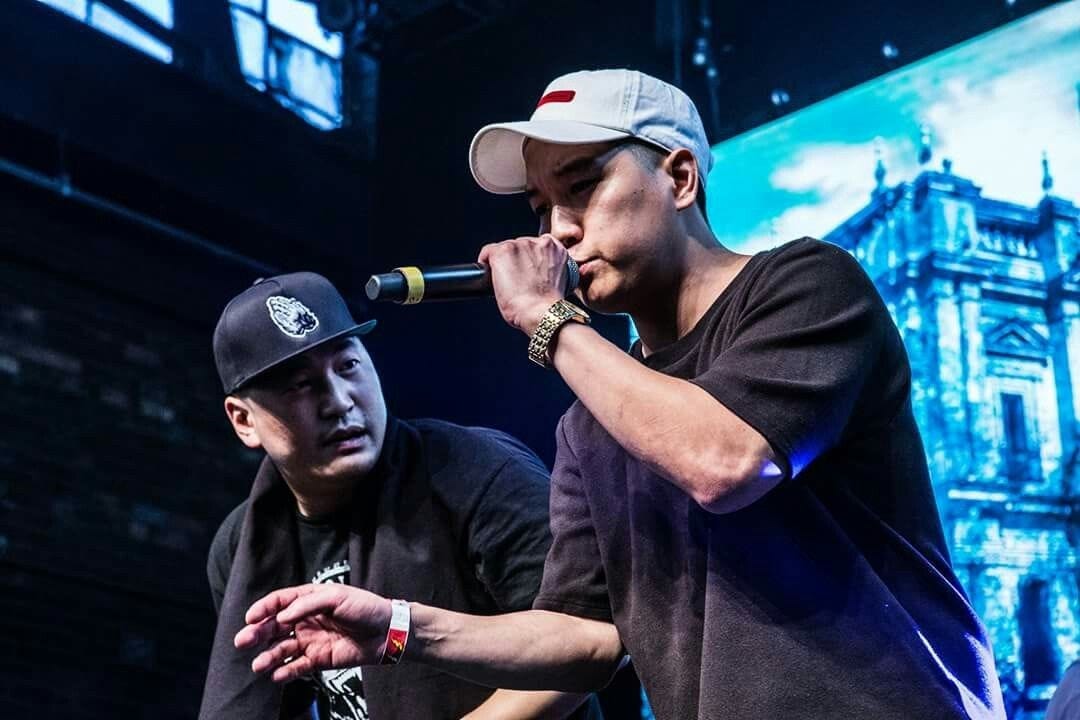
Collaborations overseas while being bilingual put Dumbfoundead, Year of the Ox (JL and Lyricks, stylized as YOX), and others at the forefront of spreading Korean culture through rhymes stateside.
YOX has a formula that works. Trap influence shows up in their tracks, but they stick to the roots of heavy lyricism and boom-bap production. References that pull from both American hip-hop history and the Korean scene overseas—this allows for two things: the audience stateside can give a nod to the bars and references, and YOX can build a fanbase in Korea off the content they’re putting out. They’re operating in the gap between the two markets that nobody else has figured out how to fill.
The bars land on both sides of the Pacific.
Looking Ahead
Korean culture is spreading rapidly, and music is the primary vehicle. Korean hip-hop is a growing segment of that wave—smaller than K-pop, louder per capita, and harder to co-opt.
The infrastructure is building in ways it wasn’t five years ago. New platforms and streaming services with global reach, a generation of Korean artists who grew up consuming both Korean and American hip-hop natively—not as imports, but as part of their musical diet from day one. Shows like Show Me the Money have done what the underground couldn’t do alone: they put Korean rap in front of millions of ears that would never have sought it out. The trade-off is that the show narrows what “Korean rap” looks like to a television audience, and the best rappers in the country know it. The underground feeds the show; the show feeds the mainstream; the mainstream feeds the global audience. Whether the underground survives that pipeline intact is the open question.
The artists putting on stateside are getting sharper, and the movements overseas are gaining a momentum that won’t reverse easily. The Korean-American bridge—Dumbfoundead, YOX, and a growing wave of bilingual artists who don’t have to choose between markets—is critical. These are the conduits through which Korean hip-hop reaches Western ears without being filtered through the K-pop machine.
There are 50 million people in South Korea—roughly 15% of America’s population. The scene’s global impact may not match the numbers, and the reliance on Western influence will likely remain for a while, but the pace of progression has no real parallel in non-English-speaking hip-hop.
If the trend holds, Korean hip-hop won’t just be a curiosity within the Korean Wave; it’ll be its own export category within a decade.
The rhymes shift with the society.
That’s what Korean hip-hop represents.